No linked studies yet.
Product analysis
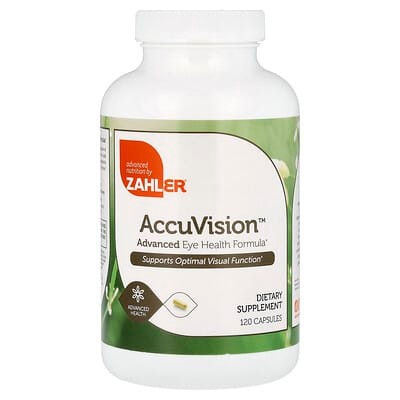
AccuVision supplies nutrients linked to normal eye function and the protective pigments at the back of the eye. Its bilberry preparation is not matched to the one behind the limited screen-related findings, so that benefit is uncertain.
AI assessment of the formula, label and price. How scoring works
Nutrient Quality28
Chromium uses a less favorable form, while many other forms remain unspecified. Those details limit a confident quality comparison of the broader mix.
Ingredient Transparency77
Every declared ingredient has a listed amount, making the serving contents easier to compare. Most forms remain unspecified, including those of several eye-focused ingredients.
Value For Money33
The full serving cost offers limited value in the vitamin C, riboflavin, chromium and rutin comparisons. Value from many other additions remains uncertain.
Customer Satisfaction69
Customer ratings are favorable, though the review count is modest. They offer a limited picture of satisfaction without establishing improved vision.
Product Focus57
Lutein and zeaxanthin give the formula a link to the retina’s protective pigment. The wider nutrient mix mainly supports normal nutritional needs, while broader improvements in vision remain uncertain.
- Format
Capsule - Container
- 120 Capsule(s)
- Per serving
- $0.95
- Customer rating
- 4.6 · 72 ratings
Goals
Ingredients
| Ingredient | Amount per serving | Score |
|---|---|---|
Vitamin A (Beta-Carotene) | 6000 mcg | |
Vitamin C (Ascorbic Acid) | 750 mg | |
Vitamin E (D-Alpha-Tocopheryl Succinate) | 134 mg | |
Riboflavin | 25 mg | |
Zinc (Zinc Picolinate) | 12.5 mg | |
Selenium (L-Selenomethionine) | 50 mcg | |
Chromium (Chromium Chloride) | 100 mcg | |
Citrus Bioflavonoids peel powder Complex | 125 mg | |
N-Acetyl Cysteine | 100 mg | |
Taurine | 100 mg | |
Rutin | 55 mg | |
Quercetin Dihydrate | 50 mg | |
Lutein | 10 mg | |
Bilberry fruit extract | 5 mg | |
L-Glutathione | 5 mg | |
Zeaxanthin | 2 mg |
How this ingredient is rated
Active Ingredient Quality & Bioavailability30
Riboflavin Form Quality
Dose, Safety & Label Transparency88
Dosage for Energy & Metabolism
R5P Elemental Yield Transparency
Additive Purity
Value10
Price per Serving Value
How this ingredient is rated
Active Ingredient Quality & Bioavailability30
Vitamin C Chemical Form & Delivery System
Gastric Comfort & pH Balance
Dose, Safety & Label Transparency91
Optimal Dosage Targeting
Purity & Excipient Quality
Mineral & Source Transparency
Value20
Price per Gram of Vitamin C
How this ingredient is rated
Composition and Label Disclosure
Composition and Label Disclosure100
Declared Active Rutin Amount
Commercial Price and Usability25
Whole-Product Cost per 100 mg Declared Rutin Preparation
Alternative products
Sources
Published studies used for the product analysis and the top-ranked studies for each ingredient and goal.

- Glutathione reduces the toxicity and improves quality of life of women diagnosed with ovarian cancer treated with cisplatin: results of a double-blind, randomised trial.
- Glutathione and morbidity in a community-based sample of elderly.
- The role of zinc, copper, plasma glutathione peroxidase enzyme, and vitamins in the development of allergic diseases in early childhood: The Polish mother and child cohort study.
- Status of glutathione and other thiols and disulfides in human plasma.
- Impact of a tailored exercise regimen on physical capacity and plasma proteome profile in post-COVID-19 condition.
- Associations of selenium status with all-cause and cause-specific mortality: a systematic review and meta-analysis of cohort studies.
- Dietary Antioxidants, Circulating Antioxidant Concentrations, Total Antioxidant Capacity, and Risk of All-Cause Mortality: A Systematic Review and Dose-Response Meta-Analysis of Prospective Observational Studies.
- The efficacy and safety of selenium supplementation versus placebo in the treatment of Graves' orbitopathy: A systematic review and meta-analysis of randomised controlled trials.
- Associations of plasma metal concentrations with the risks of all-cause and cardiovascular disease mortality in Chinese adults.
- Updates on clinical studies of selenium supplementation in radiotherapy.
- Cognitive Effects of Taurine and Related Sulphur-Containing Amino Acids: A Systematic Review of Human Trials and Considerations for Plant-Based Dietary Transitions.
- Association between habitual dietary taurine intake and the risk of metabolic dysfunction-associated steatotic liver disease: a prospective cohort study.
- Effects of Oral Taurine Supplementation on Cardiometabolic Risk Factors: A Meta-analysis and Systematic Review of Randomized Clinical Trials.
- Dietary intake and blood concentrations of antioxidants and the risk of cardiovascular disease, total cancer, and all-cause mortality: a systematic review and dose-response meta-analysis of prospective studies.
- Scientific Opinion on the substantiation of a health claim related to vitamin C and increasing non haem iron absorption pursuant to Article 14 of Regulation (EC) No 1924/2006.
- Vitamin C Depletion and All-Cause Mortality in Renal Transplant Recipients.
- Associations of Serum Biomarkers of Fruit and Vegetable Intake With the Risk of Cause-Specific Mortality and All-Cause Mortality: A National Prospective Cohort Study.
- Relation between plasma ascorbic acid and mortality in men and women in EPIC-Norfolk prospective study: a prospective population study. European Prospective Investigation into Cancer and Nutrition.
- Effectiveness of sodium bicarbonate and zinc chloride mouthwashes in the treatment of oral mucositis and quality of life in patients with cancer under chemotherapy.
- Zinc supplementation in young children with acute diarrhea in India.