
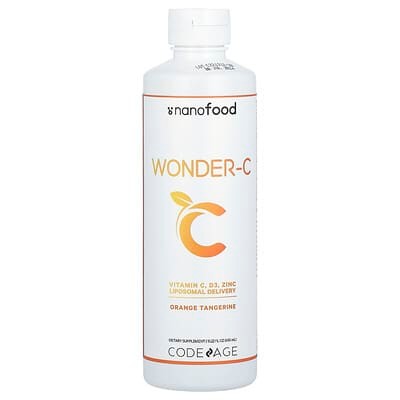
Wonder-C Orange Tangerine

Goals
$29.99 $0.99 per serving



Product analysis
Wonder-C Orange Tangerine may help cover nutrient gaps relevant to normal immune function and skin maintenance. Its undisclosed blend makes the extra ingredients harder to judge.
AI assessment of the formula, label and price. How scoring works
Nutrient Quality37
The natural vitamin E form is a favorable quality feature. Most other form comparisons remain uncertain, with several preparations and the blend contents unspecified.
Ingredient Transparency61
Ingredient amounts are listed, but many forms and the blend components are missing. That limits a complete comparison of the formula.
Value For Money35
The vitamin C and vitamin E content have relatively unfavorable value comparisons. Value for most other ingredients remains uncertain.
Customer Satisfaction83
Customer ratings are positive across a substantial review pool. They do not establish protection from infections or a particular skin benefit.
Product Focus35
The clearest role is nutritional support for normal immune and skin functions. The undisclosed blend and unresolved usable vitamin E amount limit expectations for added benefits.
- Format
Liquid - Container
- 16 Fluid Ounce(s)
- Per serving
- $0.99
- Customer rating
- 4.7 · 1,364 ratings
Goals


Impact
High effect
Vitamin D · 100 mcgZinc · 15 mgVitamin C · 1000 mg

Impact
Moderate effect
Zinc · 15 mgVitamin C · 1000 mgVitamin E · 10 IU

Impact
Highest effect
Vitamin D · 100 mcgVitamin E · 10 IUVitamin C · 1000 mg

Impact
High effect
Zinc · 15 mgVitamin E · 10 IUVitamin C · 1000 mg
Ingredients
| Ingredient | Amount per serving | Score |
|---|---|---|
Calories | 68 Calorie(s) | |
Total Fat | 4 Gram(s) | |
Total Carbohydrates | 8 Gram(s) | |
Vitamin C (Ascorbic Acid) | 1000 mg | |
Vitamin D (Cholecalciferol) | 100 mcg | |
Vitamin E (D-Alpha-Tocopherol) | 10 IU | |
Zinc (Zinc Bisglycinate) | 15 mg | |
Liposomal Proprietary Blend | 4000 mg | |
Rose Hip | 50 mg | |
Quercetin | 50 mg | |
Echinacea | 50 mg |
Vitamin C (Ascorbic Acid) · 1000 mg OverallScore72
1000 mg of vitamin C per serving provides a substantial amount. The cost per gram of vitamin C is high. It uses liposomal delivery. The vitamin C comes from Ascorbic Acid.
How this ingredient is rated
Active Ingredient Quality & Bioavailability79
The label claims liposomal delivery for Ascorbic Acid. Ascorbic acid is unbuffered.
Vitamin C Chemical Form & Delivery System
The label claims liposomal delivery for Ascorbic Acid.
Gastric Comfort & pH Balance
Ascorbic acid is unbuffered.
Dose, Safety & Label Transparency91
1000 mg of vitamin C per serving provides a substantial amount. The other-ingredient panel has no flagged sweeteners or artificial colors.
Optimal Dosage Targeting
1000 mg of vitamin C per serving provides a substantial amount.
Purity & Excipient Quality
The other-ingredient panel has no flagged sweeteners or artificial colors.
Mineral & Source Transparency
The vitamin C amount and ascorbic acid source are stated.
Value20
The cost per gram of vitamin C is high.
Price per Gram of Vitamin C
The cost per gram of vitamin C is high.
Vitamin E (D-Alpha-Tocopherol) · 10 IU OverallScore38
The 10 IU of vitamin E is a low amount, at a high cost per serving. It uses natural D-Alpha-Tocopherol. The available information does not establish mixed tocopherols or tocotrienols.
How this ingredient is rated
Active Ingredient Quality & Bioavailability46
natural D-Alpha-Tocopherol is the stated form. The available information does not establish mixed tocopherols or tocotrienols.
Natural (d-alpha) vs. Synthetic (dl-alpha)
D-Alpha-Tocopherol is a natural form of vitamin E.
Mixed Tocopherol Isomer Diversity
The available information does not establish a mixed tocopherol complex.
Tocotrienol Complex Inclusion
The available information does not establish tocotrienol inclusion.
Dose, Safety & Label Transparency29
The serving provides 10 IU, a low amount. The form and total IU are stated, but individual isomer amounts are not provided.
Therapeutic Dosage Range
The serving provides 10 IU, a low amount.
Label Transparency and Isomer Specificity
The form and total IU are stated, but individual isomer amounts are not provided.
Value40
The serving price is high.
Cost per Natural-Form Therapeutic Serving
The serving price is high.
Alternative products
Report alternatives
Sources
Published studies used for the product analysis and the top-ranked studies for each ingredient and goal.
- Dietary intake and blood concentrations of antioxidants and the risk of cardiovascular disease, total cancer, and all-cause mortality: a systematic review and dose-response meta-analysis of prospective studies.
- Scientific Opinion on the substantiation of a health claim related to vitamin C and increasing non haem iron absorption pursuant to Article 14 of Regulation (EC) No 1924/2006.
- Vitamin C Depletion and All-Cause Mortality in Renal Transplant Recipients.
- Associations of Serum Biomarkers of Fruit and Vegetable Intake With the Risk of Cause-Specific Mortality and All-Cause Mortality: A National Prospective Cohort Study.
- Relation between plasma ascorbic acid and mortality in men and women in EPIC-Norfolk prospective study: a prospective population study. European Prospective Investigation into Cancer and Nutrition.
- Vitamin D supplementation for prevention of mortality in adults.
- Effect of vitamin D on gastrointestinal symptoms and health-related quality of life in irritable bowel syndrome patients: a randomized double-blind clinical trial.
- The impact of vitamin D administration on mortality in COVID-19 patients: a systematic review and meta-analysis of randomized controlled trials.
- Vitamin D Status and Mortality: A Systematic Review of Observational Studies.
- Meta-analysis of long-term vitamin D supplementation on overall mortality.
- Effectiveness of sodium bicarbonate and zinc chloride mouthwashes in the treatment of oral mucositis and quality of life in patients with cancer under chemotherapy.
- Zinc supplementation in young children with acute diarrhea in India.
- Associations of mortality with ocular disorders and an intervention of high-dose antioxidants and zinc in the Age-Related Eye Disease Study: AREDS Report No. 13.
- Effects of zinc and probiotic co-supplementation on inflammation, gastrointestinal symptoms, quality of life, and mood in irritable bowel syndrome patients.
- Effect of zinc sulfate supplementation on premenstrual syndrome and health-related quality of life: Clinical randomized controlled trial.
- Role of Oral Vitamin 'C' on Astigmatic Errors in Phacoemulsification.
- Ascorbic acid metabolites are involved in intraocular pressure control in the general population.
- Nutritional modulation of cataract.
- Dietary n-3 Fatty Acid, α-Tocopherol, Zinc, vitamin D, vitamin C, and β-carotene are Associated with Age-Related Macular Degeneration in Japan.
- Adherence to a Mediterranean diet, lifestyle and age-related macular degeneration: the Coimbra Eye Study - report 3.