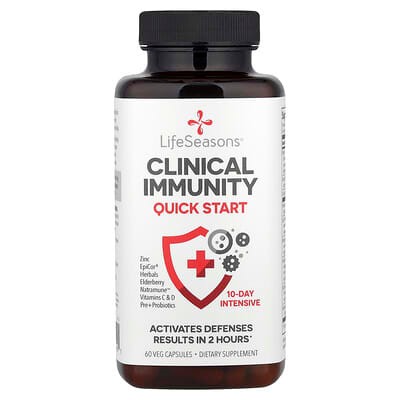


About this product
The strongest rationale is the clearly stated combination of 1000 mg vitamin C, 50 mcg vitamin D3 and 15 mg zinc. Zinc gluconate provides a named source in a maintenance-range amount. These nutrients support normal immune function when intake is low, but the combination does not establish rapid relief or added protection once nutritional needs are met.
The added ingredients are less easy to connect with a predictable benefit. EpiCor has a stated 500 mg amount, while the Natramune entries and herbal blend lack enough composition detail to assess individual contributions. The 100 mg elderberry fruit extract is identified as a concentrated preparation, but its extraction ratio alone does not establish equivalence to a particular tested formula.
The digestive additions also leave practical gaps. Acacia fiber is quantified, but the Bacillus coagulans entry gives a weight without a strain identifier or viable-organism count, limiting probiotic comparison. The high serving cost for vitamin C and zinc makes the undisclosed or incompletely characterized extras central to the buying decision, without enough detail to establish their added value.
Pros
Zinc gluconate and its elemental amount are disclosed Vitamin C and vitamin D3 amounts are clearly stated EpiCor and acacia fiber have individual amounts The elderberry declaration identifies the fruit and preparation weight
Cons
The herbal and Natramune portions lack complete breakdowns The probiotic lacks a strain identifier and viable-organism count The vitamin C brand name does not establish its chemical source or buffering Elderberry's extraction ratio does not establish equivalent clinical performance High cost for the core nutrient contribution
Warnings
The incompletely disclosed herbal and Natramune portions prevent checking all individual exposures; clarify their contents if ingredient avoidance matters.