
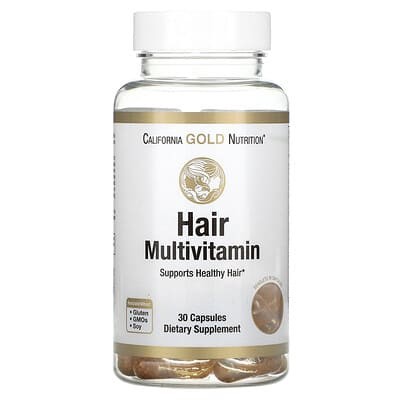
Nutrient quality
The ingredient selection closely fits hair and nail support, with high-dose biotin as the main strength. Weak copper form and token structural ingredients sharply limit nutrient depth.
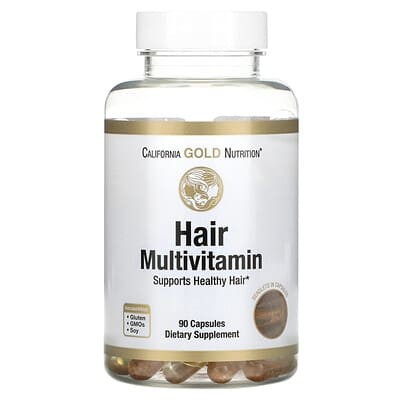
 Amazon Amazon | $ 286.99 | |
 iHerb iHerb | $ 54.67 |
Five thousand micrograms of biotin form the product's main hair-and-nail feature. Vitamin C, B vitamins, zinc, and copper provide a broad supporting nutrient base, though several forms are basic.
Evening primrose oil supplies the most substantial specialty ingredient. The collagen, cysteine, lysine, methionine, and hyaluronic acid amounts are much lower than dedicated formulas and mainly add label breadth.
Forty-five servings make this size more practical than the smaller bottle. It still works best for users who have a reason to choose high biotin and evening primrose oil rather than for anyone expecting a full collagen product.
The ingredient selection closely fits hair and nail support, with high-dose biotin as the main strength. Weak copper form and token structural ingredients sharply limit nutrient depth.
Every active amount is disclosed without a hidden blend. Collagen source, some nutrient forms, detailed use, and inactive ingredients remain incomplete.
The aggregate rating is strong and supported by extensive feedback volume. No detailed comments are supplied to show recurring benefits or tolerance concerns.
High-dose biotin and evening primrose oil support part of the premium price. The larger package improves serving cost, but token structural ingredients still weaken category value.

High-dose biotin provides the clearest nail-health contribution and is paired with vitamin C, zinc, hydrolyzed collagen, cysteine, and methionine. The combination addresses keratin production, connective tissue support, and several structural inputs.
Collagen and the sulfur amino acids appear only in trace amounts, so most of the practical value rests on biotin rather than the broader formula. The 5,000 mcg biotin amount can interfere with some thyroid, hormone, and cardiac laboratory tests, so the testing team should be told before blood work.
No linked studies yet.

High-dose biotin, hydrolyzed collagen, sulfur amino acids, zinc, copper, and vitamin C are directly selected for hair structure and growth support.
The formula covers biotin status, structural protein, keratin-related amino acids, minerals, and antioxidant cofactors. Breadth is mostly label-level because the collagen and amino-acid contributions are token. The 5000 mcg biotin amount can interfere with some thyroid, hormone, and cardiac laboratory tests.
No linked studies yet.
| Ingredient | Amount per serving |
|---|---|
Vitamin C (Ascorbic Acid) | 90 mg |
Thiamine (Thiamine Mononitrate) | 6 mg |
Riboflavin | 6.5 mg |
Vitamin B6 (Pyridoxine Hydrochloride) | 5.1 mg |
Folate | 680 mcg DFE |
Biotin | 5000 mcg |
Pantothenic Acid (D-Calcium Pantothenate) | 5 mg |
Zinc (Zinc Sulfate) | 5.5 mg |
Copper (Cupric Oxide) | 2.7 mg |
Evening Primrose Oil (Gamma-Linolenic Acid) | 880 mg |
Hydrolyzed Collagen | 100 mg |
L-Cysteine | 10 mg |
L-Lysine (L-Lysine Hydrochloride) | 10 mg |
L-Methionine | 10 mg |
Hyaluronic Acid (Sodium Hyaluronate) | 1 mg |
The disclosed biotin dose reaches the preferred high-potency range for focused hair and nail support. The label does not confirm d-biotin, while the capsule format offers practical delivery. High-dose biotin can interfere with certain laboratory tests, so use should be disclosed before blood testing.
The label uses the preferred L-form and clearly states its amount. The amount is minimal for methionine-focused hair support, and the serving cost is high for that contribution. Most of the formula value comes from evening primrose oil, biotin, and other hair-focused nutrients rather than methionine. The high biotin amount can interfere with some thyroid, hormone, and cardiac lab tests unless the testing team knows about its use.
Cupric oxide is clearly disclosed but has very poor absorption compared with chelated or organic copper forms. The amount is still within a safe supplemental range, although the zinc-to-copper balance is lower than the preferred range. The multinutrient formula may add broader benefits, but its premium per-serving cost is difficult to justify from the copper component.
Published studies used for the product analysis and the top-ranked studies for each ingredient and goal.