
Nutrient quality
Broad B-vitamin coverage fits general nutrition and deficiency-related hair support. Repeated source listings and an opaque whole-food blend create substantial padding.
 iHerb iHerb | $ 22.61 | |
 Pure Formulas Pure Formulas | $ 22.61 | |
 Vitacost Vitacost | $ 24.89 | |
 Amazon Amazon | $ 22.61 | |
| iHerb | $ 22.61 |
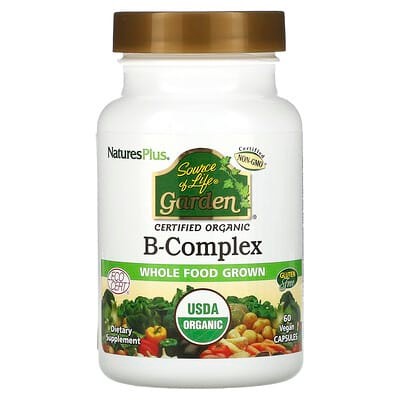
The formula aims to derive several B vitamins from guava, holy basil, and lemon extracts, while methylcobalamin and biotin are clearly named. The repeated nutrient entries can look additive even when they may describe the same stated total across multiple sources, so the physical label needs careful reading.
Folate reaches a useful amount but is listed as folic acid without an active chemical-form confirmation. Biotin at 300 mcg supports basic intake rather than a high-dose hair-and-nail strategy, and the 300 mg whole-food blend lacks component amounts.
Two capsules supply broad coverage but carry a high serving cost. It fits users who value botanical sourcing, while those prioritizing precise doses and active folate may prefer a cleaner B-complex label.
Broad B-vitamin coverage fits general nutrition and deficiency-related hair support. Repeated source listings and an opaque whole-food blend create substantial padding.
Capsule and serving counts indicate a two-capsule serving. The whole-food blend hides all component-level doses.
Feedback volume is substantial enough to stabilize the aggregate signal. No complaint text is supplied, so repeated negative themes cannot be assessed.
Broad vitamin coverage offers some value, but confusing labeling weakens price justification. An opaque whole-food blend and repeated source lines add limited assessable value.

Broad B-vitamin coverage may support energy metabolism, and methylcobalamin is a useful active B12 form. The unusual source presentation makes the formula harder to interpret than a standard B-complex.
Guava, holy basil, and lemon are repeatedly listed as vitamin forms, while a separate whole-food blend is not detailed. Effective nutrient totals and the contribution of the botanical sources therefore remain uncertain.

Folate, B12, biotin, and other B vitamins may support normal follicle cell turnover when intake is inadequate. They do not directly provide keratin building blocks or target common hormonal causes of thinning.
The formula supplies meaningful vitamin amounts, but repeated botanical-source labeling and a broad whole-food blend make the design harder to assess. Benefits for hair are likely to depend on correcting a deficiency rather than the size of the ingredient list.
| Ingredient | Amount per serving |
|---|---|
Thiamine (Guava Extract, Holy Basil Extract, Lemon Extract) | 5 mg |
Riboflavin (Guava Extract, Holy Basil Extract, Lemon Extract) | 4.5 mg |
Niacin (Guava Extract, Holy Basil Extract, Lemon Extract) | 10 mg |
Vitamin B6 (Guava Extract, Holy Basil Extract, Lemon Extract) | 5 mg |
Folic Acid (Guava Extract, Holy Basil Extract, Lemon Extract) | 400 mcg |
Vitamin B12 (Methylcobalamin) | 100 mcg |
Biotin | 300 mcg |
Pantothenic Acid (Guava Extract, Holy Basil Extract, Lemon Extract) | 9 mg |
Certified Organic Whole Food Blend | 300 mg |
A clearly disclosed 300 mcg biotin amount supports basic nutrition, but the label does not verify the biologically active isomer. The amount is well below the range used for targeted hair and nail support. Value is best judged across the full multinutrient formula rather than from biotin alone.
The B-complex supplies 400 mcg of folate from guava, holy basil, and lemon extracts with ample methylcobalamin. Food-based sourcing reaches the preferred dose but does not identify an active chemical form or validated isomer. Cost efficiency is limited compared with clearly active methylfolate products.
Published studies used for the product analysis and the top-ranked studies for each ingredient and goal.