
Nutrient quality
Whole-leaf matcha provides a broad tea matrix at a meaningful amount. The opaque adaptogen blend and missing active-marker data reduce assessability.
.
 Amazon Amazon | $ 19.99 | |
 iHerb iHerb | $ 21.15 |
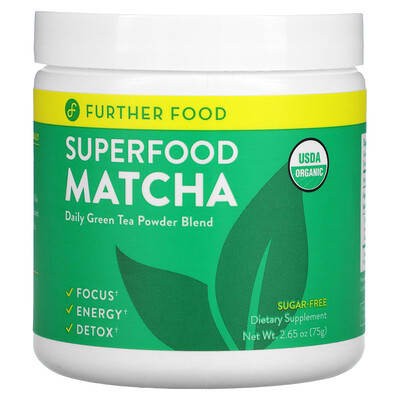
The serving provides 1.63 g of matcha green tea powder, a meaningful whole-tea amount. Matcha can contribute catechins and caffeine, but neither EGCG nor stimulant exposure is quantified.
An 870 mg superfood and adaptogen blend forms a large part of the serving without naming ingredients or individual amounts in the supplied data. That opacity prevents screening for allergies, interactions, or underdosed additions.
It fits only users who have access to a complete current label and specifically want matcha with a broad blend. A plain matcha powder offers better transparency and easier tolerance planning.
Whole-leaf matcha provides a broad tea matrix at a meaningful amount. The opaque adaptogen blend and missing active-marker data reduce assessability.
.The matcha amount is shown, but the adaptogen blend hides every component dose. EGCG, caffeine, directions, and inactive ingredients are missing.
.The supplied aggregate rating is mixed. Specific comments are unavailable, so complaint patterns and intended-use fit cannot be verified.
.Meaningful matcha supports some value, but the opaque blend and high serving cost weaken quality confidence. Mixed aggregate satisfaction adds uncertainty.
.
Matcha supplies whole-leaf green tea compounds that may support antioxidant defenses, inflammatory balance, and metabolic signaling. The label does not state EGCG or caffeine content, and the adaptogen blend hides its individual ingredients and doses.
The matcha amount is substantial by weight, but active-marker uncertainty limits dose confidence. Unquantified caffeine may affect sleep or cause jitters in sensitive users, which can work against restorative aging goals.

Whole-leaf matcha provides green-tea compounds that may support thermogenesis and fat oxidation. The serving supplies a substantial amount of tea powder, but its EGCG and caffeine content are not stated.
An undisclosed adaptogen blend may add stress or energy support, yet its ingredients and doses cannot be judged. The missing active markers make the metabolic effect less predictable than a standardized green-tea extract.

Whole-leaf matcha offers antioxidant catechins that may support inflammatory balance. A substantial matcha amount is present, but an undisclosed superfood blend makes much of the formula difficult to assess.
EGCG and caffeine amounts are not stated, so active exposure and stimulant suitability remain uncertain. The broad adaptogen blend adds label complexity without verifiable anti-inflammatory depth.
| Ingredient | Amount per serving |
|---|---|
Matcha Green Tea powder | 1630 mg |
Superfood & Adaptogen Blend | 870 mg |
The substantial matcha powder serving provides whole-leaf green tea but lacks active-marker standardization. No EGCG amount or caffeine content is stated, so dose and stimulant exposure remain uncertain. Value cannot be compared on an active EGCG basis.
Published studies used for the product analysis and the top-ranked studies for each ingredient and goal.