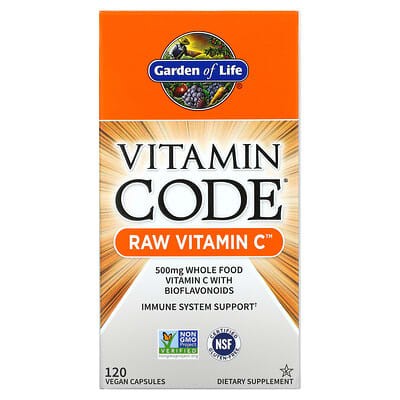
Nutrient quality
Yeast-derived vitamin C is a distinct food-based form, though no clear absorption advantage is established. The vitamin C amount is meaningful and well suited to routine supplementation.
.
 iHerb iHerb | $ 15.39 | |
 Pure Formulas Pure Formulas | $ 15.39 | |
 Walmart Walmart | $ 19.07 | |
 Vitacost Vitacost | $ 17.13 | |
| Vitacost | $ 17.13 |
Yeast-derived vitamin C supplies 500 mg, a practical amount for antioxidant and collagen support. A fruit and vegetable blend adds plant-based breadth, but individual ingredients and amounts are not stated.
The probiotic and enzyme blend is also presented only as a combined amount. Without strain counts, enzyme activities, or component doses, its practical contribution cannot be judged reliably.
Two capsules are needed per serving, and the formula is less efficient than straightforward vitamin C products. It best fits someone who values the whole-food theme more than detailed disclosure or dose economy.
Yeast-derived vitamin C is a distinct food-based form, though no clear absorption advantage is established. The vitamin C amount is meaningful and well suited to routine supplementation.
.Each top-level active blend has an amount, but internal ingredients are not itemized. A complete inactive ingredient list was not supplied.
.The available aggregate rating is strong for this category. No firsthand outcome details were supplied, so alignment with the intended use is uncertain.
.The food-based positioning does not fully justify the high serving cost or unclear blend depth. The product is less competitive than simpler vitamin C options on price versus disclosure.
.
A target-range vitamin C amount provides credible antioxidant and immune support. Fruit, vegetable, probiotic, and enzyme blends suggest broader support, but individual components and potencies are not disclosed.
The yeast-derived vitamin C source and total amount are clear. Proprietary blend totals do not establish effective doses for any additional immune pathway.

Yeast-derived vitamin C supplies a meaningful amount for antioxidant and collagen-supporting nutrition. The label also includes fruit, vegetable, probiotic, and enzyme blends.
Those blends broaden the formula but provide no individual amounts or clear evidence of meaningful general health contribution. The undisclosed blend details reduce transparency and make the formula less focused than a simple vitamin C product.

Vitamin C supports collagen synthesis and antioxidant defense, giving the formula a clear but narrow skin-health role. Yeast-derived vitamin C supplies a meaningful amount alongside fruit, vegetable, probiotic, and enzyme blends.
The blends do not disclose individual skin-active amounts and provide no clear delivery advantage. A single vitamin C product does not directly supply collagen peptides, barrier lipids, or dedicated hydration actives.
Vitamin C provides a useful antioxidant amount, while a fruit and vegetable blend may add complementary plant compounds. The yeast-derived source is clear, but no enhanced absorption benefit is established.
Individual ingredients and amounts in the plant and probiotic blends are not disclosed. The formula offers broader nutritional context without enough transparency to confirm meaningful anti-inflammatory coverage.
| Ingredient | Amount per serving |
|---|---|
Vitamin C (Saccharomyces cerevisiae) | 500 mg |
Raw Organic Fruit & Vegetable Blend | 720 mg |
Raw Probiotic & Enzyme Blend | 60 mg |
Yeast-derived vitamin C is clearly identified, but no enhanced delivery or buffered mineral form is shown. The 500 mg serving sits in the preferred dose range, although inactive ingredients are not supplied. Its cost per gram is high for a non-premium delivery system.
Published studies used for the product analysis and the top-ranked studies for each ingredient and goal.