Nutrient quality
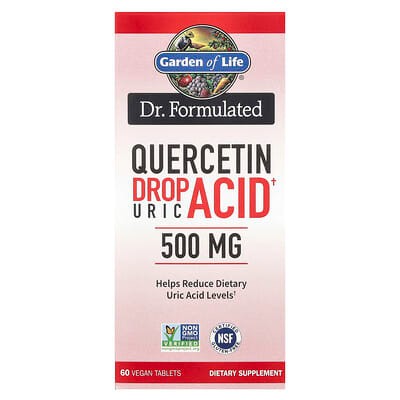
Plain ascorbic acid is basic, while quercetin, luteolin, and tart cherry broaden the antioxidant profile. Vitamin C and quercetin have substantial listed amounts, while the smaller additions provide secondary support.
.
 iHerb iHerb | $ 22.39 | |
 Pure Formulas Pure Formulas | $ 22.39 | |
 Vitacost Vitacost | $ 24.63 |
Vitamin C and quercetin are supplied at substantial amounts and form the clearest antioxidant core. Luteolin and tart cherry broaden plant-compound coverage, making the formula more targeted than a basic vitamin C tablet.
The named Bacillus subtilis DE111 strain is a useful disclosure, but no viable organism count is supplied. Tart cherry lacks standardization detail, and the specialized quercetin form is not fully explained in the supplied data.
The combination best fits people specifically interested in uric-acid and inflammatory-balance support rather than general nutrition. It offers meaningful ingredient breadth but less transparency than the headline amounts initially suggest.
Plain ascorbic acid is basic, while quercetin, luteolin, and tart cherry broaden the antioxidant profile. Vitamin C and quercetin have substantial listed amounts, while the smaller additions provide secondary support.
.Every listed active ingredient has a specific amount. A complete inactive ingredient list was not supplied.
.The available aggregate rating is strong for this category. No firsthand outcome details were supplied, so alignment with the intended use is uncertain.
.The broader antioxidant formula adds quality, but the serving cost remains high. The product is less competitive than simpler antioxidant formulas on serving value.
.
Vitamin C and quercetin provide complementary antioxidant and immune-signaling support at meaningful amounts. Luteolin, tart cherry, and a defined probiotic strain broaden the approach without creating an excessively crowded formula.
Vitamin C reaches the main target and quercetin is supplied at a substantial disclosed amount. Plain ascorbic acid is basic, while several companion ingredients lack active-marker or viability details.
Quercetin, luteolin, tart cherry, and vitamin C create a targeted antioxidant and inflammatory-signaling combination. The quercetin and vitamin C amounts are substantial, while luteolin adds a complementary flavonoid mechanism.
Tart cherry is modest and the specialized quercetin delivery details are not fully explained. The formula still offers strong depth and breadth for inflammatory balance, particularly where uric acid and oxidative stress are concerns.
No linked studies yet.

Vitamin C and quercetin provide antioxidant support that can contribute to general wellness. The disclosed vitamin C serving is meaningful, and the flavonoid blend has a clear theme.
The formula is primarily aimed at uric-acid support rather than broad foundational nutrition. Luteolin, tart cherry, and the probiotic add narrower evidence with limited relevance to everyday gap coverage.
Vitamin C, quercetin, luteolin, and tart cherry provide antioxidant support with an indirect connection to skin resilience. Vitamin C has an established collagen role, but skin-specific human evidence for the full uric-acid formula is limited.
Vitamin C and quercetin are substantial, while luteolin and tart cherry are secondary. The polyphenols are compatible, although the product is logically designed for uric acid rather than skin.
| Ingredient | Amount per serving |
|---|---|
Vitamin C (Ascorbic Acid) | 500 mg |
D.r.-Quercetin | 570 mg |
D.r.-Luteolin | 57 mg |
Tart Cherry Extract | 43 mg |
Bacillus subtilis DE111 | 5 mg |
Plain ascorbic acid provides no buffering or enhanced delivery advantage. The 500 mg serving is appropriate, while the supplied data does not identify inactive ingredients. The multi-ingredient formula carries a high cost when judged only by its vitamin C contribution.
Published studies used for the product analysis and the top-ranked studies for each ingredient and goal.