
Nutrient quality
Concentrated cruciferous extracts and marker-named rosemary support good form quality. The main cruciferous actives are meaningful, but the combined resveratrol amount is modest.
.
 Vitacost Vitacost | $ 24.03 | |
 Pure Formulas Pure Formulas | $ 24.00 | |
| Vitacost | $ 24.03 | |
 Amazon Amazon | $ 24.00 | |
 iHerb iHerb | $ 24.00 | |
| iHerb | $ 24.00 |
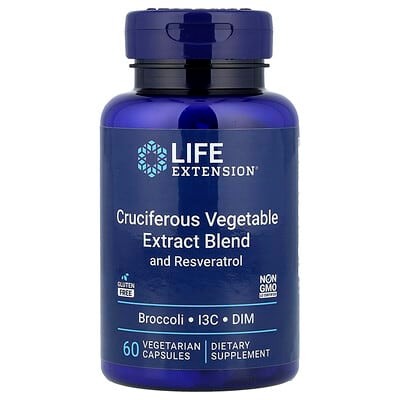
The capsule provides 400 mg of broccoli concentrate, 80 mg of I3C, 14 mg of DIM, 50 mg of rosemary extract, and 25 mg of apigenin. Grape and Japanese knotweed add a combined 40 mg of trans-resveratrol as a secondary component.
Named cruciferous compounds and resveratrol sources improve transparency, but the label does not separate raw extract weight from active yield consistently. Rosemary standardization percentages and knotweed purity details are also absent.
One capsule and reasonable cost make the blend practical. It is much stronger as a cruciferous product than as a resveratrol supplement.
Concentrated cruciferous extracts and marker-named rosemary support good form quality. The main cruciferous actives are meaningful, but the combined resveratrol amount is modest.
.Every supplied active ingredient has a specific amount. No proprietary blend hides a meaningful active dose.
.The supplied aggregate rating is strong, although no specific comments are included. The large rating count makes the aggregate result relatively stable.
.Formula quality provides reasonable support for the product positioning. Serving utility appears reasonable, while the formula avoids obvious low-value padding.
.| Ingredient | Amount per serving |
|---|---|
Broccoli super concentrate extract (Glucosinolates) | 400 mg |
l3C | 80 mg |
Watercress 4:1 extract | 50 mg |
Rosemary extract (Carnosic Acid/Carnosol, Diterpenic Compounds) | 50 mg |
Cat's Claw extract | 50 mg |
Apigenin | 25 mg |
Cabbage extract | 25 mg |
Trans-Resveratrol (Grape (fruit) extract, Japanese Knotweed extract) | 20 mg |
DIM | 14 mg |
The rosemary extract names key diterpene markers and uses a practical dry-capsule delivery. A clearly separated 50 mg amount reaches the target for a blend, although standardization percentages and the plant part are absent. Serving-level value is reasonable given the added cruciferous compounds and resveratrol.
The clearly disclosed apigenin amount is suitable for moderate support, but its purity and source are not specified. A standard vegetarian capsule offers conventional delivery without a dedicated absorption enhancer. The cost per active amount sits at the upper edge of the middle value range, while the added resveratrol broadens the formula beyond apigenin alone.
The blend clearly identifies trans-resveratrol from grape and Japanese knotweed, but the combined amount is very low and the capsule has no enhanced delivery technology. Extract weights, active yields, and purity percentages are not fully distinguished. The knotweed source lacks an emodin-free statement, so sensitive users could experience mild laxative effects from residual emodin.