Rosemary

botanical

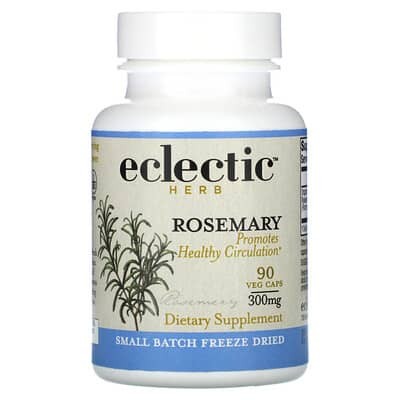
Rosemary (Rosmarinus officinalis) is an aromatic evergreen shrub from the Mediterranean, traditionally used as both a spice and a medicinal herb. Its characteristic fragrance and effects come from volatile oils and bioactive compounds like rosmarinic acid, carnosic acid, and various flavonoids. The herb is recognized for its potent antioxidant activity, which helps protect cells from oxidative damage. It also exhibits anti-inflammatory effects that may benefit multiple body systems. Research continues to explore its potential to support cognitive enhancement, including memory, concentration, and general brain function. In addition to internal use, rosemary is used in aromatherapy and topical applications to support hair growth and skin health. It remains a versatile botanical supported by both traditional use and modern research for its contributions to overall wellness.

Natural sources
Mediterranean region (native plant)Herbal teasCulinary spiceEssential oils

Ingredient forms

No public comparison lists found.

Timing & Intake
AnytimeWith food
Rosemary can be used as a culinary herb or tea throughout the day. When used as a supplement, it is often taken with meals to improve absorption and reduce potential digestive discomfort.
Optimal Dosage
Minimum500 mg
Maximum1500 mg
Safety & Toxicity
5 safety notes
  • Pregnant or breastfeeding women should avoid medicinal amounts of rosemary due to potential emmenagogue effects (can stimulate menstrual flow) and lack of sufficient safety data.
  • Individuals with bleeding disorders or those taking anticoagulant medications should use rosemary with caution, as high doses may have mild anticoagulant effects.
  • People with seizure disorders (e.g., epilepsy) should avoid high doses of rosemary, particularly essential oil, as it may exacerbate seizures.
  • Avoid consuming undiluted rosemary essential oil internally due to its potent concentration.
  • May cause allergic reactions in individuals sensitive to other Lamiaceae family plants.
Goals
Cognitive Support
Impact
Lower effect
Typical dose:500–1000 mg
While research on rosemary's components like carnosic acid shows promise in lab settings for antioxidant and anti-inflammatory effects, strong evidence from human trials on oral rosemary supplements demonstrating significant, reliable cognitive improvements is lacking. Most positive human studies involve aromatherapy, not ingestion.

Study evidence

8 studies

Rosemary shows preliminary potential to support selected aspects of memory and attention, but results vary with the preparation and setting. Some findings include slower performance or impairment, and lasting cognitive benefits from routine supplementation have not been established.

View goal

Anti-Inflammatory Support
Impact
Situational effect
Typical dose:500–1000 mg
Rosemary extract offers valuable polyphenol compounds that help reduce oxidative stress and inhibit some inflammatory enzymes. It is a beneficial supportive botanical but is not typically used as a primary agent for potent, systemic anti-inflammatory effects in the same way as curcumin or boswellia.

Study evidence

No published studies for this goal yet.

View goal
Stress Relief
Impact
Situational effect
Typical dose:200–500 mg
Rosemary contains compounds like rosmarinic acid that have neuroprotective and mild anxiolytic effects. While aromatherapy with rosemary oil is proven to lower cortisol, the evidence for oral supplementation in directly reducing felt stress is less robust than primary adaptogens, making it a situational choice for cognitive support during stress.

Study evidence

11 studies

Rosemary may ease anxiety or perceived stress in some settings, but the evidence is preliminary and inconsistent. Oral preparations and inhaled essential oils have been studied separately, and neither a universal calming effect nor reliable lowering of stress hormones is established.

View goal
Studies

Research connections will load here.
Interactions
Sources

Up to five highest-ranked published examples per goal. Study counts and charts include all published studies for the connection.

  1. Acute ingestion of rosemary water: Evidence of cognitive and cerebrovascular effects in healthy adults.
    Moss M; Smith E; Milner M; McCready J · Journal of psychopharmacology (Oxford, England) · 2019
    Randomized trial80 participantsCognitive Support
  2. Short-term study on the effects of rosemary on cognitive function in an elderly population.
    Pengelly A; Snow J; Mills SY; Scholey A; Wesnes K; Butler LR · Journal of medicinal food · 2012
    Randomized trial28 participantsCognitive Support
  3. The impact of a rosemary containing drink on event-related potential neural markers of sustained attention.
    Riby LM; Edwards S; McDonald H; Moss M · PloS one · 2023
    Non-randomized trial48 participantsCognitive Support
  4. The effect of rosemary hydroalcoholic extract on cognitive function and activities of daily living of patients with chronic obstructive pulmonary disease (COPD): A clinical trial.
    Momeni Safarabadi A; Gholami M; Kordestani-Moghadam P; Ghaderi R; Birjandi M · Explore (New York, N.Y.) · 2024
    Randomized trial77 participantsCognitive Support
  5. Effects of Rosmarinus officinalis L. on memory performance, anxiety, depression, and sleep quality in university students: A randomized clinical trial.
    Nematolahi P; Mehrabani M; Karami-Mohajeri S; Dabaghzadeh F · Complementary therapies in clinical practice · 2018
    Randomized trial68 participantsCognitive Support
  6. Safety and stress-reducing effects of rosemary extract: an open-label trial and randomized double-blind crossover study.
    Kuwata H; Ookoshi K; Shimazu K; Fukumitsu S; Aida K · Journal of clinical biochemistry and nutrition · 2025
    Randomized trial40 participantsStress Relief
  7. Comparing the effects of rosemary aromatherapy and music therapy on anxiety levels in patients undergoing general surgery: A randomized controlled clinical trial.
    Sayadi Mank-Halati M; Rezaei M; Farzaei MH; Khatony A · Explore (New York, N.Y.) · 2024
    Randomized trial236 participantsStress Relief
  8. Effects of Continuous Intake of Rosemary Extracts on Mental Health in Working Generation Healthy Japanese Men: Post-Hoc Testing of a Randomized Controlled Trial.
    Araki R; Sasaki K; Onda H; Nakamura S; Kassai M; Kaneko T; Isoda H; Hashimoto K · Nutrients · 2021
    Randomized trial21 participantsStress Relief
  9. Effects of Olfactory Stimulation with Aroma Oils on Psychophysiological Responses of Female Adults.
    Choi NY; Wu YT; Park SA · International journal of environmental research and public health · 2022
    Observational study23 participantsStress Relief
  10. Effects of visual and aromatic stimulations on the perception of five fundamental tastes.
    Itoh M; Kitagawa A; Ouchi H; Yamaguchi M; Watanabe R; Sone H; Kamiyama S · Bioscience, biotechnology, and biochemistry · 2022
    Non-randomized trial14 participantsStress Relief