
Nutrient quality
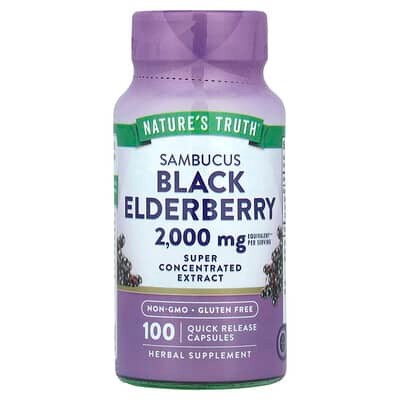
The elderberry amount is clear, but species, plant part, and extract quality are not identified. The supplied amount is substantial for focused use.
.
 iHerb iHerb | $ 12.06 | |
 Vitacost Vitacost | $ 13.27 | |
 Walmart Walmart | $ 9.97 | |
 Amazon Amazon | $ 9.97 |
A single elderberry active keeps the capsule formula simple and supplies a large stated amount. The long supply supports an uncomplicated daily routine.
The label does not identify Sambucus species, fruit part, or whether the amount represents raw powder or an extract equivalent. Without a concentration ratio or active marker, a large milligram figure does not fully establish extract potency.
The product suits value-focused adults who want a high listed amount in capsules. Ingredient-quality shoppers may prefer a smaller but precisely characterized Sambucus nigra fruit extract.
The elderberry amount is clear, but species, plant part, and extract quality are not identified. The supplied amount is substantial for focused use.
.The main active amounts are clearly listed, making the core formula possible to assess. Intake directions, non-active ingredients, and some botanical-quality details are absent from the supplied data.
.The supplied average is very strong and the response volume is very large. No detailed feedback is provided to assess recurring complaints or fit with the intended purpose.
.The serving may be economical, but incomplete botanical verification limits confidence in value. The formula compares favorably with many category alternatives.
.
The 1,000 mg elderberry amount is substantial and directly aligned with seasonal immune support. A single-botanical design avoids token amounts of unrelated herbs.
The label does not identify Sambucus species, fruit part, extract ratio, or anthocyanin standardization. Quantity is strong, but those omissions make potency and batch consistency difficult to predict.
| Ingredient | Amount per serving |
|---|---|
Sambucus Black Elderberry | 1000 mg |
The large disclosed elderberry amount reaches the high-potency range and is very cost efficient. The label does not identify a species, fruit part, extract, or standardization marker. Quantity is strong, but the unclear botanical form makes quality harder to judge.
Published studies used for the product analysis and the top-ranked studies for each ingredient and goal.