
Nutrient quality
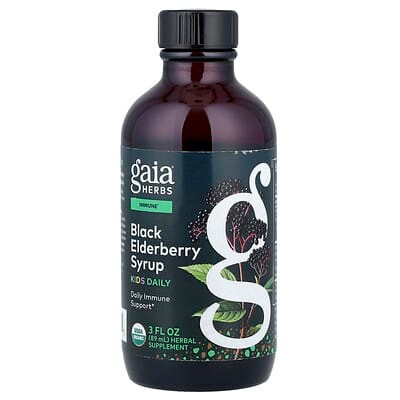
The older-child serving provides a substantial elderberry amount, while acerola adds modest support. The formula is simple and sensible, though marker yields and acerola species are not disclosed.
 Amazon Amazon | $ 19.79 | |
 Pure Formulas Pure Formulas | $ 19.79 | |
 Vitacost Vitacost | $ 19.79 | |
 iHerb iHerb | $ 19.79 | |
 Walmart Walmart | $ 19.79 | |
| Vitacost | $ 19.79 |
The formula lists 476 mg or 951 mg of Sambucus nigra concentrate and 50 mg or 101 mg of acerola, apparently for different child age groups. That design can accommodate age-based dosing, but the supplied data do not identify which amount belongs to which child.
Elderberry is clearly the main ingredient and acerola is a logical companion. Neither anthocyanin content nor vitamin C yield is standardized, so the exact active potency remains uncertain.
A liquid can be easier for children than capsules or gummies. Correct age-specific measurement is essential because the older-child amounts are roughly double the smaller serving.
The older-child serving provides a substantial elderberry amount, while acerola adds modest support. The formula is simple and sensible, though marker yields and acerola species are not disclosed.
Age-based amounts are listed for both active fruit ingredients with no hidden blend. Complete directions, inactive ingredients, and active-marker yields remain unavailable.
The aggregate rating is strong, and the very large review count makes it stable. No detailed feedback is supplied, so repeated complaints and purpose fit cannot be judged.
A substantial older-child elderberry serving and a simple design support quality. Reasonable serving economics offset the missing standardization details.
Identified Sambucus nigra fruit juice concentrate provides focused seasonal immune support with clearly listed age-based amounts. The older-child serving reaches a high active weight, while acerola adds a small related fruit extract.
The concentrate lacks an extract ratio or anthocyanin standardization, so potency may vary. Caregivers should follow the labeled age-specific serving because the younger- and older-child doses differ substantially.
| Ingredient | Amount per serving |
|---|---|
Calories | 10 Calorie(s) |
Total Carbohydrates | 2 Gram(s) |
Black Elderberry (Sambucus nigra) fruit juice concentrate | 476 mg |
Acerola fruit extract | 50 mg |
Sambucus nigra fruit juice concentrate is precisely identified and delivers a high amount at the older-child serving. Different age-based servings provide different amounts, so caregivers should follow the labeled dose. Marker standardization is absent, but active-weight value remains excellent.
Acerola serves as a secondary fruit extract in an elderberry syrup, with the amount changing by age-based serving. Neither its botanical species nor its vitamin C yield is supplied. The older-child serving reaches a modest dose, but acerola-specific cost efficiency remains weak.
Published studies used for the product analysis and the top-ranked studies for each ingredient and goal.