Nutrient quality
The ingredients align well with metabolic support and several amounts are meaningful. Incomplete extract standardization and additive glucose-lowering effects limit confidence and safety.
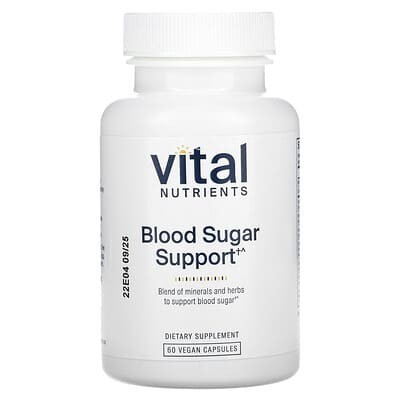
.
 Pure Formulas Pure Formulas | $ 33.99 | |
 iHerb iHerb | $ 33.99 |
Chromium at 500 mcg and vanadium at 250 mcg provide substantial mineral support for glucose-related pathways. Holy basil and fenugreek each reach 400 mg, with ginseng, cinnamon, and gymnema adding breadth.
Most botanicals lack active-marker standardization, so potency is less certain than the listed weights suggest. Biotin reaches 4.5 mg, a high amount unrelated to most glucose goals.
The formula may fit users tracking carbohydrate handling with professional guidance. It is not a direct fat-loss product, and combining several glucose-lowering agents requires careful monitoring.
The ingredients align well with metabolic support and several amounts are meaningful. Incomplete extract standardization and additive glucose-lowering effects limit confidence and safety.
.Individual active weights are disclosed without a hidden blend. Missing extract potency, full directions, and inactive ingredients prevent complete evaluation.
.The average customer rating is very strong. A modest rating base limits confidence in the average, while specific review experiences were not supplied.
.The broad metabolic formula offers several relevant actives. High serving cost and incomplete botanical potency make it weak value.
.Chromium, fenugreek, holy basil, gymnema, cinnamon, ginseng, and vanadium create a strong glucose-control formula. The product is more focused on insulin sensitivity and carbohydrate handling than on thermogenesis, but that pathway is directly relevant to the selected goal.
Chromium is strongly dosed in a useful form, and several botanicals reach meaningful amounts. Chromium, vanadium, gymnema, and related ingredients may add to glucose-lowering medicines and increase the risk of low blood sugar.

Chromium, fenugreek, gymnema, cinnamon, and other botanicals may support glucose regulation, which is only an indirect weight-management pathway. Human evidence for meaningful weight loss from the combination is mixed and less convincing than evidence for fiber, protein, or caffeine.
Chromium polynicotinate has a clear useful amount, while several botanicals also have disclosed totals. Missing active-marker standardization for the plant extracts limits potency assessment despite reasonable dosing. Gymnema, fenugreek, ginseng, chromium, and vanadium may add to glucose-lowering medicines and increase the risk of low blood sugar.
| Ingredient | Amount per serving |
|---|---|
Biotin | 4.5 mg |
Chromium (Chromium Polynicotinate) | 500 mcg |
American Ginseng root extract | 225 mg |
Holy Basil leaf extract | 400 mg |
Fenugreek | 400 mg |
Gymnema sylvestre leaf extract | 100 mg |
Cinnamon | 200 mg |
Vanadium (Vanadium Citrate) | 250 mcg |
Chromium polynicotinate provides a well-absorbed organic source, though no trademarked supplier is identified. The 500 mcg amount fits the target range, but a single label value leaves elemental yield and compound weight ambiguous. Companion value from a substantial vanadium amount improves an otherwise moderate standardized chromium cost.
Vanadium citrate provides moderate form quality at the upper edge of the preferred 250 mcg range. Elemental labeling is clear, but the supplied information lacks manufacturing or independent testing signals. Vanadium at this dose may add to glucose-lowering medicines and increase low-blood-sugar risk.
Fenugreek is present at a modest amount, but the label does not identify it as a standardized extract or disclose active markers. The dry capsules include no absorption enhancer, and the amount is low for whole-seed use. A high serving cost further weakens its fit as a dedicated fenugreek option.
Published studies used for the product analysis and the top-ranked studies for each ingredient and goal.