
Nutrient quality
The precursor form requires conversion. The very high amount creates a meaningful nerve-symptom risk with prolonged daily use.
.
 iHerb iHerb | $ 7.67 | |
 Vitacost Vitacost | $ 7.67 |
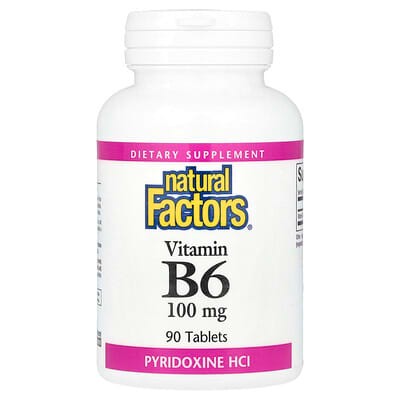
The tablet provides one clearly stated vitamin B6 active with simple once-per-serving use. It is easy to compare with other pyridoxine products.
The form must be converted into an active coenzyme after ingestion. At 100 mg, the amount is also high enough to make prolonged daily use a specific nerve-safety concern.
Good value cannot compensate for an unnecessarily large serving. Most users seeking routine support should choose a lower amount.
The precursor form requires conversion. The very high amount creates a meaningful nerve-symptom risk with prolonged daily use.
.Active names and amounts are clearly stated, with no hidden proprietary dose. Complete intake directions and a full inactive-ingredient list are not included in the supplied data.
.Supplied satisfaction metrics indicate a strong result with a meaningful response pool. Detailed experience themes are absent, so recurring complaints and real-world purpose fit remain uncertain.
.Serving value appears favorable relative to the disclosed form and amount. The focused formula avoids low-value extras.
.| Ingredient | Amount per serving |
|---|---|
Vitamin B6 (Pyridoxine Hydrochloride) | 100 mg |
Pyridoxine hydrochloride is a less direct B6 form and no riboflavin cofactor is listed. The 100 mg dose reaches the stated chronic-use safety ceiling, so routine long-term use raises a product-specific neuropathy concern. A single tablet is convenient and economically efficient.