
Nutrient quality
A basic mushroom powder lacks extract concentration, fruiting-body source, and beta-glucan standardization. The mushroom amount may contribute, but missing concentration details limit confidence in potency.
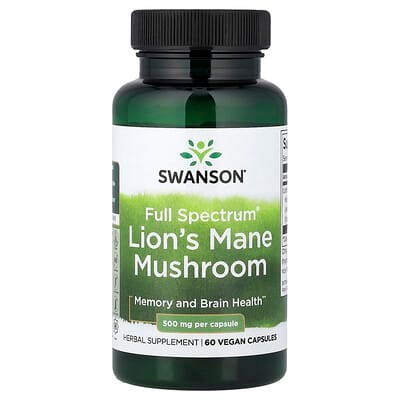
 Walmart Walmart | $ 10.77 | |
 iHerb iHerb | $ 15.39 | |
 Amazon Amazon | $ 14.79 | |
| iHerb | $ 13.79 | |
| iHerb | $ 15.39 |
The single-ingredient capsule supplies a moderate lion's mane amount without unrelated additions. It is positioned for continued cognitive support rather than an immediate alertness effect.
The label gives no mushroom-part or extraction information. Missing beta-glucan and substrate details make the active strength difficult to judge.
Low serving cost makes the formula accessible for routine use. Users seeking better potency assurance should choose a standardized fruiting-body extract.
A basic mushroom powder lacks extract concentration, fruiting-body source, and beta-glucan standardization. The mushroom amount may contribute, but missing concentration details limit confidence in potency.
A specific mushroom amount is supplied. No proprietary blend hides the active quantity.
The supplied aggregate rating metric is favorable, though it gives no specific experience details. The very large response count makes the aggregate metric highly stable.
Formula quality compares well with the cost. The serving cost is exceptionally low for the disclosed mushroom amount.

Lion’s mane is directly relevant to nerve growth signaling and may support cognitive resilience. The disclosed amount provides a moderate single-ingredient serving.
Full-spectrum wording does not reveal extraction, beta-glucan content, or whether grain substrate is present. Those gaps make the active-compound strength and likely absorption difficult to judge.

Lion's Mane is directly relevant to long-term neural support and memory, although human evidence remains more limited than for established core nootropics. The 500 mg serving provides moderate material rather than an exceptionally concentrated dose.
Full-spectrum wording does not clarify fruiting body, mycelium, extraction, or beta-glucan yield. Those omissions make absorption and active potency difficult to predict despite the focused formula.

Lion’s mane has a plausible long-term nerve-support role, but evidence for sharper attention in healthy adults is still developing. It is not an acute alertness ingredient and should not be expected to work like a stimulant.
The amount is modest for a full-spectrum mushroom product, and beta-glucan content or extraction details are not disclosed. The simple single-ingredient formula is coherent, though potency cannot be judged confidently from the label.

Lion’s mane offers a plausible route to cognitive maintenance and mental clarity without stimulation. The 500 mg amount is moderate, but missing extraction, fruiting-body, and beta-glucan details make active potency uncertain.
The clean single-ingredient formula is easy to assess yet covers only one productivity pathway. Human evidence remains promising rather than conclusive, especially for an unstandardized full-spectrum material.
| Ingredient | Amount per serving |
|---|---|
Lion's Mane Mushroom | 500 mg |
The 500 mg serving reaches a moderate lion's mane dose and comes at a low cost. Full-spectrum wording suggests broad mushroom material, but the label does not clarify extraction, beta-glucan content, or grain substrate. Those omissions make active-compound quality and absorption difficult to judge.
Published studies used for the product analysis and the top-ranked studies for each ingredient and goal.