
Nutrient quality
Large protein and carbohydrate amounts suit intentional mass gain. An aggressive energy load, high sodium, and weak alignment with several listed goals reduce suitability.
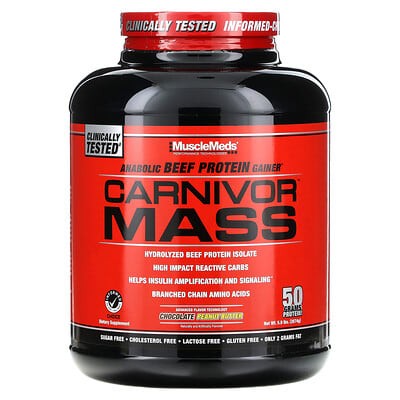
.
 iHerb iHerb | $ 56.42 |
The mass gainer delivers a large calorie load with substantial protein and carbohydrates in one serving. That composition can help users who struggle to eat enough for weight gain or high-volume training.
Sodium is substantial and may help replace heavy sweat losses, while potassium is modest and its form is not named. Chromium uses a branded yeast matrix, but the active yield and elemental interpretation are not fully clear.
The formula is poorly aligned with weight loss or routine heart support because the carbohydrate load is very high. Buyers seeking protein, electrolytes, or chromium alone can find more focused and economical products.
Large protein and carbohydrate amounts suit intentional mass gain. An aggressive energy load, high sodium, and weak alignment with several listed goals reduce suitability.
.Some core nutrition amounts are clear enough to evaluate. Missing complete ingredients, use directions, or blend details create meaningful gaps.
.Aggregate satisfaction data are favorable. Specific firsthand comments were not supplied, leaving repeated complaints and purpose fit uncertain.
.Formula weaknesses limit value for routine use. Better-balanced or more transparent alternatives are likely to be more practical.
.
A large serving of protein and carbohydrate directly supports calorie intake, muscle repair, and glycogen replacement during mass-gain training. Protein and carbohydrate nutrition is well established for recovery and weight gain.
The serving is highly calorie dense and the protein source is not identified in the supplied facts. Athletes should match the large carbohydrate and sodium load to their energy needs rather than treat it as a general-purpose recovery drink.
| Ingredient | Amount per serving |
|---|---|
Calories | 715 {Calories} |
Total Fat | 2 Gram(s) |
Cholesterol | 5 mg |
Total Carbohydrates | 125 Gram(s) |
Protein | 50 Gram(s) |
Chromium (Chromium 454(R) Bio-Organic Yeast Matrix) | 200 mcg |
Sodium | 600 mg |
Potassium | 165 mg |
The sodium amount suits athletic replenishment, but the source is undisclosed and the potassium form is not identified. No magnesium, trace-mineral complex, or buffering compound is shown, while the very high carbohydrate load may be impractical during many workouts. The serving is costly as an electrolyte source, although the mass-gainer format includes substantial non-electrolyte nutrition.
The branded yeast matrix has traceable sourcing, though yeast-based chromium can vary in active content. The disclosed 200 mcg amount fits the standard metabolic-support range, although the label does not distinguish elemental weight from compound weight. Most of the serving cost reflects a mass-gainer formula rather than chromium quality, so chromium-specific cost efficiency remains poor after normalizing to a standard amount.
No potassium compound is named, leaving form quality and bioavailability uncertain. The 165 mg serving is moderate but falls well short of a high-potency potassium dose. A very high serving cost makes it inefficient for potassium supplementation.
Published studies used for the product analysis and the top-ranked studies for each ingredient and goal.