


Astaxanthin Supportive
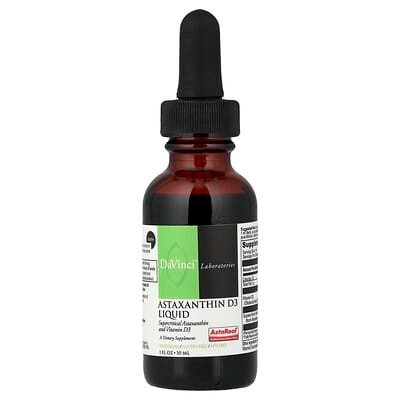
$44.64 $1.48 per serving
Product analysis
DaVinci Laboratories Astaxanthin D3 Liquid combines antioxidant and immune support with 4 mg of algae-derived astaxanthin and 125 mcg of vitamin D3 per 1 mL. The vitamin D amount exceeds the adult daily upper intake limit, making it important to check whether the serving is suitable before routine use.
AI assessment of the formula, label and price. How scoring works
Nutrient Quality68
The liquid uses a favorable form of vitamin D3 and names the microalgae source of its astaxanthin. The vitamin D amount is high, while the quality of the astaxanthin preparation and unspecified fat remains uncertain.
Ingredient Transparency81
The amounts and forms of the two main ingredients are disclosed. Total fat and calories are also declared, though their specific forms or sources are less clear.
Value For Money47
Vitamin D3 offers moderate value when judged by the serving price. Astaxanthin is expensive for the amount the liquid supplies.
Customer Satisfaction74
Customers rate the liquid highly, averaging 4.9 out of 5. Only 19 ratings contribute to that average.
Product Focus68
The formula's clearest roles are vitamin D nutrition and antioxidant support, with more modest fit for several other intended uses. The unusually high vitamin D amount does not imply greater benefit.
- Format
Liquid - Container
- 1 Liquid(s)
- Per serving
- $1.48
- Customer rating
- 4.9 · 19 ratings
Goals

Impact
Moderate effect
Astaxanthin · 4 mg
Astaxanthin D3 Liquid may offer modest support for the skin’s response to UV-related stress. Its 4 mg astaxanthin serving matches the amount linked to limited human evidence over sustained use, making astaxanthin the ingredient that explains its skin-health fit.

Impact
High effect
Vitamin D · 125 mcgAstaxanthin · 4 mg
Astaxanthin D3 Liquid has a limited, partly unquantifiable fit for inflammation support. Vitamin D3 at 125 mcg has inconsistent inflammatory-marker findings, so a larger amount does not imply a larger benefit. Astaxanthin has a narrow inflammatory-marker signal, but its undisclosed amount prevents a useful dose comparison.
Vitamin D Supportive
Astaxanthin Supportive

Impact
High effect
Vitamin D · 125 mcgAstaxanthin · 4 mg
Astaxanthin D3 Liquid combines a limited skin-aging connection with vitamin D support. Astaxanthin at 4 mg supplies an antioxidant with preparation-specific evidence for maintaining selected skin measures, although the amount is below the exposure behind that evidence. Vitamin D3 at 125 mcg supports muscle function when deficiency is present; its higher amount does not imply a larger functional benefit.
Vitamin D Supportive
Astaxanthin Supportive

Impact
High effect
Astaxanthin · 4 mg
Astaxanthin D3 Liquid is a limited option for visual-display support. Its 4 mg of Haematococcus-derived astaxanthin is the ingredient most relevant to focusing-related support, although benefit at this amount is uncertain. The formula also supplies 125 mcg of vitamin D3, whose supplied eye-health evidence adds little to the case for choosing it for this goal.
Vitamin D Disputed
Astaxanthin Mixed

Impact
Moderate effect
Vitamin D · 125 mcgAstaxanthin · 4 mg
Vitamin D Mixed
Astaxanthin Supportive

Impact
High effect
Vitamin D · 125 mcgAstaxanthin · 4 mg
Astaxanthin D3 Liquid has a limited direct fit for cognitive support. Its 4 mg astaxanthin has an antioxidant rationale, but the supplied cognitive findings do not show a clear advantage over placebo. Vitamin D3 at 125 mcg supports vitamin D intake; its cognitive relevance depends on a separate deficiency question rather than a reliable enhancement effect.
Vitamin D Supportive
Astaxanthin Mixed
Ingredients
| Ingredient | Amount per serving | Score |
|---|---|---|
Calories | 10 Calorie(s) | |
Total Fat | 1 Gram(s) | |
Vitamin D3 (Cholecalciferol) | 125 mcg | |
Supercritical extracted Astaxanthin (Haematococcus pluvialis) | 4 mg |
Astaxanthin (Haematococcus pluvialis) · 4 mg OverallScore65
DaVinci Laboratories Astaxanthin D3 Liquid provides 4 mg of astaxanthin per serving, an amount used in human studies, at $0.338 per mg of astaxanthin, which is poor value. The whole formula costs $1.35 per serving. Haematococcus pluvialis microalgae is the named source. A stabilizer is indicated, but packaging protection is unknown.
Alternative products
Report alternatives
Sources
Published studies used for the product analysis and the top-ranked studies for each ingredient and goal.
- Astaxanthin, a natural antioxidant, lowers cholesterol and markers of cardiovascular risk in individuals with prediabetes and dyslipidaemia.
- Antioxidant Lipid Supplement on Cardiovascular Risk Factors: A Systematic Review and Meta-Analysis.
- Administration of natural astaxanthin increases serum HDL-cholesterol and adiponectin in subjects with mild hyperlipidemia.
- Effects of Astaxanthin Supplementation on Glycemic Control and Lipid Profile in Patients With Prediabetes and Type 2 Diabetes: A Meta-Analysis of Randomized Controlled Trials.
- Astaxanthin Supplemented with High-Intensity Functional Training Decreases Adipokines Levels and Cardiovascular Risk Factors in Men with Obesity.
- Comparative Efficacy of Nutraceuticals on Endothelial Function: A Systematic Review and Network Meta-Analysis.
- A Randomized Trial of Vitamin D Supplementation on Vascular Function in CKD.
- Randomized, placebo-controlled, double-blind clinical trial on the contributions of vitamin D in the control of cardiovascular risk factors, depressive symptoms and suicide risk.
- Dose responses of vitamin D3 supplementation on arterial stiffness in overweight African Americans with vitamin D deficiency: A placebo controlled randomized trial.
- Paricalcitol and endothelial function in chronic kidney disease trial.
- Effects of astaxanthin-rich Haematococcus pluvialis extract on cognitive function: a randomised, double-blind, placebo-controlled study.
- Effect of astaxanthin-rich extract derived from Paracoccus carotinifaciens on cognitive function in middle-aged and older individuals.
- The Effects of Astaxanthin on Cognitive Function and Neurodegeneration in Humans: A Critical Review.
- Effects of Astaxanthin Supplementation on Fatigue, Motor Function and Cognition: A Meta-Analysis of Randomized Controlled Trials.
- Astaxanthin and improvement of dementia: A systematic review of current clinical trials.
- The impact of vitamin D food fortification and health outcomes in children: a systematic review and meta-regression.
- Vitamin D Supplementation Improves Cognitive Function Through Reducing Oxidative Stress Regulated by Telomere Length in Older Adults with Mild Cognitive Impairment: A 12-Month Randomized Controlled Trial.
- Effects of vitamin D supplementation on cognitive function and blood Aβ-related biomarkers in older adults with Alzheimer's disease: a randomised, double-blind, placebo-controlled trial.
- Dietary vitamin D intake and 2-year changes in cognitive function in older adults with overweight or obesity and metabolic syndrome.
- Gestational vitamin D concentration and child cognitive development: a longitudinal cohort study in the Environmental influences on Child Health Outcomes Program.