
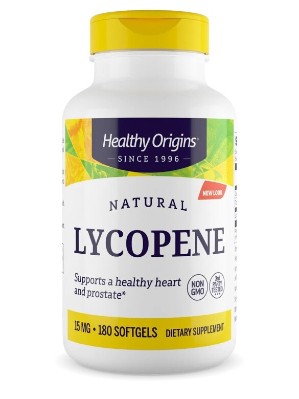

$29.99 $0.33 per serving


Product analysis
Lycopene 15 mg combines a lycopene extract with vitamins A and E, but the extract amount does not confirm how much active lycopene a serving provides. Checking that amount matters when comparing it with alternatives for heart health.
AI assessment of the formula, label and price. How scoring works
Nutrient Quality38
The vitamin A and E forms are identified, but their relative quality remains uncertain. The lycopene preparation is unspecified, which further limits comparison.
Ingredient Transparency88
Amounts are listed for the named ingredients, and the vitamin forms are disclosed. The lycopene preparation is not identified, and the extract amount does not confirm its active lycopene content.
Value For Money47
The lycopene price comparison appears favorable, but its active amount needs clarification. The vitamins cannot be judged reliably for value, so the full formula remains difficult to compare.
Customer Satisfaction72
Several hundred customers give generally positive feedback. Those opinions do not establish a benefit for heart health.
Product Focus30
The intended heart-health role is difficult to judge because the active lycopene amount is unresolved. The accompanying vitamin E amount does not establish sufficient support for that purpose.
- Format
Softgel - Container
- 180 Softgel(s)
- Per serving
- $0.33
- Customer rating
- 4.5 · 373 ratings
Goals

Impact
Situational effect
Vitamin E · 3.2 mgLycopene · 200 mg
The label facts identify 200 mg Lyc-O-Mato extract, but they do not show how much active lycopene is present per serving; the product title's 15 mg cannot be confirmed from this record. With that amount unresolved, the formula has no confirmed pathway coverage or effective amount for this goal. Vitamin E is listed at 3.2 mg, below its comparison amount.
How this product is rated for Cardiovascular Support
Ingredient fit43
The lycopene-related ingredient fits the goal, but vitamin A is off-goal and the active amount remains unclear.
Goal fit
The formula is linked to only two goals, though vitamin A is an off-goal active.
Dose adequacy
The label facts give extract mass but no normalized active lycopene amount, leaving its dose unknown.
Pathways0
No cardiovascular pathway receives enough confirmed contribution from the available ingredient facts.
Depth
None of the listed pathways has confirmed coverage from an effective amount.
Breadth
No pathway reaches the level needed to count toward the breadth target.
Evidence0
The lycopene amount cannot be established, so no ingredient is confirmed at an effective dose in a studied preparation.
Evidence strength
No credited ingredient reaches the amount needed to count as effective in this comparison.
Studied preparation
No ingredient is both at an effective dose and confirmed in a studied preparation.
Formulation logic75
No partner or conflict issue is identified, but the lycopene amount does not clear the effective-dose cutoff.
Partner coverage
The credited ingredient works alone or has its required partner.
Conflicts
No matched ingredient conflicts appear in the supplied facts.
Effective doses
The lycopene amount per serving is unknown, so it cannot meet the comparison amount.

Impact
Situational effect
Lycopene · 200 mgVitamin E · 3.2 mg
Ingredients
| Ingredient | Amount per serving | Score |
|---|---|---|
Vitamin A (Beta-Carotene) | 111 mcg RAE | |
Vitamin E (D-Alpha-Tocopherol) | 3.2 mg | |
Lyc-O-Mato | 200 mg |
Lycopene · 200 mg OverallScore100
The two-softgel serving provides 30 mg of active lycopene, distinct from the listed 200 mg preparation. The whole-product cost works out to about $0.11 per 10 mg of active lycopene, a low price for the quantity delivered.
How this ingredient is rated
Composition and Label Disclosure
Lyc-O-Mato is mentioned in the preparation details, but the saved evaluation does not assess source quality or absorption.
Composition and Label Disclosure100
The 30 mg active lycopene amount is available separately from the 200 mg preparation weight, keeping the ingredient quantity clear.
Declared Active Lycopene Amount
The saved facts identify 30 mg of active lycopene per serving; the 200 mg preparation weight is a different quantity.
Commercial Price and Usability100
The whole-product price works out to about $0.11 per 10 mg of active lycopene, a low ingredient-based cost.
Whole-Product Cost per 10 mg Declared Active Lycopene
The whole-product price works out to about $0.11 per 10 mg of active lycopene, a low ingredient-based cost.
Alternative products
Report alternatives
Sources
Published studies used for the product analysis and the top-ranked studies for each ingredient and goal.
- Effects of lycopene intake on HDL-cholesterol and triglyceride levels: A systematic review with meta-analysis.
- Improvement of vascular endothelial function by intake of lycopene-rich tomato juice in healthy adults: a randomized, placebo-controlled, double-blind, parallel-group comparative study.
- Tomato and lycopene supplementation and cardiovascular risk factors: A systematic review and meta-analysis.
- Lycopene and tomato and risk of cardiovascular diseases: A systematic review and meta-analysis of epidemiological evidence.
- Lycopene and risk of cardiovascular diseases: A meta-analysis of observational studies.
- Supplementation with vitamin E alone is associated with reduced myocardial infarction: a meta-analysis.
- Vitamin E ameliorates blood cholesterol level and alters gut microbiota composition: A randomized controlled trial.
- Effects of long-term vitamin E supplementation on cardiovascular events and cancer: a randomized controlled trial.
- Independent and combined associations of dietary antioxidant exposure with all-cause and cause-specific mortality in the general population.
- Tocotrienol rich fraction supplementation improved lipid profile and oxidative status in healthy older adults: A randomized controlled study.
- Systemic and skin-targeting beneficial effects of lycopene-enriched ice cream: A pilot study.
- Topical lycopene emulgel significantly improves biophysical parameters of human skin.
- Supplementation with tomato-based products increases lycopene, phytofluene, and phytoene levels in human serum and protects against UV-light-induced erythema.
- Association of Vitamin A Intake With Cutaneous Squamous Cell Carcinoma Risk in the United States.
- β-Carotene and other carotenoids in protection from sunlight.
- Efficacy and Tolerability of Topical 0.1% Stabilized Bioactive Retinol for Photoaging: A Vehicle-Controlled Integrated Analysis.
- Tensile properties and contours of aging facial skin. A controlled double-blind comparative study of the effects of retinol, melibiose-lactose and their association.
- Antiaging action of retinol: from molecular to clinical.
- An Updated Review of Topical Tretinoin in Dermatology: From Acne and Photoaging to Skin Cancer.
- Novel Cyclized Hexapeptide-9 Outperforms Retinol Against Skin Aging: A Randomized, Double-Blinded, Active- and Vehicle-Controlled Clinical Trial.