
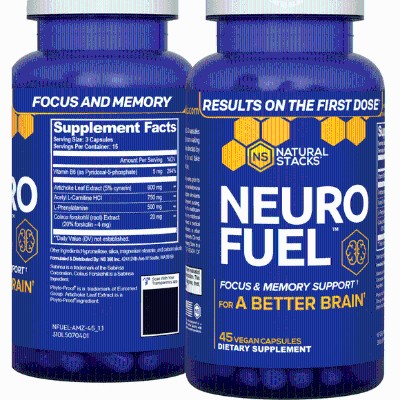

$23.95 $1.19 per serving

Product analysis
Ciltep combines ingredients involved in normal brain function and energy use. Better everyday focus in healthy adults remains uncertain, so it may not meet expectations for a noticeable mental boost.
AI assessment of the formula, label and price. How scoring works
Nutrient Quality28
Some ingredient forms are identified, but that does not establish their quality or absorption. Phenylalanine and acetyl L-carnitine also lack clear form details.
Ingredient Transparency85
Individual ingredient amounts are stated, helping you compare doses. Two ingredient forms are not identified, making comparisons of those ingredients less clear.
Value For Money38
The formula is expensive for the phenylalanine it provides, while acetyl L-carnitine offers middling value. Vitamin B6 value is uncertain, so the combination has a mixed value picture.
Customer Satisfaction75
Customer ratings are very positive. Several hundred ratings provide a useful picture of satisfaction, though they do not establish better focus.
Product Focus61
The formula targets several brain, energy and related goals. Its ingredients support normal body functions, but extra focus or productivity in healthy adults is not established.
- Format
Capsule - Container
- 60 Capsule(s)
- Per serving
- $1.19
- Customer rating
- 4.6 · 514 ratings
Goals

Impact
Moderate effect
Acetyl L-Carnitine · 750 mgAcetyl L-Carnitine · 750 mg
B6 supports the normal production of nerve messengers. Acetyl L-carnitine has a proposed role in cellular energy, but the supplied clinical findings do not transfer to routine work in healthy adults. Together, these ingredients offer no established additional productivity benefit for adults whose nutrient needs are already met.
How this product is rated for Productivity Boost
Ingredient fit54
Several nutrients contribute to the saved findings, but the wider formula is less focused on productivity.
Goal fit
Several nutrients contribute to the saved findings, but the wider formula is less focused on productivity.
Dose adequacy
The relevant amounts meet the saved minimum for inclusion but provide uneven support against the amount benchmarks.
Pathways40
Acetyl L-carnitine supplies the saved brain-energy connection, although the clinical evidence does not transfer to routine productivity. Only one assessed process has substantial coverage, so the findings remain narrow.
Depth
Acetyl L-carnitine supplies the saved brain-energy connection, although the clinical evidence does not transfer to routine productivity.
Breadth
Only one assessed process has substantial coverage, so the findings remain narrow.
Evidence67
Acetyl L-carnitine leads the saved evidence comparison, but its clinical evidence is not transferable to healthy adults doing ordinary work.
Evidence strength
Acetyl L-carnitine leads the saved evidence comparison, but its clinical evidence is not transferable to healthy adults doing ordinary work.
Studied preparation
The included ingredient preparations are accepted in the saved findings; that recognition does not establish better work performance or superiority of a nutrient form.
Formulation logic100
The included ingredients have no required partner missing, and no assessed conflict was found.
Partner coverage
Each included ingredient can contribute without a missing required partner.
Conflicts
No assessed ingredient conflict was found in the supplied facts.
Effective doses
All included ingredients' amounts reach the saved minimum for inclusion, which is not a universal effective productivity dose.

Impact
High effect
Acetyl L-Carnitine · 750 mg
Acetyl L-carnitine has roles in cellular energy and acetylcholine biology. Those mechanisms do not establish better acute focus in healthy adults, and the supplied clinical context concerns a different population and prolonged use. Its inclusion in the saved findings therefore should not be read as demonstrated everyday concentration enhancement.
How this product is rated for Mental Focus
Ingredient fit65
Acetyl L-Carnitine, Vitamin B6, Phenylalanine underpin this product’s connection to focus. Some amounts provide only a partial match to the saved comparison ranges.
Goal fit
The formula includes ingredients aimed at other purposes, so its focus connection is less concentrated.
Dose adequacy
The included amounts only partly meet the saved reference ranges for the relevant ingredients.
Pathways50
The main mapped contribution is cerebral energy supply. The mechanism alone does not establish an acute focus benefit.
Depth
Cerebral energy supply is the strongest mapped route, with partial coverage. That biological connection does not itself demonstrate acute focus improvement.
Breadth
The meaningful mapped contribution is concentrated in one route, with limited breadth across other aspects of focus.
Evidence81
The supplied evidence is limited for immediate everyday focus, despite the biological roles reflected in the saved findings.
Evidence strength
The leading ingredient supplies the evidence finding, but the supplied science does not establish routine acute focus enhancement.
Studied preparation
Preparation matching is incomplete for phenylalanine.
Formulation logic100
The included ingredients have no identified configured conflict. No required partner is missing.
Partner coverage
No required partner is missing for the included ingredients.
Conflicts
No configured ingredient conflict was identified in the supplied findings.
Effective doses
The included ingredients meet the saved minimum amount threshold; that threshold is not a demonstrated effective dose for acute focus.

Impact
Moderate effect
Acetyl L-Carnitine · 750 mg
Vitamin B6 helps your body process protein and stored carbohydrate. Acetyl L-carnitine is connected with fatty-acid transport, but that role doesn't mean taking extra increases the energy you burn at rest or throughout the day. Whether this combination raises metabolic rate when nutrient needs are already met is unclear.
How this product is rated for Metabolism Support
Ingredient fit62
Acetyl L-Carnitine and Vitamin B6 have roles related to metabolism. Normal energy use and an increase in energy expenditure are different outcomes.
Goal fit
Acetyl L-Carnitine and Vitamin B6 relate to normal metabolism; the ingredient roles don't by themselves demonstrate faster energy use.
Dose adequacy
Each label serving supplies Acetyl L-Carnitine 750 mg, Vitamin B6 5 mg. These amounts aren't a guarantee of increased energy expenditure.
Pathways4
The relevant connection is cellular energy handling and fat use; that role alone does not show increased whole-body energy expenditure.
Depth
The relevant connection is cellular energy handling and fat use; that role alone does not show increased whole-body energy expenditure.
Breadth
The ingredients do not provide broad, clearly supported effects across distinct ways of increasing energy use.
Evidence91
Vitamin B6 helps your body process protein and stored carbohydrate.
Evidence strength
Vitamin B6 helps your body process protein and stored carbohydrate.
Studied preparation
Acetyl L-carnitine cannot inherit effects attributed to different carnitine preparations.
Formulation logic100
No missing required partner or particular ingredient conflict is identified. Declared amounts alone do not imply that combining the ingredients increases energy use.
Partner coverage
No required companion ingredient is missing for the ingredients with relevant metabolic roles.
Conflicts
No particular ingredient conflict is identified.
Effective doses
The relevant ingredients have declared serving amounts; those quantities do not by themselves demonstrate an increase in metabolic rate.

Impact
High effect
Acetyl L-Carnitine · 750 mg
Vitamin B6 supports normal nutrient metabolism and may help tiredness when a deficiency is corrected. Acetyl L-carnitine has fatigue findings in selected older adults with clinical fatigue, which do not establish routine energy benefits in healthy adults at this serving. Its role in fatty-acid handling alone does not prove an energy boost.
How this product is rated for Energy
Ingredient fit61
The relevant connection comes from Acetyl L-Carnitine, Vitamin B6. The amounts offer different levels of support in the saved findings.
Goal fit
Relevant energy ingredients appear alongside ingredients aimed at other purposes, so the formulation has a broader focus.
Dose adequacy
The included amounts receive partial support against the saved amount references, without defining a proven fatigue-treatment dose.
Pathways45
The saved findings concentrate on cellular energy production, without coverage across the other energy pathways.
Depth
Cellular energy production is the best-represented pathway in the saved findings, which does not itself prove fatigue relief.
Breadth
Only one configured pathway reaches the saved coverage requirement; the formulation does not span the other energy pathways.
Evidence95
The strongest included evidence contribution comes from Acetyl L-Carnitine. Studied-preparation matching does not remove the ingredient-specific limits on fatigue benefits.
Evidence strength
Acetyl L-Carnitine provides the strongest included evidence contribution; its population and deficiency limitations still determine the benefit that can be expected.
Studied preparation
The included amounts meet the saved studied-preparation check, without establishing that the finished product itself was tested.
Formulation logic100
The included ingredients meet the saved minimum amount requirement without a missing required partner or matched conflict.
Partner coverage
The included ingredients do not lack a required partner in the saved findings; this does not imply an added combination benefit.
Conflicts
No configured ingredient conflict was matched in the supplied facts.
Effective doses
All counted ingredients meet the saved minimum amount requirement; this is distinct from a proven effective fatigue-treatment dose.

Impact
Moderate effect
Acetyl L-carnitine at 750 mg relates to mitochondrial energy transport. The supplied clinical fatigue and cognitive findings provide limited support for preserving function during normal aging or extending human lifespan.
How this product is rated for Longevity
Ingredient fit57
The blend addresses broader needs, with only part of its ingredient mix directly contributing to the saved findings. The counted amounts provide substantial but incomplete support against the saved targets.
Goal fit
The blend addresses broader needs, with only part of its ingredient mix directly contributing to the saved findings.
Dose adequacy
The counted amounts provide substantial but incomplete support against the saved targets.
Pathways17
The strongest saved coverage concerns cellular energy production.
Depth
The strongest saved coverage concerns cellular energy production.
Breadth
No area reaches the saved threshold for broad coverage.
Evidence63
Acetyl L-carnitine provides the strongest evidence contribution in the saved findings, which should be understood as support for a limited outcome rather than extended lifespan. The saved findings recognize the counted effective ingredients as matching the evidence preparations.
Evidence strength
Acetyl L-carnitine provides the strongest evidence contribution in the saved findings, which should be understood as support for a limited outcome rather than extended lifespan.
Studied preparation
The saved findings recognize the counted effective ingredients as matching the evidence preparations.
Formulation logic100
The counted ingredients meet the saved minimum amounts and have no listed conflict.
Partner coverage
The counted ingredients can contribute independently or have the required partner.
Conflicts
The saved check identified no listed ingredient conflict; this is not a general safety assessment.
Effective doses
1 of 1 counted ingredients meet the saved minimum amount threshold.

Impact
High effect
Acetyl L-Carnitine · 750 mg
Acetyl L-carnitine has a cognitive rationale involving cellular energy and acetylcholine, but the supplied clinical evidence comes from disease populations and does not establish routine focus benefits. B6 supports neurotransmitter metabolism without proving cognitive enhancement. The saved result recognizes both at partial exposure levels in the selected three-capsule serving; its energy-related finding should not be read as demonstrated improvement in healthy adults.
How this product is rated for Cognitive Support
Ingredient fit64
The relevant ingredients receive amount recognition to varying degrees. Their cognitive relevance remains subject to the specific scientific limitations described above.
Goal fit
The relevant ingredients are accompanied by ingredients outside this goal, making the formulation less focused on cognition.
Dose adequacy
The recognized amounts receive partial overall exposure recognition, so they do not fully match the saved reference comparison.
Pathways50
The saved findings associate cerebral energy buffering with this formulation, without establishing a demonstrated cognitive effect.
Depth
The main recognized connection is cerebral energy buffering; this finding does not prove improved cognitive performance.
Breadth
Only one specified pathway reaches the saved coverage threshold, giving a narrow range of connections.
Evidence100
Vitamin B6 provides the strongest recognized evidence contribution. The supplied scientific limitations still constrain expectations for cognitive benefit.
Evidence strength
Vitamin B6 supplies the strongest recognized evidence contribution, while the supplied context limits claims of routine cognitive improvement.
Studied preparation
The saved finding accepts the recognized preparations; this does not establish that all populations or outcomes would benefit.
Formulation logic100
The recognized ingredients have no missing partners or configured conflicts and meet the minimum amount threshold.
Partner coverage
The recognized ingredients meet the partner requirements without any missing required partner.
Conflicts
No configured ingredient conflict was identified in the supplied facts.
Effective doses
All ingredients included in this check reach its minimum amount threshold, which is not proof of an effective cognitive dose.
Ingredients
| Ingredient | Amount per serving | Score |
|---|---|---|
Artichoke extract (Total Caffeoylquinic Acids) | 900 mg | |
Coleus forskohlii (root) extract (Forskolin) | 20 mg | |
L-Phenylalanine | 500 mg | |
Acetyl-L-Carnitine | 750 mg |
Acetyl L-Carnitine · 750 mg OverallScore84
Each serving provides 750 mg of acetyl-L-carnitine. Based on the whole-product price, that is about $0.80 per 500 mg of acetyl-L-carnitine.
How this ingredient is rated
Active Ingredient Quality & Bioavailability85
The identified form is acetyl-L-carnitine; its specific salt is unknown.
ALCAR vs. Standard Carnitine Form
Acetyl-L-carnitine is identified, with no other carnitine form recorded in the saved facts.
Advanced Sourcing and Salt Specificity
Acetyl-L-carnitine is identified, but its salt form is not specified in the saved facts. A purity or manufacturing claim is recorded, but not independently verified.
Dose, Safety & Label Transparency100
The individual amount is 750 mg per serving.
Clinical Dosage Efficacy
Each serving provides 750 mg of acetyl-L-carnitine.
Label Transparency and Proprietary Blends
The individual acetyl-L-carnitine amount is given as 750 mg per serving.
Value50
The whole-product price works out to about $0.80 per 500 mg of acetyl-L-carnitine, a middle-range cost in this comparison.
Price per 500mg Acetyl L-Carnitine
The whole-product price works out to about $0.80 per 500 mg of acetyl-L-carnitine, a middle-range cost in this comparison.
Phenylalanine · 500 mg OverallScore82
Each serving provides 500 mg of L-phenylalanine, and no competing proteins or amino acids were identified in the saved panel. A PKU warning is recorded; the whole-product price works out to about $1.20 per 500 mg of phenylalanine.
How this ingredient is rated
Active Ingredient Quality & Bioavailability100
The L form is identified, and no competing proteins or amino acids were found in the saved panel.
Isomeric Form Specificity
The saved facts identify the L form of phenylalanine.
Absorption Environment Optimization
No competing proteins or amino acids were identified in the saved ingredient panel.
Dose, Safety & Label Transparency100
500 mg of L-phenylalanine is disclosed per serving; a PKU warning is recorded.
Phenylalanine Dosage Efficacy
A serving provides 500 mg of L-phenylalanine.
Transparency and Safety Warnings
The amount is disclosed and a PKU warning is recorded.
Value10
The whole-product price works out to about $1.20 per 500 mg of phenylalanine.
Price per 500mg Active Phenylalanine
The whole-product price works out to about $1.20 per 500 mg of phenylalanine.
Alternative products
Report alternatives
Sources
Published studies used for the product analysis and the top-ranked studies for each ingredient and goal.
- Acetyl-L-carnitine treatment in minimal hepatic encephalopathy.
- Long-term acetyl-L-carnitine treatment in Alzheimer's disease.
- Pharmaco-electroencephalographic and clinical effects of the cholinergic substance--acetyl-L-carnitine--in patients with organic brain syndrome.
- Acetyl-L-carnitine improves cognitive functions in severe hepatic encephalopathy: a randomized and controlled clinical trial.
- Acetyl-L-carnitine in the treatment of mildly demented elderly patients.
- The Association between Dietary Amino Acid Intake and Cognitive Decline 8 Years Later in Japanese Community-Dwelling Older Adults.
- Magnetic resonance imaging in phenylketonuria: reversal of cerebral white matter change.
- [Cross-sectional association between the amino acid intake and episodic memory in middle- and old-aged community dwellers].
- Improved dietary control results in improvements in indices of white matter structure in adults with phenylketonuria: the ReDAPT study.
- [Brain white matter lesions of children with phenylketonuria before and after treatment].
- Vitamin B12, B6, or Folate and Cognitive Function in Community-Dwelling Older Adults: A Systematic Review and Meta-Analysis.
- Relationship between serum pyridoxal 5'-phosphate concentration and cognitive function in older Japanese.
- A randomized, controlled trial to evaluate the efficacy of pyridoxine and ascorbic acid on cognitive function and quality of life in post-menopausal women.
- Lower Plasma Vitamin B-6 is Associated with 2-Year Cognitive Decline in the Boston Puerto Rican Health Study.
- Are Dietary Supplements and Nutraceuticals Effective for Musculoskeletal Health and Cognitive Function? A Scoping Review.
- A double-blind, parallel, multicenter comparison of L-acetylcarnitine with placebo on the attention deficit hyperactivity disorder in fragile X syndrome boys.
- Acetyl L-carnitine (ALC) treatment in elderly patients with fatigue.
- Safety and Efficacy of High-Dose Vitamin B6 as an Adjunctive Treatment for Antipsychotic-Induced Hyperprolactinemia in Male Patients With Treatment-Resistant Schizophrenia.
- Associations between dietary B vitamin intakes and cognitive function among elderly individuals: An observational study.
- Lower water-soluble vitamins and higher homocysteine are associated with neurodegenerative diseases.