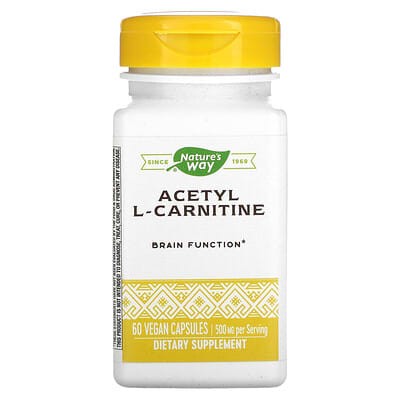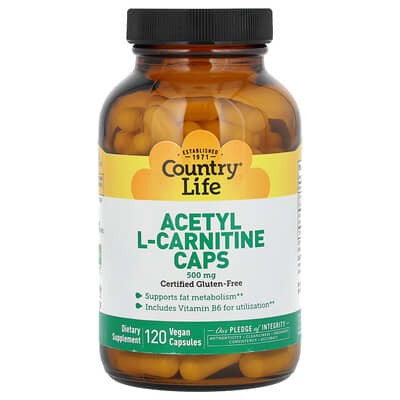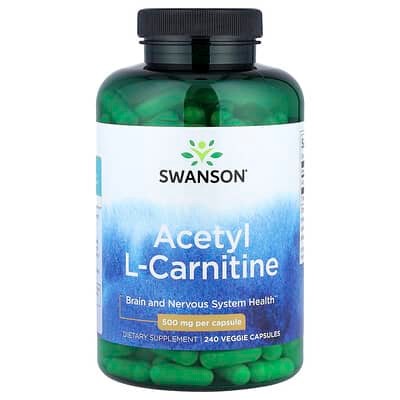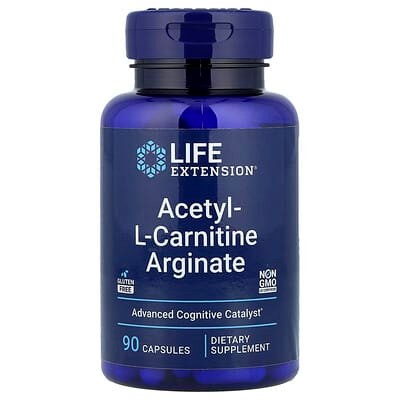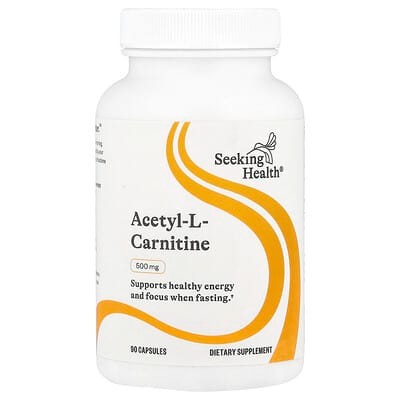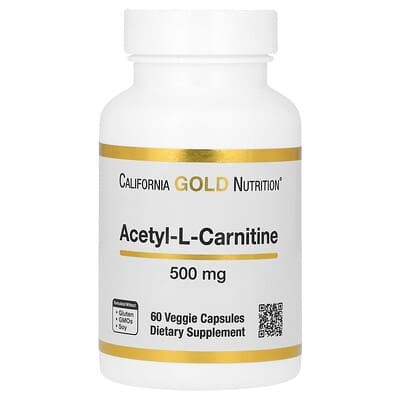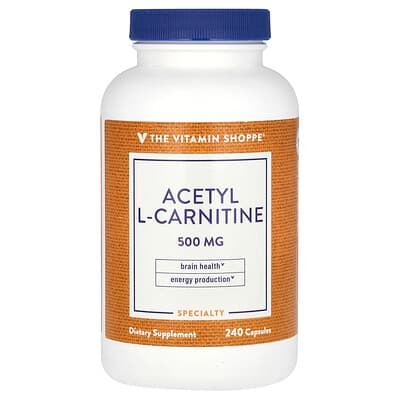
Acetyl L-Carnitine

non-nutrient_non-botanical

Acetyl L-Carnitine (ALCAR) is an amino acid derivative synthesized in the body from lysine and methionine. Its acetyl group allows it to cross the blood-brain barrier more readily than L-carnitine. It transports fatty acids into mitochondria, where they are oxidized for energy. It supports neuroprotective processes and cognitive health. It contributes to the production of acetylcholine, a neurotransmitter involved in memory and learning. It also acts as an antioxidant to help protect brain cells from oxidative stress. ALCAR is used for its potential to support cognitive function, mood, and physical performance. Researchers also study its benefits in conditions involving nerve pain, fatigue, and age-related cognitive decline.

Natural sources
Red meat (especially beef)Fish (e.g., cod, salmon)PoultryDairy productsAvocadosTempeh

No public comparison lists found.

Optimal Dosage
Minimum500 mg
Maximum1500 mg
Safety & Toxicity
Toxicity Threshold4000 mg
Toxicity EffectRestlessness, gastrointestinal discomfort
4 safety notes
  • Pregnant or breastfeeding individuals should consult a healthcare professional before use.
  • Individuals with a history of seizures should use with caution and under medical supervision, as ALCAR might potentially lower the seizure threshold in some cases.
  • Those with hypothyroidism should consult a doctor, as L-carnitine (and by extension ALCAR) may inhibit thyroid hormone activity.
  • Individuals with kidney disease should use with caution and medical guidance.
Goals
Cognitive Support
Impact
High effect
Typical dose:500–1500 mg
This form of L-Carnitine can cross the blood-brain barrier, where it helps transport fatty acids into mitochondria to be burned for energy. This process supports mental energy, reduces mental fatigue, and may improve focus and processing speed, particularly in aging individuals.

Study evidence

20 studies

Acetyl L-Carnitine has shown cognitive benefits in some people with liver-related brain dysfunction and in selected older populations, but results in Alzheimer’s disease are inconsistent. The available research does not establish a reliable memory or attention benefit for generally healthy adults.

View goal

Energy
Impact
High effect
Typical dose:500–2500 mg
By facilitating fat metabolism, Acetyl L-Carnitine (ALCAR) enhances energy production. Its acetyl group contributes to the production of acetylcholine, a key neurotransmitter for cognitive function, making it effective for reducing mental fatigue and brain fog.

Study evidence

19 studies

Acetyl L-Carnitine may reduce fatigue in some people with liver disease or treatment-related fatigue, but results vary by condition. The available research does not establish that it reliably boosts everyday energy in otherwise healthy people.

View goal
Mental Focus
Impact
High effect
Typical dose:500–2000 mg
This acetylated form of L-Carnitine can cross the blood-brain barrier, where it helps transport fatty acids into mitochondria for energy production. This enhances mental energy and has been shown to combat age-related cognitive decline and mental fatigue.

Study evidence

7 studies

Acetyl L-Carnitine may support aspects of attention in people with cognitive impairment, but evidence for improving everyday mental focus in healthy people is limited. Results in children with attention difficulties are mixed, so benefits cannot be assumed across populations.

View goal
Metabolism Boost
Impact
High effect
Typical dose:500–2000 mg
Acetyl L-Carnitine (ALCAR) is a highly bioavailable form of carnitine. It acts as a shuttle, moving long-chain fatty acids across the mitochondrial membrane where they can be oxidized ('burned') for ATP production. This is particularly beneficial during periods of calorie restriction or exercise.

Study evidence

1 study

The supplied research does not establish that Acetyl L-Carnitine boosts metabolic rate or energy use. It instead shows limited absorption and substantial production of a metabolite associated with health concerns, without directly demonstrating clinical harm.

View goal
Productivity Boost
Impact
High effect
Typical dose:500–2000 mg
Acetyl L-Carnitine (ALCAR) crosses the blood-brain barrier to assist in mitochondrial energy production and provides acetyl groups for synthesizing acetylcholine, a neurotransmitter critical for focus, memory, and cognitive speed. It's particularly effective at reducing mental fatigue.

Study evidence

1 study

Acetyl L-Carnitine may help preserve work productivity and reduce fatigue in people receiving certain hepatitis C treatments. The available evidence concerns treatment-related difficulties and does not establish a productivity boost for healthy people or workers in general.

View goal
Productivity Boost
Impact
High effect
Typical dose:500–2000 mg
Acetyl L-Carnitine (ALCAR) crosses the blood-brain barrier to assist in mitochondrial energy production and provides acetyl groups for synthesizing acetylcholine, a neurotransmitter critical for focus, memory, and cognitive speed. It's particularly effective at reducing mental fatigue.

Study evidence

1 study

Acetyl L-Carnitine may help preserve work productivity and reduce fatigue in people receiving certain hepatitis C treatments. The available evidence concerns treatment-related difficulties and does not establish a productivity boost for healthy people or workers in general.

View goal
Showing 6 of 9 goals

Studies

Research connections will load here.
Sources

Up to five highest-ranked published examples per goal. Study counts and charts include all published studies for the connection.

  1. Acetyl-L-carnitine treatment in minimal hepatic encephalopathy.
    Malaguarnera M; Gargante MP; Cristaldi E; Vacante M; Risino C; Cammalleri L; Pennisi G; Rampello L · Digestive diseases and sciences · 2008
    Randomized trial125 participantsCognitive SupportBrain Health
  2. A double-blind, parallel, multicenter comparison of L-acetylcarnitine with placebo on the attention deficit hyperactivity disorder in fragile X syndrome boys.
    Torrioli MG; Vernacotola S; Peruzzi L; Tabolacci E; Mila M; Militerni R; Musumeci S; Ramos FJ; Frontera M; Sorge G; Marzullo E; Romeo G; Vallee L; Veneselli E; Cocchi E; Garbarino E; Moscato U; Chiurazzi P; D'Iddio S; Calvani M; Neri G · American journal of medical genetics. Part A · 2008
    Randomized trial63 participantsCognitive Support
  3. Acetyl-L-carnitine improves cognitive functions in severe hepatic encephalopathy: a randomized and controlled clinical trial.
    Malaguarnera M; Vacante M; Motta M; Giordano M; Malaguarnera G; Bella R; Nunnari G; Rampello L; Pennisi G · Metabolic brain disease · 2012
    Randomized trial61 participantsCognitive SupportBrain Health
  4. Long-term acetyl-L-carnitine treatment in Alzheimer's disease.
    Spagnoli A; Lucca U; Menasce G; Bandera L; Cizza G; Forloni G; Tettamanti M; Frattura L; Tiraboschi P; Comelli M · Neurology · 1991
    Randomized trial130 participantsCognitive SupportBrain Health
  5. Acetyl L-carnitine (ALC) treatment in elderly patients with fatigue.
    Malaguarnera M; Gargante MP; Cristaldi E; Colonna V; Messano M; Koverech A; Neri S; Vacante M; Cammalleri L; Motta M · Archives of gerontology and geriatrics · 2008
    Randomized trial96 participantsCognitive Support
  6. Oral acetyl-L-carnitine therapy reduces fatigue in overt hepatic encephalopathy: a randomized, double-blind, placebo-controlled study.
    Malaguarnera M; Vacante M; Giordano M; Pennisi G; Bella R; Rampello L; Malaguarnera M; Li Volti G; Galvano F · The American journal of clinical nutrition · 2011
    Randomized trial121 participantsEnergy
  7. The supplementation of acetyl-L-carnitine decreases fatigue and increases quality of life in patients with hepatitis C treated with pegylated interferon-α 2b plus ribavirin.
    Malaguarnera M; Vacante M; Bertino G; Neri S; Malaguarnera M; Gargante MP; Motta M; Lupo L; Chisari G; Bruno CM; Pennisi G; Bella R · Journal of interferon & cytokine research : the official journal of the International Society for Interferon and Cytokine Research · 2012
    Randomized trial60 participantsEnergy
  8. Acetyl-L-carnitine reduces depression and improves quality of life in patients with minimal hepatic encephalopathy.
    Malaguarnera M; Bella R; Vacante M; Giordano M; Malaguarnera G; Gargante MP; Motta M; Mistretta A; Rampello L; Pennisi G · Scandinavian journal of gastroenterology · 2011
    Randomized trial67 participantsEnergy
  9. A prospective study to evaluate the efficacy and safety of oral acetyl-L-carnitine for the treatment of chemotherapy-induced peripheral neuropathy.
    Sun Y; Shu Y; Liu B; Liu P; Wu C; Zheng R; Zhang X; Zhuang Z; Deng Y; Zheng L; Xu Q; Jiang B; Ouyang X; Gao J; Xu N; Li X; Jiang S; Liang C; Yao Y · Experimental and therapeutic medicine · 2020
    Randomized trial239 participantsEnergy
  10. Metabolomic biomarkers for (R, S)-ketamine and (S)-ketamine in treatment-resistant depression and healthy controls: A systematic review.
    Kumar R; Nuñez NA; Joshi N; Joseph B; Verde A; Seshadri A; Cuellar Barboza AB; Prokop LJ; Medeiros GC; Singh B · Bipolar disorders · 2024
    Systematic reviewEnergy
  11. Acetyl-L-carnitine in the treatment of mildly demented elderly patients.
    Passeri M; Cucinotta D; Bonati PA; Iannuccelli M; Parnetti L; Senin U · International journal of clinical pharmacology research · 1990
    Randomized trial60 participantsMental FocusBrain Health
  12. Acetyl-L-Carnitine Supplementation During HCV Therapy With Pegylated Interferon-α 2b Plus Ribavirin: Effect on Work Performance; A Randomized Clinical Trial.
    Malaguarnera G; Pennisi M; Gagliano C; Vacante M; Malaguarnera M; Salomone S; Drago F; Bertino G; Caraci F; Nunnari G; Malaguarnera M · Hepatitis monthly · 2014
    Randomized trial62 participantsMental FocusProductivity Boost
  13. [Psycho-functional changes in attention and learning under the action of L-acetylcarnitine in 17 young subjects. A pilot study of its use in mental deterioration].
    Lino A; Boccia MM; Rusconi AC; Bellomonte L; Cocuroccia B · La Clinica terapeutica · 1992
    Non-randomized trial17 participantsMental Focus
  14. Acetyl-L-carnitine (ALC) in attention-deficit/hyperactivity disorder: a multi-site, placebo-controlled pilot trial.
    Arnold LE; Amato A; Bozzolo H; Hollway J; Cook A; Ramadan Y; Crowl L; Zhang D; Thompson S; Testa G; Kliewer V; Wigal T; McBurnett K; Manos M · Journal of child and adolescent psychopharmacology · 2008
    Randomized trial112 participantsMental Focus
  15. Acetyl-L-carnitine for patients with hepatic encephalopathy.
    Martí-Carvajal AJ; Gluud C; Arevalo-Rodriguez I; Martí-Amarista CE · The Cochrane database of systematic reviews · 2019
    Meta-analysis398 participants5 studies pooledMental Focus
  16. Low Bioavailability and High TMAO Production: Novel Insights Into Acetylcarnitine and Carnitine Metabolism.
    Krims-Davis K; Ozola M; Razzivina V; Gukalova B; Konrade I; Dambrova M; Liepinsh E · Molecular nutrition & food research · 2025
    Randomized trialMetabolism Boost
  17. Acetyl-L-carnitine Slows the Progression from Prefrailty to Frailty in Older Subjects: A Randomized Interventional Clinical Trial.
    Malaguarnera G; Catania VE; Bertino G; Chisari LM; Castorina M; Bonfiglio C; Cauli O; Malaguarnera M · Current pharmaceutical design · 2022
    Randomized trial92 participantsAnti-Aging
  18. Pharmaco-electroencephalographic and clinical effects of the cholinergic substance--acetyl-L-carnitine--in patients with organic brain syndrome.
    Herrmann WM; Dietrich B; Hiersemenzel R · International journal of clinical pharmacology research · 1990
    Randomized trialBrain Health