
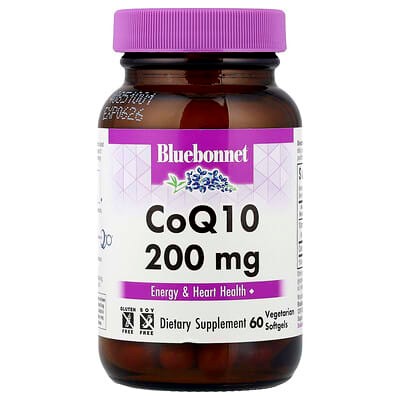

$40.76 $0.67 per serving


Product analysis
CoQ10 200 mg may support some blood pressure and blood fat measures in selected adults, although the evidence is limited.
AI assessment of the formula, label and price. How scoring works
Nutrient Quality40
The quality of the CoQ10 and vitamin E forms remains uncertain. Both are named, but naming alone does not establish how their quality compares with alternatives.
Ingredient Transparency100
Both ingredient amounts and forms are clearly disclosed. That makes the ubiquinone preparation and accompanying vitamin E easier to compare with other labels.
Value For Money40
CoQ10 offers limited value at the full serving cost. Value for vitamin E remains uncertain.
Customer Satisfaction73
Customer ratings are very favorable. The review count provides a modest base of feedback, without confirming health benefits.
Product Focus80
The formula centers on CoQ10 with vitamin E alongside it. Possible cardiovascular and fatigue-related effects remain preparation-specific, and a larger serving does not establish proportionally greater benefit.
- Format
Softgel - Container
- 60 Softgel(s)
- Per serving
- $0.67
- Also available
 CoQ10 100 mg$39.16
- Customer rating
- 4.8 · 110 ratings
Goals

Impact
Highest effect
Coenzyme Q-10 · 200 mg

Impact
Highest effect
Coenzyme Q-10 · 200 mgVitamin E · 134 mg

Impact
High effect
Coenzyme Q-10 · 200 mg

Impact
High effect
Coenzyme Q-10 · 200 mg

Impact
Highest effect
Coenzyme Q-10 · 200 mgVitamin E · 134 mg

Impact
High effect
Coenzyme Q-10 · 200 mg
Ingredients
| Ingredient | Amount per serving | Score |
|---|---|---|
Vitamin E (D-Alpha-Tocopherol) | 134 mg | |
Coenzyme Q-10 (Ubiquinone) | 200 mg |
Coenzyme Q-10 (Ubiquinone) · 200 mg OverallScore59
Alternative products
Report alternatives
Sources
Published studies used for the product analysis and the top-ranked studies for each ingredient and goal.
- Effects of Coenzyme Q10 Supplementation on Lipid Profiles in Adults: A Meta-analysis of Randomized Controlled Trials.
- Six-month supplementation with high dose coenzyme Q10 improves liver steatosis, endothelial, vascular and myocardial function in patients with metabolic-dysfunction associated steatotic liver disease: a randomized double-blind, placebo-controlled trial.
- The effect of coenzyme Q10 on morbidity and mortality in chronic heart failure: results from Q-SYMBIO: a randomized double-blind trial.
- [Coenzyme Q-10 in the treatment of patients with chronic heart failure and reduced left ventricular ejection fraction: systematic review and meta-analysis].
- Effect of coenzyme Q10 in Europeans with chronic heart failure: A sub-group analysis of the Q-SYMBIO randomized double-blind trial.
- Supplementation with vitamin E alone is associated with reduced myocardial infarction: a meta-analysis.
- Vitamin E ameliorates blood cholesterol level and alters gut microbiota composition: A randomized controlled trial.
- Effects of long-term vitamin E supplementation on cardiovascular events and cancer: a randomized controlled trial.
- Independent and combined associations of dietary antioxidant exposure with all-cause and cause-specific mortality in the general population.
- Tocotrienol rich fraction supplementation improved lipid profile and oxidative status in healthy older adults: A randomized controlled study.
- Effects of Coenzyme Q10 on Statin-Induced Myopathy: An Updated Meta-Analysis of Randomized Controlled Trials.
- Coenzyme Q10 Supplementation in Athletes: A Systematic Review.
- Effectiveness of Coenzyme Q10 Supplementation for Reducing Fatigue: A Systematic Review and Meta-Analysis of Randomized Controlled Trials.
- Antifatigue effects of coenzyme Q10 during physical fatigue.
- Effect of coenzyme Q10 supplementation on fatigue: A systematic review of interventional studies.
- Ubiquinol Ameliorates Endothelial Dysfunction in Subjects with Mild-to-Moderate Dyslipidemia: A Randomized Clinical Trial.
- Dose-Response Effect of Coenzyme Q10 Supplementation on Blood Pressure among Patients with Cardiometabolic Disorders: A Grading of Recommendations Assessment, Development, and Evaluation (GRADE)-Assessed Systematic Review and Meta-Analysis of Randomized Controlled Trials.
- Effects of Coenzyme Q10 on Lipid, Glycemic, and Inflammatory Markers in Metabolic Disorders: A Systematic Review and Meta-Analysis.
- Treatment of coenzyme Q10 for 24 weeks improves lipid and glycemic profile in dyslipidemic individuals.
- The effect of coenzyme Q10 supplementation on inflammatory and endothelial dysfunction markers in overweight/obese polycystic ovary syndrome patients.