
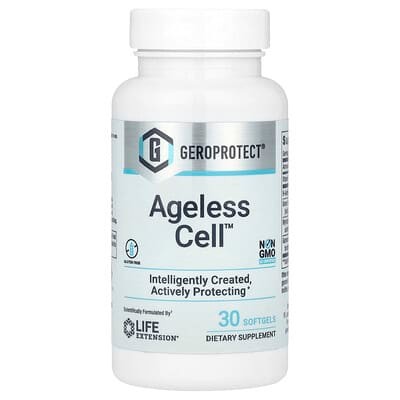

$30.00 $1.00 per serving


Product analysis
Ageless Cell combines vitamin E and green tea compounds involved in antioxidant processes. Unclear vitamin E details make the mixture harder to compare, while the green tea portion offers less favorable value.
AI assessment of the formula, label and price. How scoring works
Nutrient Quality38
Form-specific quality remains uncertain across the combination. Several forms are named, but the NAC form is unspecified and vitamin E details do not resolve a clear total.
Ingredient Transparency81
Ingredient amounts and most forms are disclosed. The different vitamin E declarations do not establish its total or component proportions.
Value For Money33
The green tea portion offers less favorable value. Value for vitamin E and NAC remains uncertain.
Customer Satisfaction76
Customers generally rate it favorably. A substantial review base supports that satisfaction pattern.
Product Focus75
The ingredients have connections to antioxidant processes. Those roles do not establish longer life, and results from combined glycine and NAC do not transfer directly to NAC alone.
- Format
Softgel - Container
- 30 Softgel(s)
- Per serving
- $1.00
- Customer rating
- 4.5 · 774 ratings
Goals

Impact
High effect
Green Tea · 223 mg
Green-tea compounds and vitamin E participate in antioxidant processes. The saved findings recognize both at partial amounts, but the supplied context does not establish routine human longevity benefit from those antioxidant roles. NAC combination findings concern glycine plus NAC in older adults and cannot establish the same result for isolated NAC in this product.
How this product is rated for Longevity
Ingredient fit73
Green tea and vitamin E receive partial amount recognition; NAC receives no contribution.
Goal fit
The recognized ingredients give the formula a clear connection to the reviewed aging-related outcomes.
Dose adequacy
The recognized amounts provide partial coverage of the reference exposures, limiting direct comparison with the reviewed findings.
Pathways51
Green tea and vitamin E contribute to antioxidant defence.
Depth
Green tea and vitamin E contribute to antioxidant defence.
Breadth
One pathway reaches the coverage threshold, leaving the findings concentrated in a single aspect of the goal.
Evidence82
The recognized antioxidant ingredients do not establish preserved human function or longer life.
Evidence strength
The recognized antioxidant ingredients do not establish preserved human function or longer life.
Studied preparation
The saved findings recognize the relevant preparation, within the ingredient-specific scientific limitations.
Formulation logic100
The recognized ingredients have no missing required partner or matched formulation conflict.
Partner coverage
The recognized ingredients work independently or have their required partner; this does not establish extra combination benefit.
Conflicts
No matched formulation conflict appears in the supplied findings.
Effective doses
All ingredients included in this finding meet its amount threshold; that threshold is not a proven minimum effective dose.
Ingredients
| Ingredient | Amount per serving | Score |
|---|---|---|
Vitamin E (D-Alpha-Tocopherol) | 13.4 mg | |
N-Acetyl-L-Cysteine | 450 mg | |
Green Tea decaffeinated extract (EGCG) | 223 mg | |
Myricetin (Myrica cerifera extract) | 50 mg | |
Gamma Tocotrienol (natural Tocotrienol/Tocopherol complex) | 25 mg |
Green Tea (EGCG) · 223 mg OverallScore61
Alternative products
Report alternatives
Sources
Published studies used for the product analysis and the top-ranked studies for each ingredient and goal.
- Green tea and coffee intake and risk of cognitive decline in older adults: the National Institute for Longevity Sciences, Longitudinal Study of Aging.
- Associations of green tea, coffee, and soft drink consumption with longitudinal changes in leukocyte telomere length.
- Can teatime increase one's lifetime?
- Influences of tea consumption on self-rated health and life satisfaction among older adults: Evidence from the CLHLS.
- Double-blinded, placebo-controlled trial of green tea extracts in the clinical and histologic appearance of photoaging skin.
- Low dietary vitamin E intake is associated with high risk of incident dementia among older adults: The Shanghai Aging Study.
- Nutrients and bioactives in green leafy vegetables and cognitive decline: Prospective study.
- Low Intake of Vitamin E Accelerates Cellular Aging in Patients With Established Cardiovascular Disease: The CORDIOPREV Study.
- The L-shaped link between total antioxidant capacity and phenotypic age acceleration: evidence from NHANES 2003-2010.
- Serum levels of vitamin E forms and risk of cognitive impairment in a Finnish cohort of older adults.