
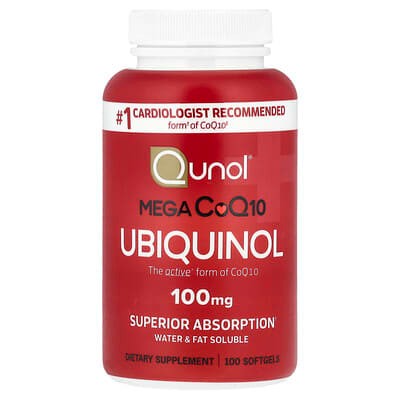

$36.00 $0.36 per serving

Product analysis
Mega Ubiquinol CoQ10 100 mg may support blood-vessel function and some blood-pressure measures in selected adults, with evidence limited to small trials. Its CoQ10 contribution appears inexpensive for the amount provided.
AI assessment of the formula, label and price. How scoring works
Nutrient Quality38
CoQ10 and vitamin C have named forms, but their quality cannot be firmly judged. The unnamed item adds no identifiable basis for a quality conclusion.
Ingredient Transparency88
Amounts are listed and the vitamin C and CoQ10 forms are named. The remaining unnamed item is not clearly described.
Value For Money80
CoQ10 appears inexpensive for the amount provided. Vitamin C value remains uncertain, leaving the clearest cost advantage with CoQ10.
Customer Satisfaction92
Customer feedback is very positive across thousands of ratings. The large review base describes satisfaction without proving cardiovascular or energy benefits.
Product Focus71
CoQ10 has limited support for blood-vessel measurements in selected populations. Its role in cellular energy does not establish routine energy, metabolism or aging benefits.
- Format
Softgel - Container
- 100 Softgel(s)
- Per serving
- $0.36
- Also available
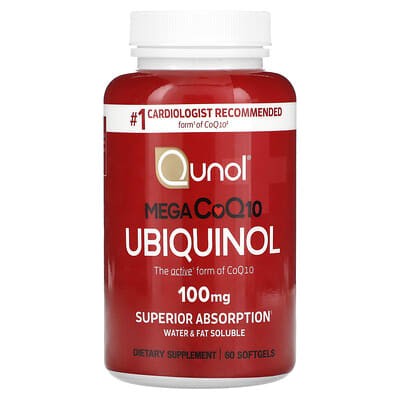 Mega CoQ10 Ubiquinol 100 mg$21.88
- Customer rating
- 4.8 · 5,945 ratings
Goals

Impact
Moderate effect
Coenzyme Q-10 · 100 mg
CoQ10 at 100 mg relates to mitochondrial energy production and antioxidant defence. The supplied human evidence concerns limited skin-appearance outcomes with a particular preparation; the saved assessment does not match this preparation to those trials.
How this product is rated for Longevity
Ingredient fit73
The assessed ingredient is closely focused on the goal, although it is also linked to other uses. The assessed amounts provide partial dose support.
Goal fit
The assessed ingredient is closely focused on the goal, although it is also linked to other uses.
Dose adequacy
The assessed amounts provide partial dose support.
Pathways10
The strongest assessed connection is mitochondrial energy production, with limited coverage. No assessed pathway reaches the saved threshold for substantial coverage.
Depth
The strongest assessed connection is mitochondrial energy production, with limited coverage.
Breadth
No assessed pathway reaches the saved threshold for substantial coverage.
Evidence30
Coenzyme Q-10 provides the strongest effective-dose evidence in the saved findings; this does not translate into a lifespan benefit. The assessed preparation is not matched to the reviewed trials in the saved findings.
Evidence strength
Coenzyme Q-10 provides the strongest effective-dose evidence in the saved findings; this does not translate into a lifespan benefit.
Studied preparation
The assessed preparation is not matched to the reviewed trials in the saved findings.
Formulation logic100
The assessed ingredients can contribute alone or have their required partner. No configured ingredient conflict was identified. 1 of 1 assessed ingredients reach the saved minimum dose threshold.
Partner coverage
The assessed ingredients can contribute alone or have their required partner.
Conflicts
No configured ingredient conflict was identified.
Effective doses
1 of 1 assessed ingredients reach the saved minimum dose threshold.

Impact
Highest effect
Coenzyme Q-10 · 100 mg
Coenzyme Q10 may offer limited support for blood-vessel function and blood pressure in selected populations. This product declares ubiquinol, which is compared with its own preparation-specific exposure range. The supplied findings concern vascular measurements, not established prevention of heart attacks.
How this product is rated for Heart Health
Ingredient fit79
Coenzyme Q10 provides the product's focused connection to heart health. Its declared serving reaches the saved exposure reference.
Goal fit
Coenzyme Q10 is the main relevant active; the product is also linked to other goals.
Dose adequacy
Coenzyme Q10's declared serving reaches the saved exposure reference; this does not define a proven effective daily dose.
Pathways60
The supported connection is chiefly blood-vessel function. It does not cover a broad range of heart-health mechanisms.
Depth
The strongest saved connection is endothelial nitric-oxide function, reflecting the included ingredients and their declared amounts.
Breadth
One mechanism reaches the saved coverage threshold, so the support remains focused.
Evidence98
The declared CoQ10 preparation matches the saved oral preparation criteria. Human findings support limited vascular effects in selected populations.
Evidence strength
CoQ10 has human vascular findings in selected populations; these do not establish routine event prevention.
Studied preparation
Declared ubiquinol meets the saved preparation criteria; this does not establish superiority over other forms.
Formulation logic100
The counted ingredients have no unmet partner requirement or matched formulation conflict. This does not imply an extra benefit from combining ingredients.
Partner coverage
The counted ingredients can contribute without an additional required partner, or have the required partner present.
Conflicts
No specified stimulant or high-sodium conflict was matched in the supplied product facts.
Effective doses
Coenzyme Q10 clears the saved minimum exposure threshold, which is not proof of a clinically effective dose.

Impact
High effect
Coenzyme Q-10 · 100 mg
CoQ10 participates in mitochondrial energy production and has limited, preparation-specific fatigue evidence. The 100 mg serving is counted in the saved findings, but its generic Coenzyme Q10 wording does not identify ubiquinol or ubiquinone. Vitamin C is present at only 6 mg per serving and does not provide a separate counted contribution here.
How this product is rated for Energy
Ingredient fit73
CoQ10 provides a counted contribution, with amounts meeting the saved comparison to differing degrees.
Goal fit
CoQ10 supplies the focused contribution in the saved findings.
Dose adequacy
The declared amount meets part of the saved comparison, without establishing a proven fatigue-treatment dose.
Pathways40
The saved contribution is concentrated in mitochondrial energy production.
Depth
Mitochondrial energy production is the strongest tracked area.
Breadth
Only mitochondrial energy production reaches the breadth comparison.
Evidence95
CoQ10 evidence is limited and preparation-specific; generic naming does not establish the studied redox form.
Evidence strength
CoQ10 evidence is limited and preparation-specific; generic naming does not establish the studied redox form.
Studied preparation
The saved findings accept CoQ10's preparation, but the generic declaration leaves its redox form unresolved.
Formulation logic100
CoQ10 needs no additional partner for the counted contribution. No configured ingredient conflict was matched.
Partner coverage
The counted ingredients can contribute without an additional partner.
Conflicts
No configured ingredient conflict was matched.
Effective doses
All counted ingredients reach the saved minimum amount comparison.

Impact
Moderate effect
Coenzyme Q-10 · 100 mgVitamin C · 6 mg
The main relevant ingredient is 100 mg ubiquinol CoQ10, which relates to oxidative and mitochondrial stress. Inflammation findings are limited, and results for reviewed ubiquinone preparations cannot be assumed to transfer to ubiquinol. The 6 mg vitamin C amount makes only a small nutritional contribution.
How this product is rated for Inflammation
Ingredient fit73
The relevant ingredients give the formula a clear inflammation-related focus. The assessed amounts provide a partial match to the saved dose comparisons.
Goal fit
The relevant ingredients give the formula a clear inflammation-related focus.
Dose adequacy
The assessed amounts provide a partial match to the saved dose comparisons.
Pathways19
The strongest assessed connection is to oxidative and mitochondrial stress, with limited coverage in the saved findings. The saved findings show limited breadth across the main inflammation mechanisms.
Depth
The strongest assessed connection is to oxidative and mitochondrial stress, with limited coverage in the saved findings.
Breadth
The saved findings show limited breadth across the main inflammation mechanisms.
Evidence63
Coenzyme Q-10 provides the strongest assessed evidence in the formula, with relevant but qualified support for this goal. The assessed CoQ10 preparation does not match the preparation supporting the saved inflammation evidence.
Evidence strength
Coenzyme Q-10 provides the strongest assessed evidence in the formula, with relevant but qualified support for this goal.
Studied preparation
The assessed CoQ10 preparation does not match the preparation supporting the saved inflammation evidence.
Formulation logic100
All assessed contributors meet the saved minimum amount comparison. No ingredient conflicts were identified in the saved assessment.
Partner coverage
The assessed ingredients can contribute independently or have their required partner present.
Conflicts
No ingredient conflicts were identified in the saved assessment.
Effective doses
All assessed contributors meet the saved minimum amount comparison.

Impact
Highest effect
Coenzyme Q-10 · 100 mgVitamin C · 6 mg
Coenzyme Q10 may support blood-vessel lining function and some blood-pressure or lipid measures in adults with abnormal blood lipids. These are limited marker findings from small trials, rather than evidence of cardiovascular-event prevention. The declared preparation and amount receive recognition in the saved findings, without establishing superior effects from one CoQ10 form or a guaranteed response.
How this product is rated for Cardiovascular Support
Ingredient fit93
CoQ10 provides the main cardiovascular connection, while also having broader uses.
Goal fit
CoQ10 provides the main cardiovascular connection, while also having broader uses.
Dose adequacy
The declared amounts receive full recognition in the saved findings; this does not establish a clinically optimal serving.
Pathways60
The strongest route is endothelial nitric-oxide function, rather than broad coverage across cardiovascular functions.
Depth
The strongest route is endothelial nitric-oxide function, rather than broad coverage across cardiovascular functions.
Breadth
Only one route has substantial coverage in the saved findings; broader cardiovascular effects are not established.
Evidence88
CoQ10 has limited trial support for vascular and metabolic markers in selected populations.
Evidence strength
CoQ10 has limited trial support for vascular and metabolic markers in selected populations.
Studied preparation
The saved findings accept this CoQ10 preparation, without proving that all forms produce identical outcomes.
Formulation logic100
The counted ingredients can contribute alone or have the partner required by the saved findings.
Partner coverage
The counted ingredients can contribute alone or have the partner required by the saved findings.
Conflicts
No evaluated ingredient conflict was found in the supplied facts.
Effective doses
All counted ingredients clear the saved contribution threshold, without establishing a treatment dose.

Impact
Moderate effect
Coenzyme Q-10 · 100 mg
Coenzyme Q10 is involved in cellular energy handling, but that role does not mean supplementing it makes your whole body burn more calories. Whether it increases everyday energy expenditure in adults who already have enough is unclear. The declared form and amount do not demonstrate a greater metabolism effect.
How this product is rated for Metabolism Support
Ingredient fit59
Coenzyme Q10 participates in cellular energy handling; an increase in whole-body calorie burning is unclear.
Goal fit
Coenzyme Q10 participates in cellular energy handling; an increase in whole-body calorie burning is unclear.
Dose adequacy
Coenzyme Q-10 100 mg per serving; this amount alone does not demonstrate an increase in calorie burning.
Pathways17
Coenzyme Q10 participates in cellular energy handling; an increase in whole-body calorie burning is unclear.
Depth
Coenzyme Q10 participates in cellular energy handling; an increase in whole-body calorie burning is unclear.
Breadth
Normal cellular or thyroid functions do not by themselves show a broader increase in whole-body energy expenditure.
Evidence75
Coenzyme Q10 participates in cellular energy handling; an increase in whole-body calorie burning is unclear.
Evidence strength
Coenzyme Q10 participates in cellular energy handling; an increase in whole-body calorie burning is unclear.
Studied preparation
The declared CoQ10 form does not demonstrate superior metabolism effects.
Formulation logic100
No particular ingredient conflict is identified. No missing required partner is identified.
Partner coverage
No missing required ingredient partner is identified.
Conflicts
No particular ingredient conflict is identified.
Effective doses
The declared amounts permit comparison with ingredient-specific reference amounts; those comparisons do not demonstrate a metabolism boost.
Ingredients
| Ingredient | Amount per serving | Score |
|---|---|---|
Calories | 6 Calorie(s) | |
Vitamin C (Ascorbyl Palmitate) | 6 mg | |
Ubiquinol (Coenzyme Q10) | 100 mg |
Coenzyme Q-10 (Coenzyme Q10) · 100 mg OverallScore89
Each serving provides 100 mg of CoQ10 as ubiquinol. Ubiquinol may be absorbed more readily than ubiquinone.
How this ingredient is rated
Active Ingredient Quality & Bioavailability72
Ubiquinol is the identified form of CoQ10 and may be absorbed more readily than ubiquinone. The saved facts do not record a listed black pepper extract or a specialized delivery claim.
Molecular Form: Ubiquinol vs. Ubiquinone
Ubiquinol is the identified form of CoQ10 and may be absorbed more readily than ubiquinone.
Formulation & Absorption Enhancers
The saved facts do not record a listed black pepper extract or a specialized delivery claim.
Dose, Safety & Label Transparency100
Each serving supplies 100 mg of CoQ10. The available ingredient information flags none of the additives checked.
Clinical Dosage Alignment
Each serving supplies 100 mg of CoQ10.
Label Transparency & Fillers
The 100 mg amount is stated, and none of the additives checked by the evaluation are flagged in the available ingredient information.
Value100
The estimated cost is about $0.36 per 100 mg of CoQ10, based on the whole-product price.
Price Per Effective Serving
The estimated cost is about $0.36 per 100 mg of CoQ10, based on the whole-product price.
Alternative products
Report alternatives
Sources
Published studies used for the product analysis and the top-ranked studies for each ingredient and goal.
- Effects of Coenzyme Q10 Supplementation on Lipid Profiles in Adults: A Meta-analysis of Randomized Controlled Trials.
- Six-month supplementation with high dose coenzyme Q10 improves liver steatosis, endothelial, vascular and myocardial function in patients with metabolic-dysfunction associated steatotic liver disease: a randomized double-blind, placebo-controlled trial.
- The effect of coenzyme Q10 on morbidity and mortality in chronic heart failure: results from Q-SYMBIO: a randomized double-blind trial.
- [Coenzyme Q-10 in the treatment of patients with chronic heart failure and reduced left ventricular ejection fraction: systematic review and meta-analysis].
- Effect of coenzyme Q10 in Europeans with chronic heart failure: A sub-group analysis of the Q-SYMBIO randomized double-blind trial.
- Vitamin C may reduce troponin and CKMB levels after PCI and CABG: a meta-analysis.
- Vitamin C improves endothelium-dependent vasodilation by restoring nitric oxide activity in essential hypertension.
- Vitamin C supplementation improves blood pressure and oxidative stress after acute exercise in patients with poorly controlled type 2 diabetes mellitus: A randomized, placebo-controlled, cross-over study.
- Vascular benefits of vitamin C supplementation against fine particulate air pollution in healthy adults: A double-blind randomised crossover trial.
- Ascorbic acid reduces blood pressure and arterial stiffness in type 2 diabetes.
- Effects of Coenzyme Q10 on Statin-Induced Myopathy: An Updated Meta-Analysis of Randomized Controlled Trials.
- Coenzyme Q10 Supplementation in Athletes: A Systematic Review.
- Effectiveness of Coenzyme Q10 Supplementation for Reducing Fatigue: A Systematic Review and Meta-Analysis of Randomized Controlled Trials.
- Antifatigue effects of coenzyme Q10 during physical fatigue.
- Effect of coenzyme Q10 supplementation on fatigue: A systematic review of interventional studies.
- Ubiquinol Ameliorates Endothelial Dysfunction in Subjects with Mild-to-Moderate Dyslipidemia: A Randomized Clinical Trial.
- Dose-Response Effect of Coenzyme Q10 Supplementation on Blood Pressure among Patients with Cardiometabolic Disorders: A Grading of Recommendations Assessment, Development, and Evaluation (GRADE)-Assessed Systematic Review and Meta-Analysis of Randomized Controlled Trials.
- Effects of Coenzyme Q10 on Lipid, Glycemic, and Inflammatory Markers in Metabolic Disorders: A Systematic Review and Meta-Analysis.
- Treatment of coenzyme Q10 for 24 weeks improves lipid and glycemic profile in dyslipidemic individuals.
- The effect of coenzyme Q10 supplementation on inflammatory and endothelial dysfunction markers in overweight/obese polycystic ovary syndrome patients.