
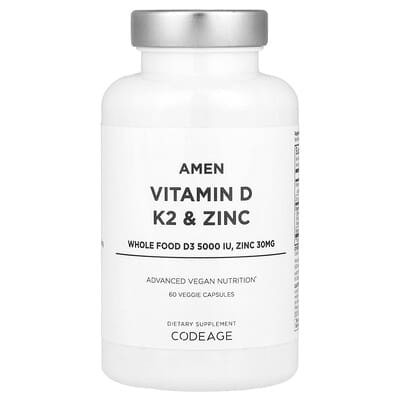




About this product
Bone and mineral nutrition is the most coherent use for the main combination. Vitamin D supports calcium absorption when intake or status is low, while MK-7 helps activate proteins involved in bone health. The 125 mcg vitamin D serving does not establish greater benefit simply because it is high.
MK-7 is clearly identified at 90 mcg, although its trans or all-trans composition is not specified. Its bone and arterial-stiffness findings have limits and do not establish broad protection from the D3 and K2 combination. Zinc at 30 mg adds normal immune and skin-related nutritional support, with hair and testosterone relevance mainly tied to inadequate zinc intake.
The main nutrient amounts are easy to compare, and value appears reasonable for MK-7 and zinc. The zinc chelate is broadly named, copper information is unavailable, and the whole-food blend does not identify its individual contents. Those gaps leave the mineral balance and the blend's added contribution uncertain.
Pros
States the MK-7 subtype and amount Clearly quantifies the main three nutrients Reasonable value for the zinc and MK-7 contributions
Cons
Whole-food blend components are undisclosed Copper information is unavailable alongside 30 mg zinc Zinc chelate carrier and MK-7 isomer details are incomplete Additional heart or hormone benefits from the combination remain unestablished
Warnings
The 125 mcg vitamin D serving warrants review before ongoing daily use, particularly if another supplement also contains vitamin D. Adding separate zinc to the 30 mg already supplied can make total zinc intake excessive.





