

Nutrient quality
Bisglycinate and vitamin C provide a strong absorption-focused core at an effective amount. Tiny vegetable additions add little, but they do not displace the main actives.
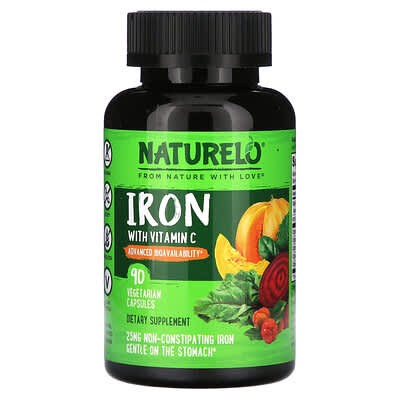
A sound bisglycinate-and-vitamin C pairing offers targeted iron support, while the vegetable extras are mostly label decoration.
A sound bisglycinate-and-vitamin C pairing offers targeted iron support, while the vegetable extras are mostly label decoration.
 Vitacost Vitacost | $ 21.95 | |
 iHerb iHerb | $ 21.95 | |
 Pure Formulas Pure Formulas | $ 21.95 | |
 Amazon Amazon | $ 18.66 |
The capsule provides 25 mg iron as ferrous bisglycinate chelate. Its form and amount are well aligned with focused supplementation and clearly disclosed.
Fifty milligrams of vitamin C from acerola and L-ascorbate supports the core formula. Five-milligram portions of beet, spinach, kale, pumpkin, and chard are too small to materially broaden the product.
It may help deficiency-related energy or hair concerns, but it is not a direct productivity formula. The 90-serving package supports regular use only when testing or a clear clinical reason justifies the dose.
Bisglycinate and vitamin C provide a strong absorption-focused core at an effective amount. Tiny vegetable additions add little, but they do not displace the main actives.
Active amounts and the iron form are clearly stated without a hidden blend. Full directions and non-active capsule ingredients are not supplied.
The aggregate satisfaction metric is strong and supported by a useful volume of ratings. Specific firsthand feedback is absent, so recurring complaints and purpose fit cannot be assessed.
Strong form quality, vitamin C, and reasonable serving economics support good value. Tiny vegetable additions are unnecessary but do not materially weaken competitiveness.

Chelated iron directly supports oxygen transport, and vitamin C may improve its absorption. The formula is most likely to help energy when low iron is the cause of fatigue.
The meaningful iron amount and well-absorbed form make the core formula coherent, while the tiny vegetable powders add little. A serving with 25 mg iron is not suited to routine use in people without a need, particularly those with iron-overload disorders.

Chelated iron directly addresses low iron stores, an important cause of excess shedding in people with deficiency. Vitamin C supports iron absorption, while the small vegetable additions are unlikely to change the result.
The dose and ferrous bisglycinate form are well suited to restoring iron when testing confirms a need. Iron should not be used for unexplained hair loss without checking iron status because unnecessary supplementation can cause harm.

Chelated iron plus vitamin C may reduce fatigue and improve concentration when low iron is the cause. The pairing supports absorption, but it is not a direct nootropic or an acute productivity aid.
Small vegetable additions do not meaningfully broaden the cognitive strategy. A 25 mg iron dose should be used for a demonstrated need because unnecessary iron can cause digestive effects and excess accumulation.
| Ingredient | Amount per serving |
|---|---|
Vitamin C (Acerola Cherry fruit extract, L-Ascorbate) | 50 mg |
Iron (Ferrous Bisglycinate Chelate) | 25 mg |
Beet | 5 mg |
Spinach | 5 mg |
Kale | 5 mg |
Swiss Chard | 5 mg |
Pumpkin | 5 mg |
Ferrous bisglycinate supports favorable absorption, while the vegetable capsule supports practical digestive tolerance. The iron amount is in the preferred range, and vitamin C remains below the absorption-support threshold. The serving cost provides good value, and one measured unit keeps the serving convenient.
Published studies used for the product analysis and the top-ranked studies for each ingredient and goal.