
Nutrient quality
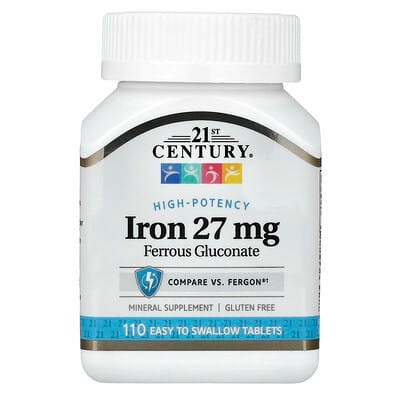
Ferrous gluconate is an established form, but it is less gentle and less predictably absorbed than a premium chelate. The iron amount is substantial enough to matter when low iron is confirmed.
 iHerb iHerb | $ 4.99 | |
 Pure Formulas Pure Formulas | $ 5.37 | |
 Walmart Walmart | $ 9.57 | |
 Amazon Amazon | $ 9.99 |
The 27 mg serving uses ferrous gluconate, a standard form that may be less gentle than chelated iron. It adds calcium but no vitamin C, folate, or vitamin B12.
Iron may support energy, concentration, and reduced shedding when low iron status is the underlying issue. It is not a general energy, productivity, or hair aid for people whose iron stores are already adequate.
Even a well-chosen iron form can cause nausea, constipation, or other digestive effects. The excellent serving value is useful, but need-based use matters more than low cost.
Ferrous gluconate is an established form, but it is less gentle and less predictably absorbed than a premium chelate. The iron amount is substantial enough to matter when low iron is confirmed.
Listed active ingredients have stated amounts, and no proprietary blend hides a combined total. Complete intake directions and inactive ingredients are not supplied, while the iron compound and supporting nutrient names are specific and understandable.
The average rating is strong, and the review count is very large. No review text is supplied to assess recurring complaints or purpose-specific experience.
The focused formula offers good quality for its low cost, although the iron form is not premium. The very low serving cost delivers a meaningful iron amount.

Ferrous gluconate supplies 27 mg of iron to support hemoglobin and oxygen transport when iron status is low. Correcting iron deficiency can meaningfully improve physical and mental energy.
Iron should be used for a demonstrated need because unnecessary supplementation can cause constipation and excess iron accumulation. The formula lacks vitamin C, folate, and vitamin B12 cofactors that could improve its energy-focused design.

The iron amount may meaningfully reduce shedding when low ferritin or iron-deficiency anemia is the cause. Ferrous gluconate is a standard effective form, although the tablet lacks vitamin C, folate, and vitamin B12 support.
Hair benefit is narrow and depends on a documented iron need rather than general supplementation. The 27 mg iron dose can cause constipation, nausea, and harm from excess iron, so it is better matched to confirmed deficiency than casual hair use.

Iron can improve energy and concentration when low iron is limiting oxygen delivery to the brain. It is not a general nootropic, so users with adequate iron are unlikely to gain a direct productivity boost.
The 27 mg amount is effective, but ferrous gluconate may be less gentle than chelated iron and calcium may compete with absorption. The serving may cause nausea or constipation and is unsuitable for people with iron-overload conditions such as hemochromatosis.
| Ingredient | Amount per serving |
|---|---|
Calcium (Calcium Carbonate) | 110 mg |
Iron (Ferrous Gluconate) | 27 mg |
Published studies used for the product analysis and the top-ranked studies for each ingredient and goal.