Published studies used for the product analysis and the top-ranked studies for each ingredient and goal.
- Green tea and coffee intake and risk of cognitive decline in older adults: the National Institute for Longevity Sciences, Longitudinal Study of Aging.
Shirai Y; Kuriki K; Otsuka R; Kato Y; Nishita Y; Tange C; Tomida M; Imai T; Ando F; Shimokata H · Public health nutrition · 2021
Cohort study1,305 participantsflagAnti-Aging forscienceGreen Tea
- Associations of green tea, coffee, and soft drink consumption with longitudinal changes in leukocyte telomere length.
Sohn I; Shin C; Baik I · Scientific reports · 2023
Cohort study1,952 participantsflagAnti-Aging forscienceGreen Tea
- Can teatime increase one's lifetime?
Nakachi K; Eguchi H; Imai K · Ageing research reviews · 2003
Cohort studyflagAnti-Aging forscienceGreen Tea
- Influences of tea consumption on self-rated health and life satisfaction among older adults: Evidence from the CLHLS.
Zou M; Sun C; Yang M; Li C; Wang S; Zheng D; Wang J; Yu L; Sun L; Wang Y; Chen H; Zeng Y · PsyCh journal · 2025
Cohort study78,345 participantsflagAnti-Aging forscienceGreen Tea
- Double-blinded, placebo-controlled trial of green tea extracts in the clinical and histologic appearance of photoaging skin.
Chiu AE; Chan JL; Kern DG; Kohler S; Rehmus WE; Kimball AB · Dermatologic surgery : official publication for American Society for Dermatologic Surgery [et al.] · 2005
Randomized trial40 participantsflagAnti-Aging forscienceGreen Tea
- Study on the Multiple Efficacies of Vitamin C Serum in Anti-Glycation, Anti-Carbonylation, Antioxidation, and Anti-Inflammation of Human Skin Based on In Vivo Tests.
Zi Y; Liu J; Liu Q; Pan Y; Jiang X · Journal of cosmetic dermatology · 2026
Randomized trial66 participantsflagAnti-Aging forscienceVitamin C
- Evaluation of the anti-wrinkle effect of a lipophilic pro-vitamin C derivative, tetra-isopalmitoyl ascorbic acid.
Yokota M; Yahagi S · Journal of cosmetic dermatology · 2022
Randomized trial69 participantsflagAnti-Aging forscienceVitamin C
- The role of vitamin C in pushing back the boundaries of skin aging: an ultrasonographic approach.
Crisan D; Roman I; Crisan M; Scharffetter-Kochanek K; Badea R · Clinical, cosmetic and investigational dermatology · 2015
Clinical trial60 participantsflagAnti-Aging forscienceVitamin C
- In vivo evaluation of topical ascorbic acid application on skin aging by 50 MHz ultrasound.
Vergilio MM; Aiello LM; Furlan AS; Caritá AC; Azevedo JR; Bolzinger MA; Chevalier Y; Leonardi GR · Journal of cosmetic dermatology · 2022
Randomized trial25 participantsflagAnti-Aging forscienceVitamin C
- Clinical Applications of Vitamin C in Dermatology: A Systematic Review.
Boghosian T; Mendez H; Boghosian N; Sayegh M; Beer J; Tosti A · The Journal of clinical and aesthetic dermatology · 2026
Systematic review44 studies pooledflagAnti-Aging forscienceVitamin C
- The effects of green tea on acne vulgaris: A systematic review and meta-analysis of randomized clinical trials.
Kim S; Park TH; Kim WI; Park S; Kim JH; Cho MK · Phytotherapy research : PTR · 2021
Meta-analysis247 participants5 studies pooledflagAnti-Inflammatory Support forscienceGreen Tea
- Green Tea Catechin Association with Ultraviolet Radiation-Induced Erythema: A Systematic Review and Meta-Analysis.
Kapoor MP; Sugita M; Fukuzawa Y; Timm D; Ozeki M; Okubo T · Molecules (Basel, Switzerland) · 2021
Meta-analysis100 participants6 studies pooledflagAnti-Inflammatory Support flagSkin Health forscienceGreen Tea
- Efficacy of (-)-epigallocatechin gallate delivered by a new-type scaler tip during scaling and root planing on chronic periodontitis: a split-mouth, randomized clinical trial.
Wang Y; Zeng J; Yuan Q; Luan Q · BMC oral health · 2021
Randomized trial20 participantsflagAnti-Inflammatory Support forscienceGreen Tea
- Camellia Sinensis Mouthwashes in Oral Care: a Systematic Review.
Tafazoli A; Tafazoli Moghadam E · Journal of dentistry (Shiraz, Iran) · 2020
Systematic review69 studies pooledflagAnti-Inflammatory Support forscienceGreen Tea
- Skin photoprotection by green tea: antioxidant and immunomodulatory effects.
Katiyar SK · Current drug targets. Immune, endocrine and metabolic disorders · 2004
Narrative reviewflagAnti-Inflammatory Support forscienceGreen Tea
- Efficacy of Vitamin C as Glucocorticoid Substitute for Reducing Pain and Inflammation After Total Hip Arthroplasty: A Randomized Controlled Trial.
Jiang W; Xu H; Jiang X; Zhan Y; Ju Y; Xie J; Huang Z; Huang Q; Pei F · The Journal of bone and joint surgery. American volume · 2025
Randomized trial107 participantsflagAnti-Inflammatory Support forscienceVitamin C
- The Impact of Vitamin C on Analgesic, Anti-inflammatory, and Hemostatic Outcomes After Total Hip and Knee Arthroplasty: A Systematic Review and Meta-Analysis.
Moftakhari Hajimirzaei S; Bagherzadeh Cham M; Dolikhani M; Tabatabaee SM; Ebrahimpour A · The archives of bone and joint surgery · 2026
Meta-analysis1,162 participants10 studies pooledflagAnti-Inflammatory Support forscienceVitamin C
- The impact of vitamin C supplementation on the perioperative outcomes after total hip and knee arthroplasty: a systematic review and meta-analysis.
Liu X; Guo J; Li Y; Yang Y; Liu M; Gao Q; Yang Y; Wu X; Yue C · BMC musculoskeletal disorders · 2026
Meta-analysis852 participants8 studies pooledflagAnti-Inflammatory Support forscienceVitamin C
- Therapeutic Impact of Ascorbic Acid on Oral and Periodontal Tissues: A Systematic Literature Review.
Ruzijevaite G; Acaite E; Jagelaviciene E · Medicina (Kaunas, Lithuania) · 2025
Systematic review811 participants17 studies pooledflagAnti-Inflammatory Support forscienceVitamin C
- Oral vitamin C administration reduces early recurrence rates after electrical cardioversion of persistent atrial fibrillation and attenuates associated inflammation.
Korantzopoulos P; Kolettis TM; Kountouris E; Dimitroula V; Karanikis P; Pappa E; Siogas K; Goudevenos JA · International journal of cardiology · 2005
Randomized trial44 participantsflagAnti-Inflammatory Support forscienceVitamin C
- Safety and efficacy of cognitive training plus epigallocatechin-3-gallate in young adults with Down's syndrome (TESDAD): a double-blind, randomised, placebo-controlled, phase 2 trial.
de la Torre R; de Sola S; Hernandez G; Farré M; Pujol J; Rodriguez J; Espadaler JM; Langohr K; Cuenca-Royo A; Principe A; Xicota L; Janel N; Catuara-Solarz S; Sanchez-Benavides G; Bléhaut H; Dueñas-Espín I; Del Hoyo L; Benejam B; Blanco-Hinojo L; Videla S; Fitó M; Delabar JM; Dierssen M; TESDAD study group · The Lancet. Neurology · 2017
Randomized trial87 participantsflagCognitive Support forscienceGreen Tea
- Association between tea consumption and risk of cognitive disorders: A dose-response meta-analysis of observational studies.
Liu X; Du X; Han G; Gao W · Oncotarget · 2018
Meta-analysis48,435 participants17 studies pooledflagCognitive Support forscienceGreen Tea
- Investigating the Impact of Tea Consumption on Cognitive Function and Exploring Tea-Genetic Interactions in Older Adults Aged 65-105 Years: Findings from the 2002-2018 CLHLS Data.
Yu L; Yang M; Ye KX; Li C; Zou M; Wang J; Yuan X; Zheng D; Sun C; Zhang Y; Feng Q; Maier AB; Sun L; Feng L; Wang Y; Chen H; Zeng Y · The journal of prevention of Alzheimer's disease · 2024
Cohort study76,270 participantsflagCognitive Support forscienceGreen Tea
- Consumption of green tea, but not black tea or coffee, is associated with reduced risk of cognitive decline.
Noguchi-Shinohara M; Yuki S; Dohmoto C; Ikeda Y; Samuraki M; Iwasa K; Yokogawa M; Asai K; Komai K; Nakamura H; Yamada M · PloS one · 2014
Cohort study490 participantsflagCognitive Support forscienceGreen Tea
- Green Tea Consumption and the Risk of Incident Dementia in Elderly Japanese: The Ohsaki Cohort 2006 Study.
Tomata Y; Sugiyama K; Kaiho Y; Honkura K; Watanabe T; Zhang S; Sugawara Y; Tsuji I · The American journal of geriatric psychiatry : official journal of the American Association for Geriatric Psychiatry · 2018
Cohort study13,645 participantsflagCognitive Support forscienceGreen Tea
- Effect of green tea on glucose control and insulin sensitivity: a meta-analysis of 17 randomized controlled trials.
Liu K; Zhou R; Wang B; Chen K; Shi LY; Zhu JD; Mi MT · The American journal of clinical nutrition · 2013
Meta-analysis1,133 participants17 studies pooledflagMetabolism Boost forscienceGreen Tea
- Green tea extract ingestion, fat oxidation, and glucose tolerance in healthy humans.
Venables MC; Hulston CJ; Cox HR; Jeukendrup AE · The American journal of clinical nutrition · 2008
Randomized trial23 participantsflagMetabolism Boost forscienceGreen Tea
- Efficacy of a green tea extract rich in catechin polyphenols and caffeine in increasing 24-h energy expenditure and fat oxidation in humans.
Dulloo AG; Duret C; Rohrer D; Girardier L; Mensi N; Fathi M; Chantre P; Vandermander J · The American journal of clinical nutrition · 1999
Randomized trial10 participantsflagMetabolism Boost forscienceGreen Tea
- A 60-Day Green Tea Extract Supplementation Counteracts the Dysfunction of Adipose Tissue in Overweight Post-Menopausal and Class I Obese Women.
Rondanelli M; Gasparri C; Perna S; Petrangolini G; Allegrini P; Fazia T; Bernardinelli L; Cavioni A; Mansueto F; Oberto L; Patelli Z; Tartara A; Riva A · Nutrients · 2022
Randomized trial28 participantsflagMetabolism Boost forscienceGreen Tea
- Epigallocatechin gallate alleviates non-alcoholic fatty liver disease through the inhibition of the expression and activity of Dipeptide kinase 4.
Yang M; Yan R; Sha R; Wang X; Zhou S; Li B; Zheng Q; Cao Y · Clinical nutrition (Edinburgh, Scotland) · 2024
Randomized trialflagMetabolism Boost forscienceGreen Tea
- Topical Polyphenon E in the treatment of external genital and perianal warts: a randomized controlled trial.
Stockfleth E; Beti H; Orasan R; Grigorian F; Mescheder A; Tawfik H; Thielert C · The British journal of dermatology · 2008
Randomized trial503 participantsflagSkin Health forscienceGreen Tea
- Efficacy, safety and tolerability of green tea catechins in the treatment of external anogenital warts: a systematic review and meta-analysis.
Tzellos TG; Sardeli C; Lallas A; Papazisis G; Chourdakis M; Kouvelas D · Journal of the European Academy of Dermatology and Venereology : JEADV · 2011
Meta-analysis1,247 participants3 studies pooledflagSkin Health forscienceGreen Tea
- Green tea polyphenols provide photoprotection, increase microcirculation, and modulate skin properties of women.
Heinrich U; Moore CE; De Spirt S; Tronnier H; Stahl W · The Journal of nutrition · 2011
Randomized trial60 participantsflagSkin Health forscienceGreen Tea
- Efficacy of Epigallocatechin-3-Gallate in Preventing Dermatitis in Patients With Breast Cancer Receiving Postoperative Radiotherapy: A Double-Blind, Placebo-Controlled, Phase 2 Randomized Clinical Trial.
Zhao H; Zhu W; Zhao X; Li X; Zhou Z; Zheng M; Meng X; Kong L; Zhang S; He D; Xing L; Yu J · JAMA dermatology · 2022
Randomized trial180 participantsflagSkin Health forscienceGreen Tea
- Evaluation of the anti-wrinkle effect of an ascorbic acid-loaded dissolving microneedle patch via a double-blind, placebo-controlled clinical study.
Lee C; Yang H; Kim S; Kim M; Kang H; Kim N; An S; Koh J; Jung H · International journal of cosmetic science · 2017
Randomized trial23 participantsflagSkin Health forscienceVitamin C
- Comparative Study on the Outcome of Periorbital Wrinkles Treated with Laser-Assisted Delivery of Vitamin C or Vitamin C Plus Growth Factors: A Randomized, Double-blind, Clinical Trial.
Machado BHB; Frame J; Zhang J; Najlah M · Aesthetic plastic surgery · 2021
Randomized trial149 participantsflagSkin Health forscienceVitamin C
- Randomized trial of topical ascorbic acid in DMSO versus imiquimod for the treatment of basal cell carcinoma.
Burke B; Bailie JE · Biomedicine & pharmacotherapy = Biomedecine & pharmacotherapie · 2022
Randomized trial25 participantsflagSkin Health forscienceVitamin C
- Vitamin C improves healing of foot ulcers: a randomised, double-blind, placebo-controlled trial.
Gunton JE; Girgis CM; Lau T; Vicaretti M; Begg L; Flood V · The British journal of nutrition · 2022
Randomized trial16 participantsflagSkin Health forscienceVitamin C
- Dietary nutrient intakes and skin-aging appearance among middle-aged American women.
Cosgrove MC; Franco OH; Granger SP; Murray PG; Mayes AE · The American journal of clinical nutrition · 2007
Cross-sectional study4,025 participantsflagSkin Health forscienceVitamin C

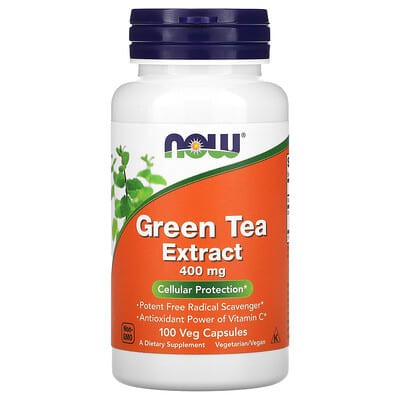
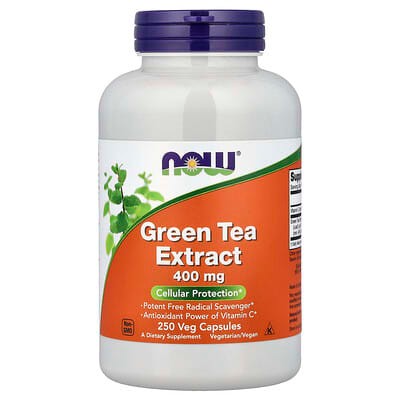
 Daily Vita
 Vitacost
 iHerb
iHerb Amazon