
Nutrient quality
Trans-resveratrol and quercetin dihydrate are useful forms, but the standard capsule lacks enhanced delivery. Resveratrol and quercetin are meaningful, while fisetin and the fruit blend are modest.
.
 iHerb iHerb | $ 27.00 | |
 Amazon Amazon | $ 36.75 | |
 Pure Formulas Pure Formulas | $ 27.00 | |
 Vitacost Vitacost | $ 26.25 |
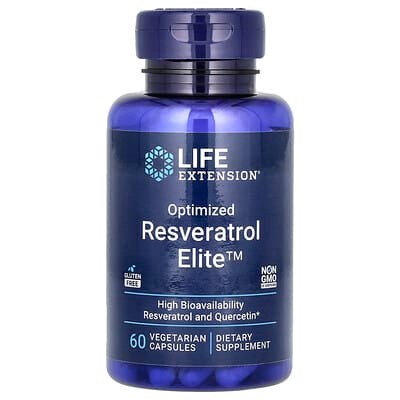
The formula supplies 250 mg trans-resveratrol with 150 mg quercetin, an 85 mg grape-blueberry blend, and 10 mg fisetin. These amounts provide more polyphenol breadth than a single-ingredient resveratrol capsule.
Japanese knotweed is named as the resveratrol source, but purity and emodin removal are not stated. The grape-blueberry blend also lacks an individual breakdown.
A one-capsule serving and broad consumer-use history improve practicality. Fisetin is a minor addition, so the formula's main value comes from resveratrol and quercetin.
Trans-resveratrol and quercetin dihydrate are useful forms, but the standard capsule lacks enhanced delivery. Resveratrol and quercetin are meaningful, while fisetin and the fruit blend are modest.
.Every listed active ingredient has a specific amount. Usage and inactive-ingredient details remain incomplete.
.The average rating is consistently strong. The very large feedback pool makes the average highly dependable.
.The main active amounts reasonably support the price. Serving value is good for meaningful resveratrol and quercetin doses.
.
Trans-resveratrol and quercetin provide complementary polyphenol support for inflammatory and oxidative-stress pathways. The main active amounts are meaningful and clearly stated.
A standard powder capsule may limit absorption, and the smaller botanical blend and fisetin amounts add less certain value. Japanese knotweed is not identified as emodin-free, so sensitive users could experience laxative effects.

Trans-resveratrol and quercetin provide a plausible endothelial and antioxidant rationale. The resveratrol amount is meaningful, but standard capsule delivery and missing purity details limit confidence in exposure.
The antioxidant blend is coherent and broader than a single active, though its evidence is less direct than fish oil or CoQ10 for major cardiovascular markers. Japanese knotweed without an emodin-free statement may cause loose stools in sensitive users.

Trans-resveratrol and quercetin provide relevant polyphenol support for oxidative and inflammatory aging pathways. Human evidence for extending healthspan remains limited despite strong mechanistic interest.
The resveratrol amount is meaningful, while fisetin and the fruit blend appear too small for dependable senolytic or broad longevity effects. Japanese knotweed is used without an emodin-free statement, so residual emodin may cause laxative effects in sensitive users.

A substantial trans-resveratrol amount plus quercetin provides focused polyphenol support against environmental oxidative stress. The additional berry blend and fisetin broaden antioxidant variety, but they do not create structural or hydration support.
Standard capsule delivery and missing purity data limit confidence in absorption and exact active yield. Japanese knotweed is used without an emodin-free statement, so sensitive users may experience a laxative effect if residual emodin is present.

Meaningful resveratrol and quercetin amounts support cellular and metabolic signaling. Mixed human evidence and low minor-active doses limit confidence in a noticeable metabolism effect.
It is more aligned with healthy aging than thermogenic fat oxidation. Resveratrol and quercetin may interact with anticoagulant or antiplatelet medicines.
| Ingredient | Amount per serving |
|---|---|
Trans-Resveratrol (Japanese Knotweed) | 250 mg |
Quercetin (Quercetin Dihydrate) | 150 mg |
Grape and Wild Blueberry blend | 85 mg |
Fisetin (Wax Tree extract) | 10 mg |
The stated trans-resveratrol amount reaches the preferred daily range, but the standard capsule lacks enhanced delivery technology. The label does not disclose purity standardization or distinguish knotweed extract weight from active yield. Japanese knotweed is used without an emodin-free statement, so residual emodin could cause mild laxative effects in sensitive users.
Published studies used for the product analysis and the top-ranked studies for each ingredient and goal.