
Nutrient quality
The amino acids use straightforward free-form names, while vitamin B6 uses conventional pyridoxine hydrochloride. The disclosed branched-chain amino acid amounts are modest for a dedicated BCAA supplement.
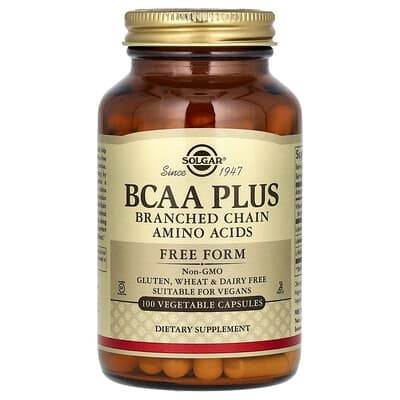
 iHerb iHerb | $ 22.78 |
Leucine, isoleucine, and valine are all clearly listed, so the core formula is easy to assess. Their proportions are sensible, but the combined amount is much lower than many people use around training.
Vitamin B6 supports amino-acid metabolism, yet 20 mg is a substantial daily amount when other supplements or fortified foods are also used. Pyridoxine hydrochloride is a conventional form rather than an active coenzyme form.
The capsule format may suit people who dislike flavored powders, but getting a stronger amino-acid amount would require many capsules. That trade-off weakens both convenience and value for serious training support.
The amino acids use straightforward free-form names, while vitamin B6 uses conventional pyridoxine hydrochloride. The disclosed branched-chain amino acid amounts are modest for a dedicated BCAA supplement.
Every active ingredient has a specific amount. Inactive ingredients are not disclosed in the supplied information.
The supplied average and volume indicate strong aggregate satisfaction. No detailed experience reports are available to identify repeated complaints or confirm perceived benefits.
The moderate cost is hard to justify given the modest amino acid amounts. Each serving offers limited active material for the cost.
| Ingredient | Amount per serving |
|---|---|
Vitamin B6 (Pyridoxine Hydrochloride) | 20 mg |
L-Leucine | 540 mg |
L-Isoleucine | 360 mg |
L-Valine | 300 mg |
The isolated L-isoleucine form supports rapid availability, though the capsule format slows delivery compared with dissolved powder. The amount per serving is low for this collection, even though the label clearly states the dose. The low cost per serving is appealing, but no independent testing or source details are provided.
A useful vitamin B6 amount accompanies the branched-chain amino acids, but pyridoxine hydrochloride requires metabolic conversion. No riboflavin cofactor or active P-5-P form is listed. The serving is practical, while the high cost for an inactive B6 form weakens collection value.
The formula clearly identifies L-leucine and discloses its exact amount in a practical capsule serving. The amount is well below the preferred muscle protein synthesis trigger range, so it is better viewed as a modest branched-chain amino acid addition than a stand-alone leucine dose. Standard capsules provide no special processing for solubility, and the low active amount leads to weak cost efficiency.