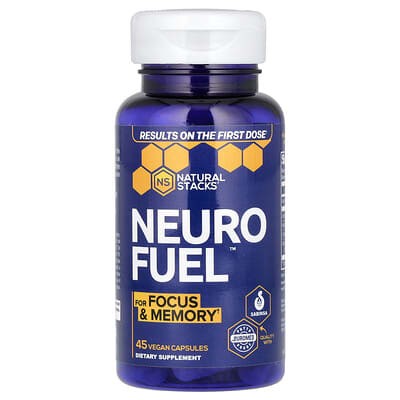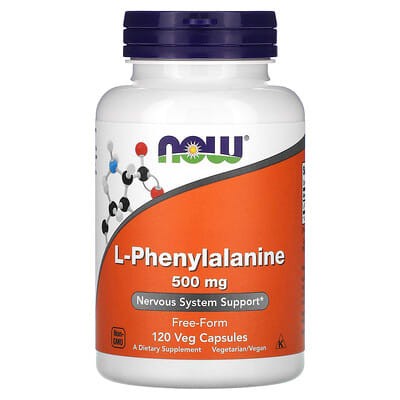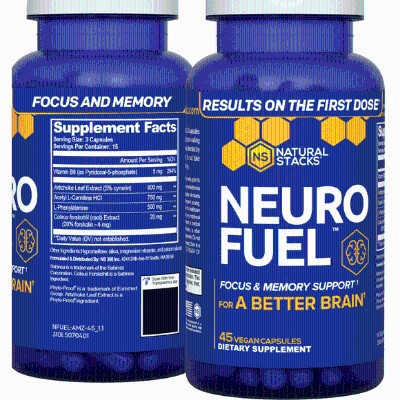
Phenylalanine

amino acid

Phenylalanine is an essential amino acid that must be obtained through the diet because the body cannot produce it. It functions as a fundamental building block for proteins and participates in various physiological processes. It acts as a direct precursor to tyrosine, which is then used to synthesize neurotransmitters such as dopamine, norepinephrine (noradrenaline), and epinephrine (adrenaline). It also contributes to the production of thyroid hormones and melanin. These pathways are important for brain function, mood stability, and the response to stress. There are three forms of this amino acid: L-phenylalanine, found naturally in proteins; D-phenylalanine, a synthetic mirror image; and DL-phenylalanine, which is a mixture of both. L-phenylalanine is the most commonly studied and supplemented form for its role in protein synthesis and neurotransmitter production.

Natural sources
Meat (beef, poultry, pork)FishEggsMilk and dairy products (cheese, yogurt)Nuts (almonds, peanuts)Seeds (sesame, pumpkin)Legumes (soybeans, lentils)Some grains (oats, quinoa)

No public comparison lists found.

Optimal Dosage
Minimum500 mg
Maximum1500 mg
Safety & Toxicity
5 safety notes
  • **Phenylketonuria (PKU):** Individuals with PKU cannot metabolize phenylalanine and must strictly avoid it. Ingesting phenylalanine can lead to severe intellectual disability and other neurological problems in individuals with PKU.
  • Pregnant or breastfeeding women should consult a healthcare professional before use.
  • Individuals with high blood pressure, heart disease, anxiety disorders, or those taking antipsychotic medications should use with caution and under medical supervision.
  • Do not exceed recommended dosages, as high doses can lead to adverse effects.
  • Avoid if you have a history of migraines, as it may trigger headaches in some individuals.
Goals
Brain Health
Impact
Situational effect
Typical dose:500–1500 mg

Phenylalanine converts to L-Tyrosine, which then produces dopamine and norepinephrine. As an indirect precursor, it is less efficient for cognitive enhancement than supplementing with L-Tyrosine directly, which is better suited for supporting focus during periods of high cognitive demand. Its use is highly situational and less effective than more direct precursors.

Focuses on
Neurotransmitter synthesisCognitive maintenanceFocus support
Most relevant for
Individuals seeking nutritional precursors for dopamine and norepinephrine, though clinical evidence for cognitive enhancement in healthy adults is limited.

Potential benefits

  • Neurotransmitter synthesis.Unconfirmed. Phenylalanine serves as an indirect precursor to dopamine and norepinephrine; however, its specific effectiveness as a supplement for enhancing brain health or focus is currently unproven.
  • Memory support.Unconfirmed. Some observational studies link higher dietary amino acid intake to better episodic memory in older adults, but these findings do not confirm a benefit from concentrated phenylalanine supplements.

Limitations

  • Disease-specific data.Most research focuses on the neurotoxic risks of excessive phenylalanine in individuals with phenylketonuria (PKU), rather than benefits for the general population.
  • Indirect pathway.It is a less direct and potentially less efficient precursor for cognitive support compared to L-Tyrosine, which it must convert into first.
  • Lack of clinical trials.There is a lack of high-quality randomized controlled trials demonstrating that phenylalanine supplementation improves brain health outcomes in healthy individuals.
Things to consider

Individuals with phenylketonuria (PKU) must avoid supplementation due to the risk of severe neurological damage. It may interact with certain medications, such as MAO inhibitors used for depression.

Study evidence

77 studies

The available evidence does not establish phenylalanine supplements as a brain-health aid. Most research concerns phenylketonuria, where impaired phenylalanine metabolism can allow harmful accumulation; favorable links between ordinary dietary intake and cognition in other populations do not prove a supplement benefit.


View goal
Mental Focus
Impact
Situational effect
Typical dose:500–1500 mg

Phenylalanine must first convert to L-Tyrosine before it can be used to produce dopamine and norepinephrine. This extra step makes it a less direct and reliable option for acutely boosting focus compared to supplementing with L-Tyrosine itself, though it still supports the necessary building blocks for cognitive function.

Focuses on
Neurotransmitter precursorCognitive building blocks
Most relevant for
Individuals seeking foundational amino acid support rather than a proven or immediate focus enhancer.

Potential benefits

  • Neurotransmitter Precursor Support.Unconfirmed. Phenylalanine serves as a metabolic building block for tyrosine and dopamine, though its ability to improve mental focus remains unproven in clinical research.

Limitations

  • Lack of Enhancement Evidence.There is no evidence in the provided research showing that phenylalanine supplementation improves concentration or attention in healthy individuals.
  • Risk of Attentional Deficits.In populations with metabolic disorders like PKU, elevated phenylalanine levels are consistently linked to executive dysfunction and decreased attention.
  • Indirect Pathway.Because it must convert to L-tyrosine before affecting dopamine levels, it is considered a less efficient and less direct option for acute cognitive support.
Things to consider

Individuals with phenylketonuria (PKU) must avoid phenylalanine supplementation, as high levels are neurotoxic and lead to significant cognitive and attentional impairment in this population.

Study evidence

7 studies

The available evidence does not establish phenylalanine as a supplement for improving mental focus. Most research concerns phenylketonuria, a condition that impairs phenylalanine metabolism, where higher levels can be associated with attention problems rather than benefits.

View goal
Mood Support
Impact
Situational effect
Typical dose:500–1500 mg

Phenylalanine converts to L-Tyrosine before it can be used to synthesize catecholamine neurotransmitters. While useful, taking L-Tyrosine directly is a more efficient step for supporting dopamine and norepinephrine production, especially during acute stress. Its use for general mood support is less established.

Focuses on
Dopamine precursorNorepinephrine synthesisMood regulation
Most relevant for
Individuals exploring amino acid precursors involved in neurotransmitter production.

Potential benefits

  • Neurotransmitter precursor.It serves as an essential building block for the synthesis of catecholamines like dopamine and norepinephrine, which are key to regulating emotional states.
  • Potential mood balance support.Unconfirmed. Early, small-scale clinical studies suggested potential for supporting mood in specific populations, though these results lack the rigor of placebo-controlled trials and remain unproven.

Limitations

  • Lack of clear evidence.Controlled studies in healthy adults have failed to show consistent improvements in mood, arousal, or emotional processing after supplementation.
  • Indirect pathway.Because it must first be converted into L-Tyrosine, it is often considered less direct and potentially less efficient for mood support than its metabolite.
  • Ambiguous biomarker status.While blood levels are sometimes altered in those with mood disorders, research has not confirmed that these levels can be corrected via supplementation to produce a therapeutic effect.
Things to consider

Individuals with Phenylketonuria (PKU) must avoid this supplement, as they cannot process it properly; high blood levels in this population are linked to anxiety, mood swings, and cognitive deficits.

Study evidence

28 studies

Phenylalanine has not been shown reliably to improve mood. Early depression research is preliminary, while much of the available evidence concerns amino acid levels or experimental depletion; in phenylketonuria, difficulty processing phenylalanine makes high levels a particular concern for mood and brain function.

View goal

Studies

Research connections will load here.
Sources

Up to five highest-ranked published examples per goal. Study counts and charts include all published studies for the connection.

  1. The Association between Dietary Amino Acid Intake and Cognitive Decline 8 Years Later in Japanese Community-Dwelling Older Adults.
    Kinoshita K; Otsuka R; Takada M; Tsukamoto-Yasui M; Nishita Y; Tange C; Tomida M; Shimokata H; Kuzuya M; Imaizumi A; Arai H · The journal of nutrition, health & aging · 2021
    Cohort study427 participantsBrain Health
  2. Magnetic resonance imaging in phenylketonuria: reversal of cerebral white matter change.
    Cleary MA; Walter JH; Wraith JE; White F; Tyler K; Jenkins JP · The Journal of pediatrics · 1995
    Non-randomized trial41 participantsBrain Health
  3. [Cross-sectional association between the amino acid intake and episodic memory in middle- and old-aged community dwellers].
    Kinoshita K; Otsuka R; Takada M; Tsukamoto-Yasui M; Nishita Y; Tange C; Tomida M; Shimokata H; Imaizumi A; Arai H · Nihon Ronen Igakkai zasshi. Japanese journal of geriatrics · 2021
    Cross-sectional study2,082 participantsBrain Health
  4. Improved dietary control results in improvements in indices of white matter structure in adults with phenylketonuria: the ReDAPT study.
    Kang MJY; Adamson C; Malpas CB; Winton-Brown T; Burgess N; Fazio T; Velakoulis D; Desmond P; Venkatraman V; De Jong G; Walterfang M · Acta neuropsychiatrica · 2026
    Single-arm trial7 participantsBrain Health
  5. [Brain white matter lesions of children with phenylketonuria before and after treatment].
    Wang ZX; Zhou ZS; Yu WM · Zhongguo dang dai er ke za zhi = Chinese journal of contemporary pediatrics · 2006
    Single-arm trial19 participantsBrain Health
  6. Cognition after a 4-week high phenylalanine intake in adults with phenylketonuria - a randomized controlled trial.
    Trepp R; Muri R; Maissen-Abgottspon S; Haynes AG; Hochuli M; Everts R · The American journal of clinical nutrition · 2024
    Randomized trial30 participantsMental Focus
  7. A systematic review of cognitive functioning in early treated adults with phenylketonuria.
    Hofman DL; Champ CL; Lawton CL; Henderson M; Dye L · Orphanet journal of rare diseases · 2019
    Systematic review16 studies pooledMental Focus
  8. Are Functional Brain Networks Sensitive to High Phenylalanine in Adults With Phenylketonuria?
    Vallesi V; Morishima Y; Winiger L; Trepp R; Everts R; Muri R · JIMD reports · 2026
    Randomized trial23 participantsMental Focus
  9. Sustained attention in untreated non-PKU-hyperphenylalaninemia.
    Weglage J; Schmidt E; Fünders B; Pietsch M; Ullrich K · Journal of clinical and experimental neuropsychology · 1997
    Case-control study48 participantsMental Focus
  10. Effects of L-histidine depletion and L-tyrosine/L-phenylalanine depletion on sensory and motor processes in healthy volunteers.
    van Ruitenbeek P; Sambeth A; Vermeeren A; Young SN; Riedel WJ · British journal of pharmacology · 2009
    Clinical trial17 participantsMental Focus
  11. The significant role of educational status in PKU patients: the beneficial effect of psychological support in depression.
    Iakovou K; Schulpis K · International journal of adolescent medicine and health · 2021
    Non-randomized trial110 participantsMood Support
  12. Evaluation of serum amino acids and non-enzymatic antioxidants in drug-naïve first-episode major depressive disorder.
    Islam MR; Ali S; Karmoker JR; Kadir MF; Ahmed MU; Nahar Z; Islam SMA; Islam MS; Hasnat A; Islam MS · BMC psychiatry · 2020
    Case-control study495 participantsMood Support
  13. Therapy of depression by phenylalanine. Preliminary note.
    Fischer E; Heller B; Nachon M; Spatz H · Arzneimittel-Forschung · 1975
    Single-arm trial23 participantsMood Support
  14. [DL-phenylalanine as an antidepressant. Open study (author's transl)].
    Beckmann H; Ludolph E · Arzneimittel-Forschung · 1979
    Single-arm trial20 participantsMood Support
  15. Do early-treated adults with phenylketonuria sense high phenylalanine levels?
    Hauri L; Muri R; Everts R; Trepp R · JIMD reports · 2024
    Randomized trial28 participantsMood Support