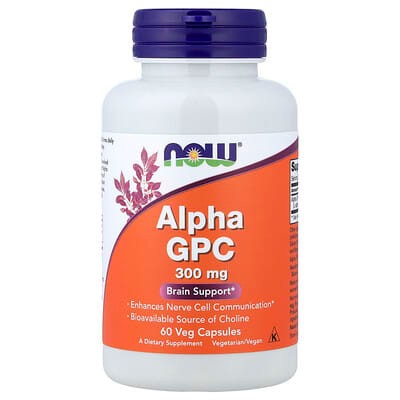
Alpha-GPC

non-nutrient_non-botanical

Alpha-GPC is a highly bioavailable form of choline, an essential nutrient important for various bodily functions. In the brain, Alpha-GPC crosses the blood-brain barrier and serves as a precursor to acetylcholine, a neurotransmitter involved in memory, learning, and overall cognitive processing. This mechanism is thought to contribute to its cognitive-enhancing effects. Beyond its cognitive roles, Alpha-GPC is researched for its impact on physical performance. It may help increase power output and strength by supporting neuromuscular function and healthy growth hormone secretion. This makes it a frequent choice for those looking to optimize their physical capabilities. As a non-botanical compound, Alpha-GPC is common in supplements designed to improve focus and exercise performance. Research continues into its efficacy and safety, with a generally good safety profile when used appropriately.

Natural sources
SoybeansEggsMeatFishDairy products

No public comparison lists found.

Optimal Dosage
Minimum300 mg
Maximum600 mg
Safety & Toxicity
Toxicity Threshold1200 mg
Toxicity EffectHeadache, dizziness
4 safety notes
  • Pregnant or nursing women should consult a healthcare professional before use.
  • Individuals with pre-existing medical conditions should consult a doctor before taking Alpha-GPC.
  • May cause gastrointestinal discomfort in some individuals.
  • Avoid exceeding recommended dosages.
Goals
Anti-Aging
Impact
High effect
Typical dose:300–1200 mg
Alpha-GPC is a highly bioavailable form of choline that readily crosses the blood-brain barrier. It helps maintain the structural integrity of neuronal membranes and supports the synthesis of acetylcholine, a key neurotransmitter involved in cognitive processes. Supplementation can help counteract age-related declines in memory, focus, and mental acuity.

Study evidence

No published studies for this goal yet.

View goal

Brain Health
Impact
High effect
Typical dose:300–600 mg
Alpha-GPC efficiently crosses the blood-brain barrier to provide choline, a crucial building block for acetylcholine. This neurotransmitter is vital for learning, memory formation, and focus. Supplementation supports optimal cholinergic function, which can decline with age.

Study evidence

12 studies

Alpha-GPC may improve cognitive symptoms in people with dementia or other cognitive impairment. The available research is more supportive in these clinical settings than in healthy adults, where limited findings do not establish lasting brain-health benefits or prevention of decline.

View goal
Cognitive Support
Impact
High effect
Typical dose:300–1200 mg
Alpha-GPC is a highly bioavailable source of choline that readily crosses the blood-brain barrier. It supports the acetylcholine system, which is involved in memory and focus, and has acute cognitive effects.

Study evidence

15 studies

Alpha-GPC has improved cognitive symptoms in some people with dementia or other cognitive impairments, including when added to medication. These findings do not establish sharper thinking in healthy people or show that Alpha-GPC prevents progression to dementia.

View goal
Mental Focus
Impact
High effect
Typical dose:300–600 mg
Alpha-GPC readily crosses the blood-brain barrier to serve as a direct precursor for acetylcholine synthesis. This supports neuronal communication, enhances learning capacity, and can sharpen focus for cognitively demanding activities.

Study evidence

1 study

Alpha-GPC may briefly improve some aspects of attention in healthy, physically trained men, but the evidence is preliminary. Benefits were limited to selected cognitive tasks, so better everyday focus or a lasting improvement in mental performance is not established.

View goal
Productivity Boost
Impact
High effect
Typical dose:300–1200 mg
Acetylcholine is essential for learning, memory recall, and concentration. Alpha-GPC efficiently delivers choline to the brain, providing the raw material needed to produce this key neurotransmitter, thereby supporting overall cognitive horsepower and mental clarity.

Study evidence

2 studies

Alpha-GPC may improve some aspects of attention on cognitive tests, but the available evidence does not establish a productivity boost. Results in healthy men were selective, with no clear improvement in working memory or attention across all tests.

View goal
Mood Support
Impact
Situational effect
Typical dose:300–600 mg
Alpha-GPC readily crosses the blood-brain barrier to provide choline for the synthesis of phosphatidylcholine, a key component of neuronal membranes, and acetylcholine, a neurotransmitter involved in memory and mood. Healthy cell membranes are crucial for proper neurotransmitter signaling.

Study evidence

1 study

Alpha-GPC has limited evidence for mood support when added to donepezil in people with Alzheimer's disease. Depressive symptoms improved in that treatment setting, but the available research does not establish a mood benefit from Alpha-GPC alone or in otherwise healthy people.

View goal
Showing 6 of 7 goals

Studies

Research connections will load here.
Sources

Up to five highest-ranked published examples per goal. Study counts and charts include all published studies for the connection.

  1. Activity of Choline Alphoscerate on Adult-Onset Cognitive Dysfunctions: A Systematic Review and Meta-Analysis.
    Sagaro GG; Traini E; Amenta F · Journal of Alzheimer's disease : JAD · 2023
    Meta-analysis8 studies pooledBrain HealthCognitive Support
  2. Comparative study of choline alfoscerate as a combination therapy with donepezil: A mixed double-blind randomized controlled and open-label observation trial.
    Lee W; Kim M · Medicine · 2024
    Randomized trial119 participantsCognitive SupportBrain Health
  3. Effects of choline alfoscerate on cognitive function and quality of life in type 2 diabetes: A double-blind, randomized, placebo-controlled trial.
    Sohn M; Park YH; Lim S · Diabetes, obesity & metabolism · 2025
    Randomized trial36 participantsBrain HealthCognitive Support
  4. Acute Alpha-Glycerylphosphorylcholine Supplementation Enhances Cognitive Performance in Healthy Men.
    Kerksick CM · Nutrients · 2024
    Randomized trial20 participantsBrain HealthProductivity BoostMental Focus
  5. Cognitive improvement in mild to moderate Alzheimer's dementia after treatment with the acetylcholine precursor choline alfoscerate: a multicenter, double-blind, randomized, placebo-controlled trial.
    De Jesus Moreno Moreno M · Clinical therapeutics · 2003
    Randomized trial261 participantsBrain Health
  6. [Gliatilin in the Treatment of Cognitive Impairments Not Reaching the Level of Dementia: Meta-Analysis and Systematic Review].
    Voznyuk IA; Nepomnyashchiy IS; Kutkova AK; Tokareva DV; Prokhorova MV; Ovdiienko OA; Shusharina NN · Zhurnal nevrologii i psikhiatrii imeni S.S. Korsakova · 2025
    Meta-analysis10 studies pooledCognitive Support
  7. Vertical Association Between Dietary Total Choline and L-alpha-glycerylphosphorylcholine and the Cognitive Function in Chinese Adults Aged over 55, Result from China Health and Nutrition Survey 1997-2018.
    Guan F; Jia X; Huang F; Zhang J; Wei Y; Li L; Bai J; Wang H · Nutrients · 2024
    Cohort study7,659 participantsCognitive Support
  8. Treatment of dementia with neurotransmission modulation.
    Doggrell SA; Evans S · Expert opinion on investigational drugs · 2004
    Narrative reviewProductivity Boost
  9. Association Between the Cholinesterase Inhibitor Donepezil and the Cholinergic Precursor Choline Alphoscerate in the Treatment of Depression in Patients with Alzheimer's Disease
    Anna Carotenuto, Angiola Maria Fasanaro, Valentino Manzo, Francesco Amenta, Enea Traini · Journal of Alzheimer's disease reports · 2022
    Randomized trial90 participantsMood Support
  10. The effect of 6 days of alpha glycerylphosphorylcholine on isometric strength
    David Bellar, Nina R LeBlanc, Brian Campbell · Journal of the International Society of Sports Nutrition · 2015
    Randomized trial13 participantsMuscle Gain