
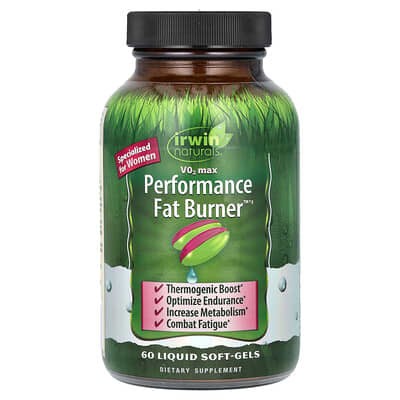
VO2 Max Performance Fat Burner

Goals
$28.99 $0.96 per serving


Product analysis
VO2 Max Performance Fat Burner may help with alertness and attention through caffeine, while ashwagandha adds a more tentative connection to stress support. Undisclosed blend ingredients make it harder to judge the complete formula.
AI assessment of the formula, label and price. How scoring works
Nutrient Quality32
Several ingredient forms are named, but many others are missing. The information does not support a confident judgment of the quality of the full mix.
Ingredient Transparency62
Amounts are stated throughout, which helps you see how much is included. Many forms and the makeup of two mixtures remain undisclosed, limiting comparison with other products.
Value For Money39
The green tea component looks costly for the amount of EGCG, a key green tea compound. Value for most other ingredients remains uncertain, so that comparison cannot settle the value of the whole formula.
Customer Satisfaction65
Customer ratings are favorable across a moderate number of reviews. They give useful feedback on satisfaction without establishing health benefits.
Product Focus15
Alertness and attention have the clearest practical support, with more tentative support for stress and training. The wide range of purposes and incomplete blend details make its central focus less clear.
- Format
Softgel - Container
- 60 Softgel(s)
- Per serving
- $0.96
- Customer rating
- 4.3 · 210 ratings
Goals

Impact
High effect
Vitamin B5 · 15 mgVitamin B12 · 50 mcgCaffeine · 75 mg
Vitamin B5 Not classified
No linked studies yet.

Impact
High effect
Vitamin B6 · 5 mgFolate · 340 mcg DFEVitamin B12 · 50 mcgGreen Tea · 270 mgAshwagandha · 300 mg

Impact
High effect
Folate · 340 mcg DFEVitamin B12 · 50 mcgGreen Tea · 270 mg

Impact
Moderate effect
Ashwagandha · 300 mgCaffeine · 75 mg

Impact
Moderate effect
Vitamin B12 · 50 mcgVitamin B12 · 50 mcgVitamin B6 · 5 mgCaffeine · 75 mg

Impact
Moderate effect
Caffeine · 75 mg
Ingredients
| Ingredient | Amount per serving | Score |
|---|---|---|
Calories | 15 Calorie(s) | |
Total Fat | 1 Gram(s) | |
Total Carbohydrates | 1 Gram(s) | |
Protein | 1 Gram(s) | |
Niacin (Niacinamide) | 10 mg | |
Vitamin B6 (Pyridoxine Hydrochloride) | 5 mg | |
Folate | 340 mcg DFE | |
Vitamin B12 (Methylcobalamin) | 50 mcg | |
Pantothenic Acid (Calcium D-Pantothenate) | 15 mg | |
Flaxseed Oil | 850 mg | |
Medium Chain Triglyceride Oil | 500 mg | |
KSM-66 Ashwagandha extract (Withanolides) | 300 mg | |
Green Tea extract (EGCG, Polyphenols) | 270 mg | |
Maca powder | 250 mg | |
Schisandra extract | 150 mg | |
Caffeine (Coffee) | 75 mg | |
BioPerine Complex | 3 mg |
Ashwagandha (Withanolides) · 300 mg OverallScore85
The serving provides 300 mg of ashwagandha extract, with the whole product priced per serving. It declares 5% withanolides.
How this ingredient is rated
Composition and Label Disclosure70
The ashwagandha extract declares 5% withanolides.
Withanolide and Preparation Disclosure
The ashwagandha extract declares 5% withanolides.
Composition and Label Disclosure100
The serving amount and ashwagandha source are stated.
Individual Preparation Amount Disclosure
The label states 300 mg of ashwagandha extract per serving.
Commercial Price and Usability
A separate value conclusion is not available.
Green Tea (EGCG, Polyphenols) · 270 mg OverallScore61
A serving provides 270 mg of green tea extract. The cost per amount of EGCG is high. The stated concentration corresponds to 135 mg of EGCG. The label mentions 75 mg of caffeine, but total product caffeine is not established.
How this ingredient is rated
Composition and Label Disclosure100
The green tea extract states 50% EGCG, 98% polyphenols.
Declared Green Tea Marker Concentration
The green tea extract states 50% EGCG, 98% polyphenols.
Composition and Label Disclosure40
The label mentions 75 mg of caffeine, but total product caffeine is not established.
Whole-Product Caffeine Disclosure
The label mentions 75 mg of caffeine, but total product caffeine is not established.
Commercial Price and Usability25
The cost per amount of EGCG is high.
Cost per 200 mg Declared EGCG
The cost per amount of EGCG is high.
Caffeine (Coffee) · 75 mg OverallScore61
Each serving provides 75 mg of caffeine per serving at a high cost per serving. No other listed stimulants were found. The caffeine source is unclear.
How this ingredient is rated
Active Ingredient Quality & Bioavailability40
The caffeine source and release details are unclear in the available information.
Advanced Bioavailability and Release Profiles
The caffeine source and release details are unclear in the available information.
Dose, Safety & Label Transparency92
The serving declares 75 mg of caffeine. No other listed stimulants were found.
Caffeine Dose Transparency
The total caffeine amount is stated as 75 mg per serving.
Dosage Efficacy and Safety Margin
Each serving provides 75 mg of caffeine.
Secondary Stimulant Disclosure and Risk
No other listed stimulants were found.
Value40
The cost per serving is high.
Price Per Serving vs. Collection Median
The cost per serving is high.
Alternative products
Report alternatives
Sources
Published studies used for the product analysis and the top-ranked studies for each ingredient and goal.
- Acute and Repeated Ashwagandha Supplementation Improves Markers of Cognitive Function and Mood.
- Effect of ashwagandha (Withania somnifera) extract with Sominone (Somin-On™) to improve memory in adults with mild cognitive impairment: A randomized, double-blind, placebo-controlled study.
- Efficacy of Withania somnifera supplementation on adult's cognition and mood.
- A clinical assessment of the therapeutic effects of Ashwagandha root extract on cognitive performance, sleep, and fatigue in children aged 6-12 years.
- Efficacy and Safety of Ashwagandha Root Extract on Cognitive Functions in Healthy, Stressed Adults: A Randomized, Double-Blind, Placebo-Controlled Study.
- B vitamins and prevention of cognitive decline and incident dementia: a systematic review and meta-analysis.
- Folate and long-chain polyunsaturated fatty acid supplementation during pregnancy has long-term effects on the attention system of 8.5-y-old offspring: a randomized controlled trial.
- Folic acid supplementation improves cognitive function in participants with cerebral small vascular disease-related cognitive impairment: a randomized controlled trial.
- Circulating folate concentrations and the risk of mild cognitive impairment: A prospective study on the older Chinese population without folic acid fortification.
- Normal-But-Low Serum Folate Levels and the Risks for Cognitive Impairment.
- Relationship between vitamin B12 levels and motor development: A systematic review.
- Vitamin B12 supplementation improves cognitive function in middle aged and elderly patients with cognitive impairment.
- Structural and Functional Brain Changes Associated with Vitamin B12 Deficiency using Magnetic Resonance Imaging: A Systematic Review and Meta-analysis.
- Maternal vitamin B12, vitamin D, and folic acid status during pregnancy and child neurodevelopment: a systematic review.
- Higher vitamin B12 from mid- to late life is related to slower rates of cognitive decline.
- Vitamin B12, B6, or Folate and Cognitive Function in Community-Dwelling Older Adults: A Systematic Review and Meta-Analysis.
- Relationship between serum pyridoxal 5'-phosphate concentration and cognitive function in older Japanese.
- A randomized, controlled trial to evaluate the efficacy of pyridoxine and ascorbic acid on cognitive function and quality of life in post-menopausal women.
- Lower Plasma Vitamin B-6 is Associated with 2-Year Cognitive Decline in the Boston Puerto Rican Health Study.
- Are Dietary Supplements and Nutraceuticals Effective for Musculoskeletal Health and Cognitive Function? A Scoping Review.