






Iron Supportive
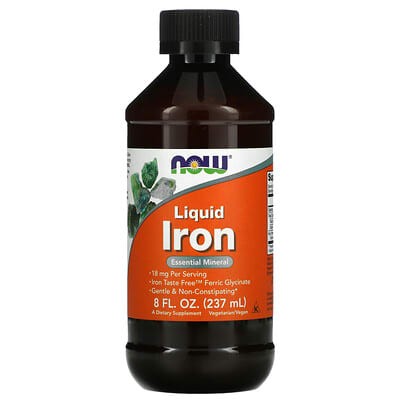
$12.70 $0.52 per serving
Product analysis
AI assessment of the formula, label and price. How scoring works
Nutrient Quality36
Ingredient Transparency75
Value For Money88
Customer Satisfaction85
Product Focus62
- Format
Liquid - Container
- 8 Liquid(s)
- Per serving
- $0.52
- Customer rating
- 4.6 · 3,030 ratings
Goals
Impact
High effect
Iron · 18 mg
Liquid Iron fits Energy mainly when iron intake or stores are low. It supplies 18 mg of iron per serving. Iron supports oxygen transport, and replenishing low iron stores can help fatigue when iron deficiency is the cause.

Impact
Moderate effect
Iron · 18 mg
Liquid Iron is a targeted nutritional option when iron deficiency contributes to shedding. Its 18 mg of iron as taste-free ferric glycinate supplies the relevant nutrient for addressing that shortfall.
Iron Disputed


Impact
High effect
Liquid Iron has a narrow immunity role: correcting an iron shortfall that impairs immune-cell function. It supplies 18 mg iron as ferric glycinate. Iron suitability depends on iron status and infection context, since therapeutic iron has worsened some infections.
Iron Supportive

Impact
Moderate effect
Iron · 18 mg
Liquid Iron is relevant to productivity mainly when low iron contributes to fatigue or poor concentration. A serving supplies 18 mg of iron as taste-free ferric glycinate, supporting correction of that nutritional shortfall. The label alone cannot tell whether low iron is the reason for someone’s symptoms.
Iron Supportive
Ingredients
| Ingredient | Amount per serving | Score |
|---|---|---|
Calories | 20 Calorie(s) | |
Total Carbohydrates | 5 Gram(s) | |
Iron (Iron Taste Free Ferric Glycinate) | 18 mg |
Iron (Iron Taste Free Ferric Glycinate) · 18 mg OverallScore79
NOW Liquid Iron is a useful iron choice with 18 mg per serving as Ferric Glycinate. Iron is good value at $0.15 per 5 mg of iron; the price is $0.54 per serving.
Alternative products
Report alternatives
Sources
Published studies used for the product analysis and the top-ranked studies for each ingredient and goal.
- Large-dose intravenous ferric carboxymaltose injection for iron deficiency anemia in heavy uterine bleeding: a randomized, controlled trial.
- The Effect of Parenteral or Oral Iron Supplementation on Fatigue, Sleep, Quality of Life and Restless Legs Syndrome in Iron-Deficient Blood Donors: A Secondary Analysis of the IronWoMan RCT.
- Ferric carboxymaltose vs. oral iron in the treatment of pregnant women with iron deficiency anemia: an international, open-label, randomized controlled trial (FER-ASAP).
- Effect of iron therapy on fatigue symptoms in non-anaemic iron deficient women of reproductive age- A Randomized Controlled Trial.
- Intravenous iron isomaltoside treatment of women suffering from severe fatigue after postpartum hemorrhage.
- Ferric carboxymaltose in patients with heart failure and iron deficiency.
- Marginal iron deficiency without anemia impairs aerobic adaptation among previously untrained women.
- Ferric Carboxymaltose Versus Ferrous Fumarate in Anemic Children with Inflammatory Bowel Disease: The POPEYE Randomized Controlled Clinical Trial.
- Daily iron supplementation for improving anaemia, iron status and health in menstruating women.
- Altered metabolic response of iron-depleted nonanemic women during a 15-km time trial.
- The Association Between Alopecia Areata and Iron Deficiency Anemia: A Large-Scale Population-Based Case-Control Study.
- Iron Deficiency and Nonscarring Alopecia in Women: Systematic Review and Meta-Analysis.
- Comparative Analysis of Postoperative Hair Loss and Micronutrient Deficiencies After One-Anastomosis Gastric Bypass Versus Sleeve Gastrectomy.
- Assessment of Serum Ferritin Levels in Female Patients With Telogen Effluvium.
- Diagnosis and treatment of female alopecia: Focusing on the iron deficiency-related alopecia.
- The immune response in iron-deficient children: Impaired cellular defense mechanisms with altered humoral components.
- The role of iron homeostasis in remodeling immune function and regulating inflammatory disease.
- Hepcidin--a peptide hormone at the interface of innate immunity and iron metabolism.
- Adaptive immunity and vaccination - iron in the spotlight.
- Buried Treasure: Evolutionary Perspectives on Microbial Iron Piracy.