


Iron Disputed
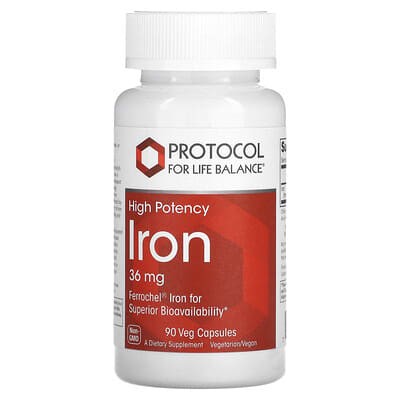
High Potency Iron 36 mg
Goals
$17.00 $0.18 per serving
Product analysis
AI assessment of the formula, label and price. How scoring works
Nutrient Quality40
Ingredient Transparency100
Value For Money88
Customer Satisfaction77
Product Focus72
- Format
Capsule - Container
- 90 Capsule(s)
- Per serving
- $0.18
- Customer rating
- 4.8 · 328 ratings
Goals

Impact
High effect
Iron · 36 mg
High Potency Iron 36 mg is a focused option for hair health when iron deficiency is contributing to shedding. It supplies 36 mg iron as Ferrochel iron bisglycinate to help fill that nutrient gap. The amount and form alone cannot determine whether iron replacement is appropriate.

Impact
High effect
Iron · 36 mg
High Potency Iron 36 mg is relevant to productivity mainly when low iron is contributing to fatigue or poor concentration. The serving supplies 36 mg iron as Ferrochel iron bisglycinate, with iron replacement addressing that nutritional gap rather than acting as an attention stimulant.
Iron Supportive

Impact
High effect
Iron · 36 mg
High Potency Iron 36 mg is relevant to energy when iron deficiency contributes to tiredness. Its 36 mg of elemental iron as Ferrochel iron bisglycinate provides replacement iron for that nutritional need; the benefit depends on iron status.
Iron Supportive

Impact
High effect
High Potency Iron 36 mg has a situational immune-nutrition role when iron intake or status is low. Its 36 mg iron supports immune-cell function in deficiency, but the supplied facts also flag that iron can worsen some infections, making iron status relevant to the choice.
Iron Supportive
Ingredients
| Ingredient | Amount per serving | Score |
|---|---|---|
Iron (Ferrochel Iron Bisglycinate) | 36 mg |
Iron (Ferrochel Iron Bisglycinate) · 36 mg OverallScore89
Protocol For Life Balance High Potency Iron 36 mg offers a stated amount of iron. A serving provides 36 mg iron. The iron is supplied as Iron Bisglycinate. The vitamin C amount is not known. At $0.026 per 5 mg iron, the price is good value; the full formula costs $0.19 per serving.
Alternative products
Report alternatives
Sources
Published studies used for the product analysis and the top-ranked studies for each ingredient and goal.
- Large-dose intravenous ferric carboxymaltose injection for iron deficiency anemia in heavy uterine bleeding: a randomized, controlled trial.
- The Effect of Parenteral or Oral Iron Supplementation on Fatigue, Sleep, Quality of Life and Restless Legs Syndrome in Iron-Deficient Blood Donors: A Secondary Analysis of the IronWoMan RCT.
- Ferric carboxymaltose vs. oral iron in the treatment of pregnant women with iron deficiency anemia: an international, open-label, randomized controlled trial (FER-ASAP).
- Effect of iron therapy on fatigue symptoms in non-anaemic iron deficient women of reproductive age- A Randomized Controlled Trial.
- Intravenous iron isomaltoside treatment of women suffering from severe fatigue after postpartum hemorrhage.
- The Association Between Alopecia Areata and Iron Deficiency Anemia: A Large-Scale Population-Based Case-Control Study.
- Iron Deficiency and Nonscarring Alopecia in Women: Systematic Review and Meta-Analysis.
- Comparative Analysis of Postoperative Hair Loss and Micronutrient Deficiencies After One-Anastomosis Gastric Bypass Versus Sleeve Gastrectomy.
- Assessment of Serum Ferritin Levels in Female Patients With Telogen Effluvium.
- Diagnosis and treatment of female alopecia: Focusing on the iron deficiency-related alopecia.
- The immune response in iron-deficient children: Impaired cellular defense mechanisms with altered humoral components.
- The role of iron homeostasis in remodeling immune function and regulating inflammatory disease.
- Hepcidin--a peptide hormone at the interface of innate immunity and iron metabolism.
- Adaptive immunity and vaccination - iron in the spotlight.
- Buried Treasure: Evolutionary Perspectives on Microbial Iron Piracy.
- Effects of daily iron supplementation in primary-school-aged children: systematic review and meta-analysis of randomized controlled trials.
- Consumption of Iron-Biofortified Beans Positively Affects Cognitive Performance in 18- to 27-Year-Old Rwandan Female College Students in an 18-Week Randomized Controlled Efficacy Trial.
- Functional consequences of iron supplementation in iron-deficient female cotton mill workers in Beijing, China.
- The Effect of Iron-Fortified Lentils on Blood and Cognitive Status among Adolescent Girls in Bangladesh.
- Daily iron supplementation for improving anaemia, iron status and health in menstruating women.