

$19.99 $0.66 per serving


Product analysis
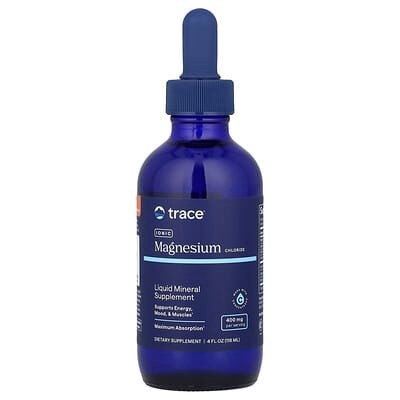
Ionic Magnesium 400 mg may help fill a dietary gap and support normal bone, muscle and energy functions. The mineral forms are unspecified, making absorption and product comparisons less clear.
AI assessment of the formula, label and price. How scoring works
Nutrient Quality20
The mineral forms are unspecified, so their absorption quality cannot be judged confidently. The word ionic alone does not resolve those missing details.
Ingredient Transparency63
All mineral amounts are stated, making serving quantities easy to compare. None of their specific forms is disclosed, which limits comparison of the sources used.
Value For Money23
Value is uncertain because magnesium's form and some mineral cost comparisons are unclear. Boron is expensive for the amount supplied, while chloride and sulfur offer more moderate value.
Customer Satisfaction87
Customer feedback is strongly positive. Thousands of reviews provide a substantial picture of buyer satisfaction.
Product Focus65
The clearest use is filling a magnesium gap to support normal bone, muscle and energy functions. The broader promises around stress, hormones and exercise have more limited or conditional support.
- Format
Liquid - Container
- 4 Liquid(s)
- Per serving
- $0.66
- Customer rating
- 4.7 · 3,261 ratings
Goals

Impact
High effect
Magnesium · 400 mgBoron · 1.5 mg
Magnesium contributes to normal energy processes and mineral nutrition. These nutrients can help fill dietary gaps; amounts above nutritional adequacy do not establish additional general-health benefits.
How this product is rated for Everyday Health
Ingredient fit69
The retained nutrients provide nutritional contributions, with the serving amounts determining how fully the saved references are covered.
Goal fit
The formula includes relevant nutrients alongside other active ingredients, making its focus less specific.
Dose adequacy
Serving amounts provide uneven coverage of the saved references, with unresolved quantities contributing no amount coverage.
Pathways80
The strongest saved area is energy metabolism cofactors; breadth depends on the other retained nutrient contributions.
Depth
The saved findings are strongest for energy metabolism cofactors, reflecting the retained nutrients’ nutritional roles.
Breadth
The saved findings cover energy metabolism cofactors, bone and mineral metabolism.
Evidence86
Magnesium provides the strongest saved evidence connection, limited here to conditional nutritional usefulness.
Evidence strength
Magnesium leads the saved evidence finding; its practical general-health role is filling a dietary gap rather than guaranteeing disease prevention.
Studied preparation
The retained ingredients meeting the amount threshold match recognized preparation categories; no superior form or delivery benefit is established.
Formulation logic100
No configured partner gap or ingredient conflict was found; retained amount coverage varies by nutrient.
Partner coverage
The saved findings identify no missing required ingredient partner.
Conflicts
No configured ingredient conflict was matched.
Effective doses
All retained nutrients meet the saved amount threshold, which is a comparison reference rather than proof of added health benefits.

Impact
High effect
Potassium · 5 mgMagnesium · 400 mg
Magnesium contributes to blood-vessel function, with possible effects on arterial stiffness. Findings are inconsistent: one trial improved stiffness without lowering blood pressure, while others found no overall benefit. Support is more plausible with low magnesium status or elevated blood pressure; the supplied forms do not establish superior cardiovascular effects.
How this product is rated for Cardiovascular Support
Ingredient fit63
The formula includes relevant cardiovascular ingredients alongside other actives, making its focus broader than this goal.
Goal fit
The formula includes relevant cardiovascular ingredients alongside other actives, making its focus broader than this goal.
Dose adequacy
The amounts of the ingredients counted here reach their saved comparison anchors; this does not establish a proven effective daily dose.
Pathways54
The supplied findings concentrate on vascular tone and sodium balance. Other cardiovascular aspects have limited or no recognized coverage.
Depth
The strongest supplied connection is vascular tone and sodium balance.
Breadth
Coverage is concentrated in vascular tone and sodium balance; the other cardiovascular aspects do not reach the saved coverage threshold.
Evidence79
Magnesium provides the strongest recognized evidence here, limited to the contexts and outcomes described for that ingredient.
Evidence strength
Magnesium provides the strongest recognized evidence here, limited to the contexts and outcomes described for that ingredient.
Studied preparation
The ingredients counted at meaningful amounts are recognized as studied preparations in the saved findings.
Formulation logic100
The counted ingredients have no missing required partner or listed conflict, and reach the saved minimum amount threshold.
Partner coverage
The counted ingredients can contribute without a missing required partner.
Conflicts
No listed ingredient conflict was triggered by the supplied facts.
Effective doses
All ingredients counted in this finding reach its minimum amount threshold; that threshold is a comparison convention, not proof of effectiveness.

Impact
Moderate effect
Magnesium · 400 mgPotassium · 5 mg
The 400 mg magnesium serving contributes to meeting a nutrient need associated with fatigue and weakness when deficient. Extra energy is not established for people who already have adequate magnesium intake.
How this product is rated for Energy
Ingredient fit66
Magnesium provides the relevant contribution within a formula containing other actives. The counted amount meets the full saved dose comparison.
Goal fit
Magnesium provides the relevant contribution within a formula containing other actives.
Dose adequacy
The counted amount meets the full saved dose comparison.
Pathways0
No direct alertness, muscle-buffering, mitochondrial, stress-fatigue or blood-flow contribution was assigned; nutritional relevance is assessed separately.
Depth
No direct alertness, muscle-buffering, mitochondrial, stress-fatigue or blood-flow contribution was assigned; nutritional relevance is assessed separately.
Breadth
No assessed area reaches the saved breadth threshold.
Evidence88
Magnesium provides the strongest saved evidence finding at the assessed amount. The counted preparations meet the saved studied-preparation criteria.
Evidence strength
Magnesium provides the strongest saved evidence finding at the assessed amount.
Studied preparation
The counted preparations meet the saved studied-preparation criteria.
Formulation logic100
The counted ingredients work independently or have their required partners. No configured ingredient conflict was found in the supplied facts.
Partner coverage
The counted ingredients work independently or have their required partners.
Conflicts
No configured ingredient conflict was found in the supplied facts.
Effective doses
1 of 1 counted ingredients meet the saved minimum amount comparison.

Impact
High effect
Magnesium · 400 mg
Magnesium has limited and inconsistent evidence for small blood-pressure changes. Its declared elemental amount provides the relevant contribution, without establishing a predictable response or prevention of cardiovascular events. The supplied findings do not show a superior heart-health benefit from its chemical form, and amounts beyond the comparison range do not establish added benefit.
How this product is rated for Heart Health
Ingredient fit63
Magnesium anchors the relevant saved findings. Its declared amount meets the saved comparison.
Goal fit
Relevant ingredients form part of a broader formula, so a smaller share of its active ingredients is concentrated on this goal.
Dose adequacy
Magnesium’s declared serving amount meets the saved comparison; this does not establish an optimal or clinically effective regimen.
Pathways57
The connection is concentrated in electrolyte and vascular-tone balance. Other heart-health processes have little or no coverage.
Depth
The strongest saved connection is to electrolyte and vascular-tone balance; this describes marker-related coverage rather than demonstrated prevention of heart disease.
Breadth
Coverage is concentrated in electrolyte and vascular-tone balance, with little or no coverage of the other evaluated heart-health processes.
Evidence89
Magnesium leads the saved evidence finding, although its blood-pressure results are marginal and inconsistent.
Evidence strength
Magnesium leads the saved evidence finding, although its blood-pressure results are marginal and inconsistent.
Studied preparation
The counted declarations meet the saved preparation comparison, without establishing finished-product equivalence or superiority of a particular delivery form.
Formulation logic100
No required partner is missing and none of the listed stimulant or high-sodium conditions applies. Counted ingredients meet the minimum amount comparison.
Partner coverage
No counted ingredient lacks a required partner under the supplied findings; this does not establish extra benefit from combining them.
Conflicts
The listed caffeine, stimulant and high-sodium conditions are not triggered by the supplied facts; this is a limited conflict check.
Effective doses
All counted ingredients meet the saved minimum amount comparison; excluded preparations and smaller contributions are not made effective by this finding.

Impact
High effect
Magnesium · 400 mg
Magnesium may help with stress-related symptoms when magnesium intake is low or in selected clinical settings. This product provides 400 mg of elemental magnesium per serving, with the relevant connection centered on calming. Broad, lasting relief from everyday stress remains uncertain.
How this product is rated for Stress Relief
Ingredient fit63
Magnesium supplies the relevant stress connection within a broader mineral formula.
Goal fit
Additional minerals make the formula less focused on stress relief.
Dose adequacy
The declared serving receives full amount recognition in the saved findings.
Pathways50
The main connection is calming, with a smaller contribution to stress-hormone regulation.
Depth
Calming is the strongest covered route, but coverage remains incomplete.
Breadth
Only calming reaches substantial coverage; stress-hormone regulation remains a smaller contribution.
Evidence76
Magnesium's stress findings are conditional on low intake or selected clinical settings, with uncertain everyday applicability.
Evidence strength
Magnesium provides the strongest evidence available in this formula, with conditional stress findings.
Studied preparation
The saved findings recognize the declared preparation; this does not establish equal absorption across magnesium salts.
Formulation logic100
Magnesium can contribute without missing partners, and none of the checked conflicts was triggered.
Partner coverage
No required partner is missing from the credited ingredients.
Conflicts
None of the checked stimulant or ingredient-combination conflicts was triggered.
Effective doses
Magnesium reaches the amount threshold used for a meaningful contribution.

Impact
High effect
Magnesium · 400 mgBoron · 1.5 mg
Magnesium makes a substantial amount contribution, but its testosterone evidence concerns a small exercise-related study rather than routine use. Boron adds a smaller recorded contribution. Its short-term and conflicting human findings do not establish a reliable, lasting testosterone increase from this formula.
How this product is rated for Testosterone Support
Ingredient fit61
Relevant ingredients are present alongside ingredients or uses beyond testosterone support. The declared amounts provide a mixture of partial and full contributions relative to the supplied reference exposures.
Goal fit
Relevant ingredients are present alongside ingredients or uses beyond testosterone support.
Dose adequacy
The declared amounts provide a mixture of partial and full contributions relative to the supplied reference exposures.
Pathways70
The largest recorded route concerns free-testosterone availability, although that assignment does not establish an increase in circulating free testosterone.
Depth
The largest recorded route concerns free-testosterone availability, although that assignment does not establish an increase in circulating free testosterone.
Breadth
Coverage is concentrated in free-testosterone availability, with other routes below the coverage threshold.
Evidence74
Magnesium leads the evidence contribution, but its human hormone findings concern specific exercise conditions.
Evidence strength
Magnesium leads the evidence contribution, but its human hormone findings concern specific exercise conditions.
Studied preparation
The counted forms receive full preparation recognition here, without establishing hormone benefit or superiority of one salt.
Formulation logic100
The counted ingredients have no missing required partners or matched conflicts, and their amounts meet the minimum comparison threshold.
Partner coverage
No counted ingredient lacks a required partner under the applied checks.
Conflicts
No ingredient combination triggers the specific conflict checks applied.
Effective doses
All counted ingredients meet the minimum amount threshold used here; this is not a proven testosterone-raising dose.
Ingredients
| Ingredient | Amount per serving | Score |
|---|---|---|
Magnesium | 400 mg | |
Chloride | 1120 mg | |
Sodium | 10 mg | |
Potassium | 5 mg | |
Sulfate | 90 mg | |
Boron | 1.5 mg |
Sulfur · 90 mg OverallScore42
The serving lists 90 mg of sulfate. That is the compound amount; the elemental sulfur amount is not established in the saved facts.
How this ingredient is rated
Active Ingredient Quality & Bioavailability40
The saved facts do not identify a specific sulfur carrier.
Sulfur Source & Chemical Form
The saved facts do not identify a specific sulfur carrier.
Dose, Safety & Label Transparency40
The serving lists 90 mg of sulfate, which is not the same as the amount of elemental sulfur.
Elemental Sulfur Potency
The amount of elemental sulfur is not established in the saved facts.
Quantitative Complex Disclosure
The serving lists 90 mg of sulfate, which is not the same as the amount of elemental sulfur.
Value50
The whole-product serving costs about $0.68.
Price per Serving vs. Collection Median
The whole-product serving costs about $0.68.
Chloride · 1120 mg OverallScore54
Each serving lists 1,120 mg of chloride. The specific source salt is unknown in the supplied facts.
How this ingredient is rated
Active Ingredient Quality & Bioavailability20
The specific source salt is unknown.
Chloride source quality
The specific chloride source is unknown in the supplied facts.
Dose, Safety & Label Transparency91
The serving amount is recorded, though the source information is less complete.
Chloride amount per serving
A serving lists 1,120 mg of chloride.
Amount and source disclosure
The chloride amount is recorded, but complete source details are not identified in the main listing.
Value50
A whole-product serving costs about $0.68; that price covers the entire product.
Price per serving
The whole-product serving costs about $0.68.
Magnesium · 400 mg OverallScore40
Each serving provides 400 mg of magnesium. Its chemical source is not identified in the available facts.
How this ingredient is rated
Active Ingredient Quality & Bioavailability0
The magnesium source is not identified in the available facts, so its chemical form cannot be assessed.
Magnesium Form & Absorption Potential
The magnesium source is not identified in the available facts, so its chemical form cannot be assessed.
Patented Materials & Chelation Quality
The available facts do not establish a patented or fully chelated magnesium claim.
Dose, Safety & Label Transparency100
A serving provides 400 mg of magnesium. At least one of vitamin B6, vitamin D or boron is recorded in a positive amount.
Elemental Yield Transparency
The label explicitly declares 400 mg of elemental magnesium per serving.
Therapeutic Dosage Alignment
A serving provides 400 mg of magnesium.
Synergistic Formulation Logic
At least one of vitamin B6, vitamin D or boron is recorded in a positive amount.
Value0
A whole-product serving costs about $0.67.
Price Per Elemental Quality
A whole-product serving costs about $0.67.
Alternative products
Report alternatives
Sources
Published studies used for the product analysis and the top-ranked studies for each ingredient and goal.
- [Comparative study of the urinary excretion of boron, calcium, magnesium and phosphorus in postmenopausal women with and without osteoporosis].
- Effect of dietary boron on mineral, estrogen, and testosterone metabolism in postmenopausal women.
- The relationship between boron and magnesium status and bone mineral density in the human: a review.
- Effects of boron supplementation on bone mineral density and dietary, blood, and urinary calcium, phosphorus, magnesium, and boron in female athletes.
- Metabolic responses of postmenopausal women to supplemental dietary boron and aluminum during usual and low magnesium intake: boron, calcium, and magnesium absorption and retention and blood mineral concentrations
- Association between Serum Magnesium and Fractures: A Systematic Review and Meta-Analysis of Observational Studies.
- Bioabsorbable Magnesium-Based Materials Potential and Safety in Bone Surgery: A Systematic Review.
- Vascularized bone grafting fixed by biodegradable magnesium screw for treating osteonecrosis of the femoral head.
- An update on magnesium and bone health.
- Sex-specific differences in the association of magnesium intake with femoral neck bone mineral density among older adults.
- Effect of potassium citrate on bone density, microarchitecture, and fracture risk in healthy older adults without osteoporosis: a randomized controlled trial.
- Long-term persistence of the urine calcium-lowering effect of potassium bicarbonate in postmenopausal women.
- Partial neutralization of the acidogenic Western diet with potassium citrate increases bone mass in postmenopausal women with osteopenia.
- Potassium citrate supplementation results in sustained improvement in calcium balance in older men and women.
- Effects of potassium chloride and potassium bicarbonate on endothelial function, cardiovascular risk factors, and bone turnover in mild hypertensives.
- Circulating and dietary magnesium and risk of cardiovascular disease: a systematic review and meta-analysis of prospective studies.
- Magnesium and the risk of cardiovascular events: a meta-analysis of prospective cohort studies.
- Quantitative Association Between Serum/Dietary Magnesium and Cardiovascular Disease/Coronary Heart Disease Risk: A Dose-Response Meta-analysis of Prospective Cohort Studies.
- Comparative Efficacy of Nutraceuticals on Endothelial Function: A Systematic Review and Network Meta-Analysis.
- Serum magnesium, mortality, and cardiovascular disease in chronic kidney disease and end-stage renal disease patients: a systematic review and meta-analysis.