
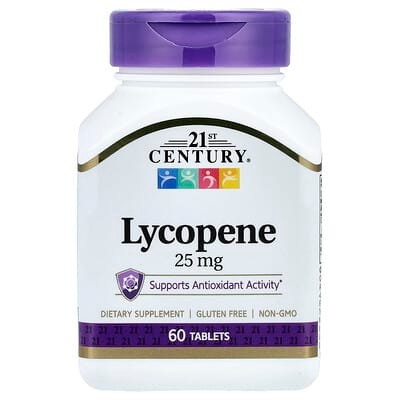

$11.49 $0.19 per serving


Product analysis
Lycopene 25 mg may offer modest support against some signs of sun-related skin stress. Its lycopene form is not specified, making it harder to compare with the preparations behind those findings.
AI assessment of the formula, label and price. How scoring works
Nutrient Quality24
The unspecified lycopene form makes preparation quality hard to compare. The calcium form is named, but its absorption quality is uncertain.
Ingredient Transparency81
Both nutrient amounts are stated, which helps when comparing servings. The lycopene form is missing even though the calcium form is named.
Value For Money88
The lycopene serving offers good value. The calcium component cannot be compared as confidently.
Customer Satisfaction88
Customer feedback is strongly positive across a large number of ratings. Satisfaction does not establish that the supplement will deliver skin or blood-vessel benefits.
Product Focus81
The formula centers on lycopene, with modest and mixed skin findings and limited blood-vessel findings. Those findings do not establish stronger sun protection or a general cardiovascular benefit.
- Format
Tablet - Container
- 60 Tablet(s)
- Per serving
- $0.19
- Also available
 Magnesium 250 mg$4.99
- Customer rating
- 4.7 · 4,944 ratings
Goals

Impact
Highest effect
Lycopene · 25 mg
Lycopene showed a limited blood-vessel-function signal in statin-treated adults with cardiovascular disease, but not in healthy volunteers. Blood pressure, lipids and arterial stiffness were unchanged in that trial. The serving meets the saved amount range, but does not establish a general cardiovascular benefit or an effect equivalent to dietary tomato associations.
How this product is rated for Cardiovascular Support
Ingredient fit83
The cardiovascular ingredients sit within a broader formula, reducing its specific focus on this goal.
Goal fit
The cardiovascular ingredients sit within a broader formula, reducing its specific focus on this goal.
Dose adequacy
The disclosed amounts meet the saved comparison ranges; those ranges do not establish clinical benefit or a recommended intake.
Pathways60
The strongest recorded connection concerns ldl and vessel-wall oxidative protection. This describes a mechanism rather than proven event prevention.
Depth
The strongest recorded connection concerns ldl and vessel-wall oxidative protection. This describes a mechanism rather than proven event prevention.
Breadth
Only part of the selected cardiovascular mechanisms reaches the saved coverage threshold.
Evidence83
Lycopene leads the saved evidence finding; the supported outcomes remain limited to the specific markers and populations described.
Evidence strength
Lycopene leads the saved evidence finding; the supported outcomes remain limited to the specific markers and populations described.
Studied preparation
The saved findings recognize the evaluated preparations, while the supplied population and outcome limitations still apply.
Formulation logic100
No required partner is missing in the saved findings; this does not establish added benefit from combining ingredients.
Partner coverage
No required partner is missing in the saved findings; this does not establish added benefit from combining ingredients.
Conflicts
No matched ingredient conflict was recorded in the supplied findings.
Effective doses
All counted ingredients meet the saved minimum amount threshold, which does not prove a clinically effective cardiovascular dose.

Impact
Highest effect
Lycopene · 25 mg
Lycopene has modest, mixed evidence for reducing selected signs of UV-related skin stress. Some small trials used tomato preparations, so their results do not transfer completely to this product’s declared lycopene. The 25 mg serving is above the cited study exposures and does not establish stronger protection or a sunscreen-equivalent effect.
How this product is rated for Skin Health
Ingredient fit83
Lycopene drives the saved skin-related finding. The credited amounts meet the saved criteria.
Goal fit
Lycopene is the principal ingredient receiving a skin-related contribution; the product’s other uses also affect its focus.
Dose adequacy
The credited ingredients meet the saved amount criteria; this does not establish additional benefit above nutritional needs.
Pathways59
Coverage is strongest for UV-related antioxidant activity, with limited breadth beyond the breadth criterion.
Depth
The strongest saved contribution concerns UV-related antioxidant activity; this describes coverage, not a proven clinical effect.
Breadth
Only UV-related antioxidant activity reaches the breadth criterion; support across other skin functions is limited.
Evidence87
Lycopene has modest, mixed support for selected UV-related skin outcomes.
Evidence strength
Lycopene has modest, mixed support for selected UV-related skin outcomes.
Studied preparation
The saved preparation criteria are met; this does not remove population, combination or nutrient-sufficiency limits in the supplied evidence.
Formulation logic100
No unmet partner requirement or evaluated conflict was identified. The credited ingredients meet the saved minimum amount criterion.
Partner coverage
The credited ingredients have no unmet partner requirement in the supplied findings; this does not establish added benefits from combining them.
Conflicts
No ingredient conflict was identified by the evaluated rules.
Effective doses
All credited ingredients meet the saved minimum amount criterion; that threshold is not a proven effective skin dose.
Ingredients
| Ingredient | Amount per serving | Score |
|---|---|---|
Calcium (Calcium Carbonate) | 170 mg | |
Lycopene | 25 mg |
Lycopene · 25 mg OverallScore100
A serving lists 25 mg of lycopene. Using the whole-product price, the cost works out to about $0.08 per 10 mg of lycopene.
How this ingredient is rated
Composition and Label Disclosure
No additional composition rules were evaluated.
Composition and Label Disclosure100
The lycopene amount is specified per serving, allowing a direct amount comparison.
Declared Active Lycopene Amount
The serving lists 25 mg of lycopene.
Commercial Price and Usability100
The whole-product cost is relatively low when expressed per 10 mg of lycopene.
Whole-Product Cost per 10 mg Declared Active Lycopene
The whole-product serving price corresponds to about $0.08 per 10 mg of declared lycopene.
Alternative products
Report alternatives
Sources
Published studies used for the product analysis and the top-ranked studies for each ingredient and goal.
- Effects of lycopene intake on HDL-cholesterol and triglyceride levels: A systematic review with meta-analysis.
- Improvement of vascular endothelial function by intake of lycopene-rich tomato juice in healthy adults: a randomized, placebo-controlled, double-blind, parallel-group comparative study.
- Tomato and lycopene supplementation and cardiovascular risk factors: A systematic review and meta-analysis.
- Lycopene and tomato and risk of cardiovascular diseases: A systematic review and meta-analysis of epidemiological evidence.
- Lycopene and risk of cardiovascular diseases: A meta-analysis of observational studies.
- Systemic and skin-targeting beneficial effects of lycopene-enriched ice cream: A pilot study.
- Topical lycopene emulgel significantly improves biophysical parameters of human skin.
- Supplementation with tomato-based products increases lycopene, phytofluene, and phytoene levels in human serum and protects against UV-light-induced erythema.
- Association of Vitamin A Intake With Cutaneous Squamous Cell Carcinoma Risk in the United States.
- β-Carotene and other carotenoids in protection from sunlight.