
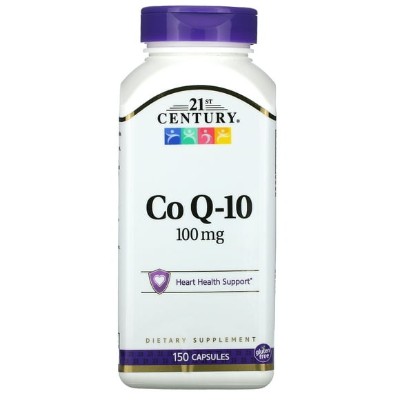

$35.21 $0.23 per serving

Product analysis
Co Q-10 100 mg is a focused CoQ10 option that may support some measures of blood-vessel function in selected adults. The unspecified CoQ10 form makes it harder to relate the serving to preparation-specific fatigue findings.
AI assessment of the formula, label and price. How scoring works
Nutrient Quality20
The CoQ10 form is not identified, leaving its quality and delivery characteristics uncertain. A generic CoQ10 description does not establish equivalence to a particular ubiquinone or ubiquinol preparation.
Ingredient Transparency63
The CoQ10 amount is listed, making the total serving clear. The missing form makes precise comparisons with identified preparations harder.
Value For Money60
The full serving offers moderate value on the available CoQ10 price comparison. The unspecified form limits a precise comparison with alternatives.
Customer Satisfaction76
Customer feedback is strongly positive. The review base is modest, leaving some uncertainty about how widely those experiences apply.
Product Focus68
The single ingredient has limited support for some heart-related measures in selected adults. The 100 mg serving is below some relevant repeated-use amounts, and broader energy, metabolism or aging benefits remain uncertain.
- Format
Capsule - Container
- 150 Capsule(s)
- Per serving
- $0.23
- Also available
 Co Q-10 200 mg$28.58
- Customer rating
- 4.8 · 248 ratings
Goals

Impact
Highest effect
Coenzyme Q-10 · 100 mg
CoQ10 has limited support for blood-vessel function and lipid or blood-pressure markers in people with abnormal blood lipids. This serving provides 100 mg, slightly below the 120 mg daily exposure in the supplied general CoQ10 study. The declaration establishes CoQ10 active mass, without proving a superior delivery form or prevention of cardiovascular events.
How this product is rated for Cardiovascular Support
Ingredient fit86
The main ingredient or declared actives directly relate to the cardiovascular area represented here.
Goal fit
The main ingredient or declared actives directly relate to the cardiovascular area represented here.
Dose adequacy
The declared amount receives partial recognition relative to the saved amount references; this does not establish a proven response at that exposure.
Pathways53
The contribution focuses on blood-vessel function.
Depth
The contribution focuses on blood-vessel function.
Breadth
One area reaches substantial coverage, so the contribution remains focused.
Evidence88
Declared CoQ10 matches the relevant active, with evidence limited to selected cardiovascular markers.
Evidence strength
Declared CoQ10 matches the relevant active, with evidence limited to selected cardiovascular markers.
Studied preparation
The saved findings recognize the eligible preparation or active declaration; this does not remove the ingredient-specific research limitations.
Formulation logic100
The recognized ingredients have no missing required partner or identified conflict in the supplied checks.
Partner coverage
The recognized ingredients can contribute independently or have their required partner; no additional benefit from combining them is established.
Conflicts
No conflict covered by the supplied checks was identified.
Effective doses
All ingredients retained for this check meet its minimum amount criterion, which is not a proven clinical threshold.

Impact
Highest effect
Coenzyme Q-10 · 100 mg
CoQ10 has limited support for blood-vessel function and blood-pressure measures in selected populations. Its preparation and exposure matter, and these findings do not establish routine prevention of heart attacks or other cardiovascular events. A label serving does not establish the sustained daily use tested in trials.
How this product is rated for Heart Health
Ingredient fit86
Coenzyme Q-10 gives this product a focused heart-health connection. The assessed amounts provide partial coverage of the saved references, with some ingredients contributing less than others.
Goal fit
Coenzyme Q-10 gives this product a focused heart-health connection.
Dose adequacy
The assessed amounts provide partial coverage of the saved references, with some ingredients contributing less than others.
Pathways53
The main covered mechanism is endothelial nitric-oxide function, with partial coverage in the saved findings.
Depth
The main covered mechanism is endothelial nitric-oxide function, with partial coverage in the saved findings.
Breadth
Meaningful coverage is concentrated in endothelial nitric-oxide function.
Evidence98
CoQ10 evidence concerns selected vascular and blood-pressure measures, with preparation-specific exposure comparisons.
Evidence strength
Coenzyme Q-10 provides the strongest assessed evidence connection; changes in intermediate measures do not necessarily demonstrate fewer cardiovascular events.
Studied preparation
The assessed preparations meet the saved study criteria, without establishing identical effects in every population or regimen.
Formulation logic100
No configured conflict or missing partner was found. All ingredients included in this amount check clear its minimum comparison threshold; that threshold does not itself prove a noticeable benefit.
Partner coverage
The assessed ingredients do not depend on a missing partner for their assigned contribution.
Conflicts
No configured ingredient conflict was found in the supplied facts.
Effective doses
All ingredients included in this amount check clear its minimum comparison threshold; that threshold does not itself prove a noticeable benefit.

Impact
Moderate effect
Coenzyme Q-10 · 100 mg
CoQ10 at 100 mg relates to mitochondrial energy production and has limited, preparation-specific fatigue evidence. The redox form is unresolved in the saved assessment, so findings for identified ubiquinone or ubiquinol preparations have limited transferability. A sustained-release or generic CoQ10 declaration does not by itself resolve that identity.
How this product is rated for Energy
Ingredient fit73
The relevant ingredients make up a focused share of the saved assessment. The counted amounts meet only part of the saved comparison criteria.
Goal fit
The relevant ingredients make up a focused share of the saved assessment.
Dose adequacy
The counted amounts meet only part of the saved comparison criteria.
Pathways8
The strongest saved coverage relates to mitochondrial energy production, and remains partial. None of the listed pathways reaches the saved coverage threshold.
Depth
The strongest saved coverage relates to mitochondrial energy production, and remains partial.
Breadth
None of the listed pathways reaches the saved coverage threshold.
Evidence27
Coenzyme Q-10 provides the strongest saved evidence contribution among ingredients at qualifying amounts. Preparation matching remains incomplete for Coenzyme Q-10.
Evidence strength
Coenzyme Q-10 provides the strongest saved evidence contribution among ingredients at qualifying amounts.
Studied preparation
Preparation matching remains incomplete for Coenzyme Q-10.
Formulation logic100
The counted ingredients can contribute alone or have their required partner present. No configured ingredient conflict was found in the supplied assessment. 1 of 1 counted ingredients meet the saved minimum amount criterion.
Partner coverage
The counted ingredients can contribute alone or have their required partner present.
Conflicts
No configured ingredient conflict was found in the supplied assessment.
Effective doses
1 of 1 counted ingredients meet the saved minimum amount criterion.

Impact
High effect
Coenzyme Q-10 · 100 mg
Coenzyme Q-10 participates in mitochondrial electron transport, helping cells carry out normal energy processes. That role and findings on metabolic-control markers do not establish a routine increase in whole-body energy expenditure. The serving amount contributes to the saved comparison, but the supplied context does not support interpreting it as faster calorie burning or durable fat loss.
How this product is rated for Metabolism Support
Ingredient fit73
The contributing amounts meet part of the saved comparison range, without establishing a proven thermogenic dose.
Goal fit
The formula's contributing ingredients are not diluted by unrelated actives, though their roles may extend beyond this goal.
Dose adequacy
The contributing amounts meet part of the saved comparison range, without establishing a proven thermogenic dose.
Pathways17
The saved findings emphasize mitochondrial energy processes, which do not by themselves demonstrate increased whole-body energy expenditure.
Depth
The saved findings emphasize mitochondrial energy processes, which do not by themselves demonstrate increased whole-body energy expenditure.
Breadth
No assessed pathway reaches the saved coverage threshold, leaving broad energy-expenditure support unestablished.
Evidence75
Coenzyme Q-10 leads the saved evidence finding; its normal metabolic or biomarker roles do not establish a routine rise in energy expenditure.
Evidence strength
Coenzyme Q-10 leads the saved evidence finding; its normal metabolic or biomarker roles do not establish a routine rise in energy expenditure.
Studied preparation
The contributing forms meet the saved preparation criteria; this does not transfer findings from other outcomes into a thermogenic benefit.
Formulation logic100
The contributing ingredients have no missing required partners or configured conflicts. Their amounts meet the saved minimum comparison threshold.
Partner coverage
No required partner is missing among contributing ingredients; this does not establish added thermogenesis from combining them.
Conflicts
No configured ingredient conflict was identified in the supplied calculation.
Effective doses
All contributing ingredients meet the saved minimum amount threshold; this comparison threshold is not proof of a clinical thermogenic effect.

Impact
High effect
Coenzyme Q-10 · 100 mg
Coenzyme Q-10 contributes to the oxidative-stress aspect of this goal. Oral ubiquinone showed a limited TNF-alpha signal in statin-treated people with coronary artery disease, while CRP and IL-6 were unchanged. The 100 mg per serving is below the 300 mg daily study regimen, and a serving does not establish repeated use.
How this product is rated for Inflammation
Ingredient fit66
Coenzyme Q-10 is central to the relevant findings. Smaller or unresolved relevant amounts limit alignment with the saved comparison ranges.
Goal fit
The relevant ingredients are the main focus of the formula, although the product is linked to other goals.
Dose adequacy
Smaller or unresolved relevant amounts limit alignment with the saved comparison ranges.
Pathways13
The main saved connection is to oxidative and mitochondrial stress. The existing connection is limited and does not reach the saved coverage threshold for any pathway.
Depth
The strongest saved connection is to oxidative and mitochondrial stress.
Breadth
The existing connection is limited and does not reach the saved coverage threshold for any pathway.
Evidence93
Ubiquinone evidence comes from a small trial in statin-treated coronary artery disease.
Evidence strength
Ubiquinone evidence comes from a small trial in statin-treated coronary artery disease.
Studied preparation
The usable forms are treated as matching the saved study comparisons; this does not establish identical clinical effects.
Formulation logic100
The relevant ingredients have no missing required partner or configured conflict. Their amounts clear the saved inclusion threshold.
Partner coverage
The relevant ingredients can contribute without an additional missing partner.
Conflicts
No configured ingredient conflict was identified in the supplied findings.
Effective doses
The counted ingredients reach the saved amount threshold, which is a comparison convention rather than proof of benefit.

Impact
Moderate effect
Coenzyme Q-10 · 100 mg
CoQ10 participates in cellular energy production and antioxidant defence. The 100 mg amount alone cannot transfer the selected skin-appearance findings from a different, specifically studied preparation.
How this product is rated for Longevity
Ingredient fit73
1 assessed ingredient relate to healthy aging, alongside no other active ingredients. The product’s broader uses also affect its focus. The assessed amounts provide partial support relative to the saved comparison amounts; any undisclosed amount cannot add dose support.
Goal fit
1 assessed ingredient relate to healthy aging, alongside no other active ingredients. The product’s broader uses also affect its focus.
Dose adequacy
The assessed amounts provide partial support relative to the saved comparison amounts; any undisclosed amount cannot add dose support.
Pathways10
The strongest saved support concerns mitochondrial energy production, with limited coverage. No assessed function reaches the saved level for broad coverage.
Depth
The strongest saved support concerns mitochondrial energy production, with limited coverage.
Breadth
No assessed function reaches the saved level for broad coverage.
Evidence30
Coenzyme Q-10 supplies the strongest saved evidence contribution at an assessed amount. The support remains subject to that ingredient’s preparation and population limits. Preparation matching is incomplete: Coenzyme Q-10 is not matched to a studied preparation.
Evidence strength
Coenzyme Q-10 supplies the strongest saved evidence contribution at an assessed amount. The support remains subject to that ingredient’s preparation and population limits.
Studied preparation
Preparation matching is incomplete: Coenzyme Q-10 is not matched to a studied preparation.
Formulation logic100
The assessed ingredients can contribute independently or have their required partner present. No configured ingredient conflict was identified in the supplied assessment. 1 of 1 assessed ingredients reach the saved minimum for a meaningful amount.
Partner coverage
The assessed ingredients can contribute independently or have their required partner present.
Conflicts
No configured ingredient conflict was identified in the supplied assessment.
Effective doses
1 of 1 assessed ingredients reach the saved minimum for a meaningful amount.
Ingredients
| Ingredient | Amount per serving | Score |
|---|---|---|
Coenzyme Q-10 | 100 mg |
Coenzyme Q-10 · 100 mg OverallScore41
Alternative products
Report alternatives
Sources
Published studies used for the product analysis and the top-ranked studies for each ingredient and goal.
- Effects of Coenzyme Q10 Supplementation on Lipid Profiles in Adults: A Meta-analysis of Randomized Controlled Trials.
- Six-month supplementation with high dose coenzyme Q10 improves liver steatosis, endothelial, vascular and myocardial function in patients with metabolic-dysfunction associated steatotic liver disease: a randomized double-blind, placebo-controlled trial.
- The effect of coenzyme Q10 on morbidity and mortality in chronic heart failure: results from Q-SYMBIO: a randomized double-blind trial.
- [Coenzyme Q-10 in the treatment of patients with chronic heart failure and reduced left ventricular ejection fraction: systematic review and meta-analysis].
- Effect of coenzyme Q10 in Europeans with chronic heart failure: A sub-group analysis of the Q-SYMBIO randomized double-blind trial.
- Effects of Coenzyme Q10 on Statin-Induced Myopathy: An Updated Meta-Analysis of Randomized Controlled Trials.
- Coenzyme Q10 Supplementation in Athletes: A Systematic Review.
- Effectiveness of Coenzyme Q10 Supplementation for Reducing Fatigue: A Systematic Review and Meta-Analysis of Randomized Controlled Trials.
- Antifatigue effects of coenzyme Q10 during physical fatigue.
- Effect of coenzyme Q10 supplementation on fatigue: A systematic review of interventional studies.
- Ubiquinol Ameliorates Endothelial Dysfunction in Subjects with Mild-to-Moderate Dyslipidemia: A Randomized Clinical Trial.
- Dose-Response Effect of Coenzyme Q10 Supplementation on Blood Pressure among Patients with Cardiometabolic Disorders: A Grading of Recommendations Assessment, Development, and Evaluation (GRADE)-Assessed Systematic Review and Meta-Analysis of Randomized Controlled Trials.
- Effects of Coenzyme Q10 on Lipid, Glycemic, and Inflammatory Markers in Metabolic Disorders: A Systematic Review and Meta-Analysis.
- Treatment of coenzyme Q10 for 24 weeks improves lipid and glycemic profile in dyslipidemic individuals.
- The effect of coenzyme Q10 supplementation on inflammatory and endothelial dysfunction markers in overweight/obese polycystic ovary syndrome patients.
- The effects of coenzyme Q10 supplementation on metabolic profiles and parameters of mental health in women with polycystic ovary syndrome.
- Efficacy and Optimal Dose of Coenzyme Q10 Supplementation on Inflammation-Related Biomarkers: A GRADE-Assessed Systematic Review and Updated Meta-Analysis of Randomized Controlled Trials.
- Can coenzyme Q10 supplementation effectively reduce human tumor necrosis factor-α and interleukin-6 levels in chronic inflammatory diseases? A systematic review and meta-analysis of randomized controlled trials.
- Promising efficacy of coenzyme Q10 supplementation as adjunctive therapy in juvenile idiopathic arthritis: a randomized-controlled pilot study.
- Coenzyme Q10 and Degenerative Disorders Affecting Longevity: An Overview.