
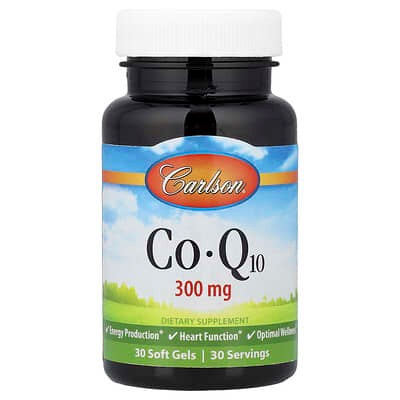

$33.15 $1.10 per serving

Product analysis
Co-Q10 300 mg supports normal cellular energy production, with limited relevance to selected heart-related measures. Its relatively high cost and unspecified preparation make value harder to judge.
AI assessment of the formula, label and price. How scoring works
Nutrient Quality26
The CoQ10 preparation is unspecified, limiting a firm form comparison. Vitamin E is named, but the information does not establish the quality of the whole combination.
Ingredient Transparency72
The listed amounts are disclosed, making the serving quantities clear. Most preparation details are missing, including which CoQ10 form is used.
Value For Money27
The serving is relatively costly for its CoQ10 contribution. The separate value of vitamin E remains uncertain, so the combination does not offer a clear value advantage.
Customer Satisfaction67
Customer ratings are favorable. The small review base limits how widely that satisfaction picture can be applied.
Product Focus74
CoQ10 provides a clear focus on cellular energy and selected heart-related measures. Broader claims about fatigue, calorie burning or visible aging remain limited by preparation and health context.
- Format
Softgel - Container
- 30 Softgel(s)
- Per serving
- $1.10
- Customer rating
- 4.5 · 63 ratings
Goals

Impact
Moderate effect
Coenzyme Q-10 · 300 mg
CoQ10 relates to mitochondrial energy production, with limited fatigue evidence tied to specific preparations. The 300 mg serving reaches the saved amount comparison, but the unidentified redox form limits transfer from those findings. A higher amount does not ensure a stronger fatigue benefit.
How this product is rated for Energy
Ingredient fit79
1 ingredients relate to energy, alongside 1 other actives that broaden the formula beyond this goal. The assessed amounts meet or closely approach the full comparison amounts.
Goal fit
1 ingredients relate to energy, alongside 1 other actives that broaden the formula beyond this goal.
Dose adequacy
The assessed amounts meet or closely approach the full comparison amounts.
Pathways17
The clearest connection is mitochondrial energy production, with limited support in the saved findings.
Depth
The clearest connection is mitochondrial energy production, with limited support in the saved findings.
Breadth
The assessed contributions remain too limited to show meaningful breadth across the goal pathways.
Evidence27
Coenzyme Q-10 provides the strongest evidence contribution in the saved assessment, with practical benefits dependent on the relevant nutritional or trial context. Direct transfer of trial findings is limited by preparation matching for Coenzyme Q-10.
Evidence strength
Coenzyme Q-10 provides the strongest evidence contribution in the saved assessment, with practical benefits dependent on the relevant nutritional or trial context.
Studied preparation
Direct transfer of trial findings is limited by preparation matching for Coenzyme Q-10.
Formulation logic100
The relevant ingredients can contribute alone or have the partners required by the saved findings. No conflict was identified in the supplied checks. 1 of 1 relevant ingredients meet the saved minimum amount criterion.
Partner coverage
The relevant ingredients can contribute alone or have the partners required by the saved findings.
Conflicts
No conflict was identified in the supplied checks.
Effective doses
1 of 1 relevant ingredients meet the saved minimum amount criterion.

Impact
Highest effect
Coenzyme Q-10 · 300 mgVitamin E · 2 mg
Coenzyme Q10 has limited support for blood-pressure, lipid or blood-vessel lining markers in people with dyslipidemia or endothelial dysfunction. The declared amount meets the saved preparation amount benchmark. These findings do not establish cardiovascular-event prevention, relief of statin symptoms or superiority of a particular delivery form.
How this product is rated for Cardiovascular Support
Ingredient fit93
Coenzyme Q10 provide the goal connection. Coenzyme Q10 meets the saved preparation amount benchmark; more does not imply greater benefit.
Goal fit
Coenzyme Q10 give the product a focused connection to this goal.
Dose adequacy
Coenzyme Q10 meets the saved preparation amount benchmark; more does not imply greater benefit.
Pathways60
The strongest finding concerns blood-vessel lining function. Only one pathway reaches the saved coverage benchmark, so support remains focused.
Depth
The strongest finding concerns blood-vessel lining function.
Breadth
Only one pathway reaches the saved coverage benchmark, so support remains focused.
Evidence88
Coenzyme Q10 supplies the evidence finding, with limited marker results in selected populations.
Evidence strength
Coenzyme Q10 supplies the evidence finding, with limited marker results in selected populations.
Studied preparation
The saved finding accepts the counted preparations at qualifying amounts; this does not establish that the complete product was studied.
Formulation logic100
No missing required partner or configured conflict was found. All ingredients counted for this finding meet its saved amount threshold; this is not proof of clinical effectiveness.
Partner coverage
The counted ingredients do not lack a required partner under the saved finding; no added combination benefit is established.
Conflicts
No configured ingredient conflict was triggered in the supplied facts.
Effective doses
All ingredients counted for this finding meet its saved amount threshold; this is not proof of clinical effectiveness.

Impact
Moderate effect
Coenzyme Q-10 · 300 mg
Coenzyme Q10 supports normal cellular energy production and antioxidant processes. The serving supplies 300 mg, but the supplied skin-aging evidence concerns a particular water-soluble preparation, making the connection to visible aging limited and preparation-specific. Longer lifespan is not a supported outcome.
How this product is rated for Longevity
Ingredient fit93
CoQ10 gives the formula a focused connection to cellular function.
Goal fit
CoQ10 is the main relevant active, with no unrelated actives reducing focus.
Dose adequacy
The serving reaches the saved upper amount comparison; higher amounts do not imply greater benefit.
Pathways40
Support is concentrated in cellular energy production, with a smaller antioxidant contribution.
Depth
Mitochondrial energy production is the strongest area.
Breadth
Only cellular energy production has substantial coverage.
Evidence30
The evidence contribution is modest and preparation-specific.
Evidence strength
CoQ10 provides the strongest saved evidence contribution.
Studied preparation
The declared CoQ10 is not matched to the studied preparation.
Formulation logic100
The relevant ingredients meet most amount comparisons without a flagged conflict.
Partner coverage
No required partner is missing.
Conflicts
No configured ingredient conflict was found.
Effective doses
The relevant ingredient meets the saved minimum amount comparison.

Impact
High effect
Coenzyme Q-10 · 300 mg
CoQ10 has limited support for blood-vessel function and selected blood-pressure measures. The declared active CoQ10 amount can be compared with ordinary oral CoQ10 evidence, but it does not identify an oxidation state or prove special delivery benefits. These findings do not establish general prevention of cardiovascular events.
How this product is rated for Heart Health
Ingredient fit74
Coenzyme Q-10 provide the included contribution, with partial coverage of the comparison amounts.
Goal fit
Coenzyme Q-10 contribute alongside ingredients directed at other uses.
Dose adequacy
The included amounts partly cover the saved comparison ranges, which compare exposure rather than establish treatment doses.
Pathways55
The strongest recorded connection is endothelial nitric-oxide function, with partial comparison-range coverage.
Depth
The strongest recorded connection is endothelial nitric-oxide function, with partial comparison-range coverage.
Breadth
One configured pathway reached the coverage threshold, so the contribution remains focused.
Evidence98
Coenzyme Q-10 provides the strongest included evidence; its clinical meaning remains limited by the outcomes and populations studied.
Evidence strength
Coenzyme Q-10 provides the strongest included evidence; its clinical meaning remains limited by the outcomes and populations studied.
Studied preparation
The included preparations were matched to studied material, without establishing benefit outside the studied outcomes or populations.
Formulation logic100
The included ingredients have no recorded partner gap or configured conflict and clear the minimum amount threshold.
Partner coverage
The included ingredients can stand alone or have their required partner present.
Conflicts
No configured ingredient conflict was identified.
Effective doses
All included ingredients clear the saved minimum amount threshold; this does not guarantee a clinical benefit.

Impact
High effect
Coenzyme Q-10 · 300 mg
Coenzyme Q-10 participates in the mitochondrial process that produces usable cellular energy. That normal role does not establish that supplementation increases whole-body energy expenditure. The supplied studies concern metabolic markers rather than a general increase in calorie burning, so the amount-based recognition in this comparison should not be interpreted as a lasting metabolic or weight-loss effect.
How this product is rated for Metabolism Support
Ingredient fit79
Coenzyme Q-10 leads the included ingredient findings. The retained amounts reach the upper comparison references.
Goal fit
The relevant ingredients share the formula with ingredients aimed at other health goals, reducing its concentration on this outcome.
Dose adequacy
The included amounts reach their upper comparison references; these are not proven doses for increasing calorie expenditure.
Pathways54
The connection is concentrated in mitochondrial energy and fat oxidation, with limited breadth across other routes. This is distinct from demonstrated whole-body thermogenesis.
Depth
Mitochondrial energy and fat oxidation provide the strongest connection, but cellular processes are distinct from increased whole-body calorie expenditure.
Breadth
One route reaches meaningful coverage, leaving the connection concentrated rather than broad across thermogenic processes.
Evidence75
CoQ10’s mitochondrial role and metabolic-marker findings do not demonstrate a routine increase in whole-body energy expenditure.
Evidence strength
Coenzyme Q-10 leads the included evidence finding; its normal role or specific study outcomes do not establish a general metabolism boost.
Studied preparation
The retained ingredients meet the saved preparation comparison; this does not establish that the product increases whole-body energy expenditure.
Formulation logic100
The retained ingredients meet the partner and minimum amount conditions, with no listed conflict triggered. These findings do not establish a lasting metabolic-rate or weight-loss effect.
Partner coverage
The retained ingredients have no unmet partner requirement; this does not establish extra calorie expenditure from combining them.
Conflicts
None of the listed ingredient-conflict conditions was triggered by the supplied facts.
Effective doses
All retained ingredients meet the minimum amount condition, which is not a proven dose for raising whole-body energy expenditure.

Impact
Highest effect
Coenzyme Q-10 · 300 mgVitamin E · 2 mg
Coenzyme Q-10 has a limited connection to inflammatory markers and oxidative stress. Its supporting trial used ubiquinone in people with coronary artery disease taking statins, with a change in TNF-alpha but no clear endpoint change in CRP or IL-6. This serving supplies 300 mg, matching the amount used daily in that trial.
How this product is rated for Inflammation
Ingredient fit93
Coenzyme Q-10 is the relevant ingredient; the serving's relationship to the studied amount determines its saved amount finding.
Goal fit
Coenzyme Q-10 is the formula's relevant ingredient, giving it a focused connection to this goal.
Dose adequacy
The serving matches the amount used daily in the supplied ubiquinone trial.
Pathways59
The saved findings are concentrated in one pathway, giving a limited range of connections to this broad goal.
Depth
The strongest saved connection is oxidative and mitochondrial stress.
Breadth
Only one pathway reaches the saved coverage threshold, so the connection is narrow.
Evidence93
Ubiquinone has limited biomarker evidence in statin-treated coronary artery disease. The preparation match does not establish routine clinical efficacy.
Evidence strength
Coenzyme Q-10 provides the strongest saved evidence finding among the counted ingredients, while its specific human-evidence limitations still apply.
Studied preparation
The counted preparations match the saved preparation criteria; this does not remove the limitations of the underlying human findings.
Formulation logic100
The counted ingredients meet the saved minimum amounts and most partner requirements, with no matched conflict recorded.
Partner coverage
The counted ingredients can contribute alone or meet the saved partner requirements.
Conflicts
No matched conflict was recorded in the supplied calculation.
Effective doses
All counted ingredients reach the saved minimum amount threshold; this threshold is not proof of an effective clinical dose.
Ingredients
| Ingredient | Amount per serving | Score |
|---|---|---|
Calories | 10 Calorie(s) | |
Total Fat | 1 Gram(s) | |
Vitamin E (D-Alpha-Tocopherol) | 2 mg | |
Co-Q10 | 300 mg |
Coenzyme Q-10 · 300 mg OverallScore26
Each serving records 300 mg of CoQ10. The evaluation flags an additive of concern, though the saved facts do not identify it.
How this ingredient is rated
Active Ingredient Quality & Bioavailability12
The saved facts do not identify whether the CoQ10 is ubiquinol or ubiquinone. The saved facts do not confirm a targeted absorption-enhancing delivery system or enhancer.
Molecular Form: Ubiquinol vs. Ubiquinone
The saved facts do not identify whether the CoQ10 is ubiquinol or ubiquinone.
Formulation & Absorption Enhancers
The saved facts do not confirm a targeted absorption-enhancing delivery system or enhancer.
Dose, Safety & Label Transparency42
300 mg of CoQ10 is recorded per serving. The evaluation flags an additive of concern without identifying it.
Clinical Dosage Alignment
300 mg of CoQ10 is recorded per serving.
Label Transparency & Fillers
The evaluation flags an additive of concern, but the saved facts do not identify it.
Value20
A whole-product serving costs about $1.10.
Price Per Effective Serving
A whole-product serving costs about $1.10.
Alternative products
Report alternatives
Sources
Published studies used for the product analysis and the top-ranked studies for each ingredient and goal.
- Effects of Coenzyme Q10 Supplementation on Lipid Profiles in Adults: A Meta-analysis of Randomized Controlled Trials.
- Six-month supplementation with high dose coenzyme Q10 improves liver steatosis, endothelial, vascular and myocardial function in patients with metabolic-dysfunction associated steatotic liver disease: a randomized double-blind, placebo-controlled trial.
- The effect of coenzyme Q10 on morbidity and mortality in chronic heart failure: results from Q-SYMBIO: a randomized double-blind trial.
- [Coenzyme Q-10 in the treatment of patients with chronic heart failure and reduced left ventricular ejection fraction: systematic review and meta-analysis].
- Effect of coenzyme Q10 in Europeans with chronic heart failure: A sub-group analysis of the Q-SYMBIO randomized double-blind trial.
- Supplementation with vitamin E alone is associated with reduced myocardial infarction: a meta-analysis.
- Vitamin E ameliorates blood cholesterol level and alters gut microbiota composition: A randomized controlled trial.
- Effects of long-term vitamin E supplementation on cardiovascular events and cancer: a randomized controlled trial.
- Independent and combined associations of dietary antioxidant exposure with all-cause and cause-specific mortality in the general population.
- Tocotrienol rich fraction supplementation improved lipid profile and oxidative status in healthy older adults: A randomized controlled study.
- Effects of Coenzyme Q10 on Statin-Induced Myopathy: An Updated Meta-Analysis of Randomized Controlled Trials.
- Coenzyme Q10 Supplementation in Athletes: A Systematic Review.
- Effectiveness of Coenzyme Q10 Supplementation for Reducing Fatigue: A Systematic Review and Meta-Analysis of Randomized Controlled Trials.
- Antifatigue effects of coenzyme Q10 during physical fatigue.
- Effect of coenzyme Q10 supplementation on fatigue: A systematic review of interventional studies.
- Ubiquinol Ameliorates Endothelial Dysfunction in Subjects with Mild-to-Moderate Dyslipidemia: A Randomized Clinical Trial.
- Dose-Response Effect of Coenzyme Q10 Supplementation on Blood Pressure among Patients with Cardiometabolic Disorders: A Grading of Recommendations Assessment, Development, and Evaluation (GRADE)-Assessed Systematic Review and Meta-Analysis of Randomized Controlled Trials.
- Effects of Coenzyme Q10 on Lipid, Glycemic, and Inflammatory Markers in Metabolic Disorders: A Systematic Review and Meta-Analysis.
- Treatment of coenzyme Q10 for 24 weeks improves lipid and glycemic profile in dyslipidemic individuals.
- The effect of coenzyme Q10 supplementation on inflammatory and endothelial dysfunction markers in overweight/obese polycystic ovary syndrome patients.