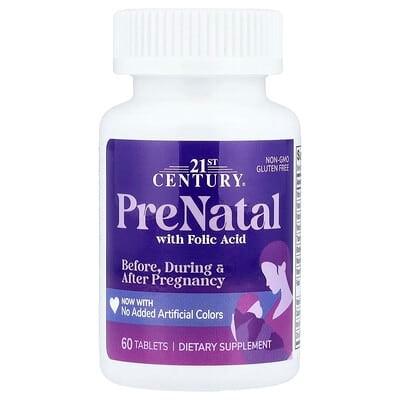


About this product
Iron, folate and B12 make blood-forming nutrient support the clearest role. Iron at 28 mg can help fill higher nutritional needs, while these nutrients may help with tiredness linked to low intake rather than providing extra energy when needs are met.
The iron source is clearly identified as ferrous fumarate, but it can be harder on the stomach. The same serving contains 25 mg of zinc, which can compete with iron absorption, and zinc oxide is a less favorable form for absorption.
The low serving cost makes the iron and zinc contributions affordable, but the prenatal name does not establish complete pregnancy nutrition. Iodine, choline and DHA are not listed in the supplied ingredients, and the ingredient details do not identify folate's form despite folic acid appearing in the title.
Pros
Iron, folate and B12 provide related blood-forming nutrients Ferrous fumarate and its amount are clearly identified Low serving cost supports value for the stated iron contribution
Cons
Zinc oxide has less favorable absorption potential Iron and zinc in the same serving can compete for absorption Iodine, choline and DHA are not listed Folate's precise form is missing from the ingredient details
Warnings
Ferrous fumarate at 28 mg may be harder on the stomach, which matters if iron supplements have caused discomfort before. The substantial iron serving is intended for higher needs; adding another iron supplement should be based on an assessed need. The 25 mg zinc serving adds to food and other supplements; avoid automatically combining it with a separate high-dose zinc product.