
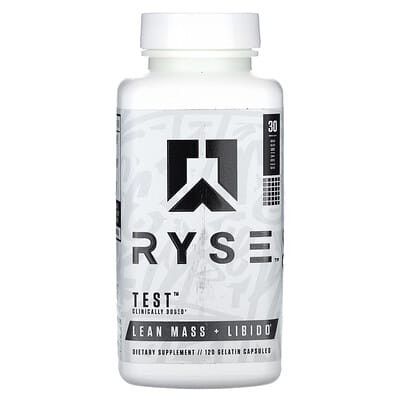

$69.99 $2.33 per serving



Product analysis
TEST may help stressed adults feel calmer through its KSM-66 ashwagandha. Wider hormone and fitness benefits are less certain.
AI assessment of the formula, label and price. How scoring works
Nutrient Quality21
KSM-66 identifies the ashwagandha extract, and citrate identifies a boron source. Most detailed forms are not consistently disclosed, limiting comparisons of the full formula.
Ingredient Transparency68
Amounts are declared throughout, but magnesium and zinc cannot be reliably tied to a serving. Most detailed forms are not consistently disclosed, which also limits comparisons.
Value For Money40
Value for money remains uncertain without reliable ingredient cost comparisons. Unresolved mineral amounts per serving also prevent a clear like-for-like comparison.
Customer Satisfaction74
Customer ratings are very positive, but only a small set of buyers has rated it. That limited review base does not establish how widely those experiences apply.
Product Focus59
KSM-66 ashwagandha has the clearest support for stress-related benefits, with more limited findings for cognition and training. Its serving amount exceeds the highest reviewed daily trial exposure without establishing extra benefit, while mineral contributions remain unresolved.
- Format
Capsule - Container
- 120 Capsule(s)
- Per serving
- $2.33
- Customer rating
- 4.9 · 28 ratings
Goals

Impact
High effect
Magnesium · 750 mgZinc · 75 mgBoron · 200 mgAshwagandha · 675 mg
KSM-66 ashwagandha has a testosterone signal from a small study in men starting resistance training, with hormones measured as a secondary outcome. This does not establish treatment of low testosterone or the same response without that exercise setting. PrimaVie shilajit has limited findings in middle-aged men, but its serving amount remains unresolved here. Zinc can help restore testosterone impaired by zinc deficiency; additional increases in men with adequate zinc intake are not established.
How this product is rated for Testosterone Support
Ingredient fit61
Ashwagandha provide the saved ingredient connections, with the practical meaning limited by preparation, amount and study population.
Goal fit
Ashwagandha provides the relevant ingredient connection.
Dose adequacy
The declared serving amounts provide uneven contributions; the amount comparison does not establish a proven testosterone-enhancing dose.
Pathways68
The represented hormone-related areas describe the supplied ingredient findings rather than a demonstrated personal testosterone increase.
Depth
The strongest represented area is stress-hormone regulation. This describes ingredient roles rather than demonstrated hormone enhancement.
Breadth
The represented areas meeting the comparison threshold are stress-hormone regulation.
Evidence100
Direct hormone findings depend on the particular preparation, exercise setting or nutrient status studied.
Evidence strength
Ashwagandha supplies the leading evidence contribution, with benefits limited by the populations and outcomes studied.
Studied preparation
The qualifying ingredient preparations match the saved comparison; this does not extend results to general testosterone enhancement.
Formulation logic80
The contributing ingredients meet the supplied partner requirements, with no configured conflict identified.
Partner coverage
The contributing ingredients can act independently or have the partners required by the supplied findings.
Conflicts
No configured ingredient conflict was identified; this is a limited interaction check.
Effective doses
Shilajit, Boron, Magnesium, Zinc falls below the amount threshold used for this comparison; the other contributing ingredients meet it.

Impact
High effect
Ashwagandha · 675 mgMagnesium · 750 mg
KSM-66 ashwagandha provides the main connection to perceived psychological stress, supported by extract trials whose results vary with preparation and duration. The declared 675 mg per serving gives a usable amount for that ingredient. Magnesium and zinc are also declared, but their serving denominators are unavailable, so their per-serving contributions cannot be established.
How this product is rated for Stress Relief
Ingredient fit54
Ashwagandha supplies the main practical connection to stress relief. The serving amounts are interpreted within the supplied guidance.
Goal fit
Ashwagandha supplies stress relevance within a formula containing ingredients aimed at other goals.
Dose adequacy
Ashwagandha has a usable serving amount; missing magnesium and zinc serving denominators reduce the amount-based finding.
Pathways77
The strongest finding concerns stress regulation, with sleep recovery also represented.
Depth
Stress-hormone regulation is the strongest saved finding, led by ashwagandha.
Breadth
Stress regulation and sleep recovery are most represented, with a smaller calming finding.
Evidence95
Ashwagandha anchors the evidence, with the preparation, population and outcome limitations described for those ingredients.
Evidence strength
Ashwagandha leads the saved evidence finding; the supplied limitations still restrict how broadly its benefit can be described.
Studied preparation
The identified ashwagandha extract is accepted as a studied preparation in the saved findings.
Formulation logic83
Ashwagandha supplies the usable amount-based contribution. No evaluated conflict was triggered, but magnesium and zinc amounts remain unresolved.
Partner coverage
The credited ingredients retain their individual contributions without requiring an additional missing partner.
Conflicts
No evaluated formulation conflict was triggered by the supplied facts.
Effective doses
Only ashwagandha meets the saved amount threshold; magnesium and zinc lack usable per-serving amounts.

Impact
High effect
Magnesium · 750 mgAshwagandha · 675 mg
KSM-66 ashwagandha offers a limited connection to cognitive-task performance in adults with self-reported cognitive or energy complaints. The identified extract provides 675 mg per serving, while the evidence does not establish the same benefit for every adult. Magnesium supports normal nerve function and zinc is nutritionally essential, but their serving amounts remain unresolved here.
How this product is rated for Brain Health
Ingredient fit56
The ingredient selection connects to brain health, with serving amounts and the formula’s wider purpose shaping how focused that connection is.
Goal fit
The formula includes brain-relevant ingredients alongside a broader mix of ingredients and intended uses.
Dose adequacy
KSM-66 reaches its amount reference, while unresolved magnesium and zinc serving amounts limit the amount finding.
Pathways60
The strongest saved connection is stress and arousal regulation; this describes the ingredient grouping rather than a demonstrated brain-health outcome. One area reaches the saved coverage threshold, leaving the connection concentrated rather than broad.
Depth
The strongest saved connection is stress and arousal regulation; this describes the ingredient grouping rather than a demonstrated brain-health outcome.
Breadth
One area reaches the saved coverage threshold, leaving the connection concentrated rather than broad.
Evidence98
The saved evidence findings recognize ingredients and preparations, while the supplied scientific context limits expectations for general cognitive improvement.
Evidence strength
Ashwagandha leads the saved evidence finding, while the supplied research context limits claims of broad cognitive improvement.
Studied preparation
The saved findings recognize the included preparations; this does not establish equivalence where the supplied scientific context distinguishes extracts or populations.
Formulation logic83
The saved findings identify no missing required partners or configured conflicts. Amount recognition does not itself establish an effective cognitive outcome.
Partner coverage
The recognized ingredients have no missing required partner in the saved findings; this does not establish an added benefit from combining them.
Conflicts
No configured conflict was identified. The caffeine-specific checks do not apply because no qualifying caffeine amount is established.
Effective doses
Magnesium, Zinc do not reach the saved amount threshold; this reflects missing or insufficient qualifying amounts, not proof of ineffectiveness.

Impact
Moderate effect
Magnesium · 750 mg
Ashwagandha at 675 mg is associated with the stress-related aspect of the saved assessment. The supplied human evidence offers limited support for fatigue itself and depends on the exact extract and population; the unclear magnesium amount also limits its nutritional contribution.
How this product is rated for Energy
Ingredient fit46
2 ingredients relate to this goal, alongside 4 actives aimed at other needs. The relevant amounts provide partial support in the saved comparison; some are modest or unclear.
Goal fit
2 ingredients relate to this goal, alongside 4 actives aimed at other needs.
Dose adequacy
The relevant amounts provide partial support in the saved comparison; some are modest or unclear.
Pathways60
Stress-fatigue resistance is the strongest mechanism in the saved assessment, with substantial coverage. 1 of the three target mechanisms meets the saved coverage level.
Depth
Stress-fatigue resistance is the strongest mechanism in the saved assessment, with substantial coverage.
Breadth
1 of the three target mechanisms meets the saved coverage level.
Evidence71
Ashwagandha provides the strongest evidence contribution among the assessed amounts. This remains specific to the supplied evidence and its context.
Evidence strength
Ashwagandha provides the strongest evidence contribution among the assessed amounts. This remains specific to the supplied evidence and its context.
Studied preparation
The assessed contribution matches preparations recognized in the saved assessment.
Formulation logic88
1 of 2 assessed ingredients meet the saved amount threshold; Magnesium falls below it or has an unclear amount. No conflict was recorded by the supplied checks.
Partner coverage
The assessed ingredients can work alone or have their required partners present.
Conflicts
No conflict was recorded by the supplied checks.
Effective doses
1 of 2 assessed ingredients meet the saved amount threshold; Magnesium falls below it or has an unclear amount.

Impact
High effect
Magnesium · 750 mgAshwagandha · 675 mg

Impact
High effect
Magnesium · 750 mgBoron · 200 mgAshwagandha · 675 mgZinc · 75 mg
Magnesium and zinc have nutritional roles in energy metabolism and normal immune functions, but their amounts per serving remain unresolved. Ashwagandha has stress- and sleep-specific findings, which do not establish routine broad health benefits in healthy, unstressed adults. Its known amount received the saved result’s strongest contribution, while unresolved mineral serving amounts prevent a clear nutritional comparison.
How this product is rated for Everyday Health
Ingredient fit55
Unresolved mineral amounts per serving limit the amount comparison; ashwagandha supplies the known contribution.
Goal fit
Relevant nutrients contribute, while additional ingredients and links to other goals make the product less focused on routine general health.
Dose adequacy
Unresolved mineral amounts per serving limit the amount comparison; ashwagandha supplies the known contribution.
Pathways60
Ashwagandha accounts for the strongest saved contribution in stress and sleep; those findings do not establish routine broad health benefits. The meaningful contribution is concentrated in one area rather than spread across the broader goal.
Depth
Ashwagandha accounts for the strongest saved contribution in stress and sleep; those findings do not establish routine broad health benefits.
Breadth
The meaningful contribution is concentrated in one area rather than spread across the broader goal.
Evidence96
Ashwagandha leads the saved evidence comparison, but stress-specific findings do not establish broad benefit in healthy, unstressed adults.
Evidence strength
Ashwagandha leads the saved evidence comparison, but stress-specific findings do not establish broad benefit in healthy, unstressed adults.
Studied preparation
The contributing ingredients with qualifying amounts match preparations accepted in the saved comparison; this does not establish superiority of their forms.
Formulation logic81
Only ashwagandha reaches the saved amount threshold; unresolved magnesium, zinc and boron serving amounts do not establish ineffectiveness.
Partner coverage
The contributing ingredients can act independently or have their required partners; no additional combination benefit is established.
Conflicts
No configured ingredient conflict was identified in the supplied facts; this is not a comprehensive safety assessment.
Effective doses
Only ashwagandha reaches the saved amount threshold; unresolved magnesium, zinc and boron serving amounts do not establish ineffectiveness.
Ingredients
| Ingredient | Amount per serving | Score |
|---|---|---|
Magnesium | 150 mg | |
Zinc | 15 mg | |
Magnesium Aspartate | 750 mg | |
organic Ashwagandha extract | 675 mg | |
Shilajit extract | 500 mg | |
Tribulus alatus extract | 200 mg | |
Boron Citrate | 200 mg | |
Zinc Bisglycinate Chelate | 75 mg | |
Black Pepper extract (Piperine) | 5 mg |
Ashwagandha · 675 mg OverallScore65
The serving provides 675 mg of ashwagandha extract; the price covers the whole product. The available information does not specify a withanolide percentage.
How this ingredient is rated
Composition and Label Disclosure30
The preparation is ashwagandha extract; its withanolide percentage is not available here.
Withanolide and Preparation Disclosure
The preparation is ashwagandha extract; its withanolide percentage is not available here.
Composition and Label Disclosure100
The serving amount is stated as 675 mg of ashwagandha extract.
Individual Preparation Amount Disclosure
The serving amount is stated as 675 mg of ashwagandha extract.
Commercial Price and Usability
A separate price and usability assessment is unavailable.
Boron · 200 mg OverallScore26
The amount of boron per serving is unknown, so its contribution and cost per amount cannot be determined. The boron comes as boron citrate. No specific purity or third-party mineral testing claim is available.
How this ingredient is rated
Active Ingredient Quality & Bioavailability64
The boron comes as boron citrate. No specific purity or third-party mineral testing claim is available.
Boron Form & Bioavailability
The boron comes as boron citrate.
Trademarked & High-Purity Sources
No specific purity or third-party mineral testing claim is available.
Dose, Safety & Label Transparency0
The amount of elemental boron per serving is unknown. Without the boron amount, its contribution and safety cannot be determined.
Elemental Dose Transparency
The amount of elemental boron per serving is unknown.
Dosage Efficacy & Safety Margin
Without the boron amount, its contribution and safety cannot be determined.
Value0
The cost per amount of boron cannot be determined without the boron amount.
Price per 3mg Elemental Boron
The cost per amount of boron cannot be determined without the boron amount.
Alternative products
Report alternatives
Sources
Published studies used for the product analysis and the top-ranked studies for each ingredient and goal.
- Acute and Repeated Ashwagandha Supplementation Improves Markers of Cognitive Function and Mood.
- Effect of ashwagandha (Withania somnifera) extract with Sominone (Somin-On™) to improve memory in adults with mild cognitive impairment: A randomized, double-blind, placebo-controlled study.
- Efficacy of Withania somnifera supplementation on adult's cognition and mood.
- A clinical assessment of the therapeutic effects of Ashwagandha root extract on cognitive performance, sleep, and fatigue in children aged 6-12 years.
- Efficacy and Safety of Ashwagandha Root Extract on Cognitive Functions in Healthy, Stressed Adults: A Randomized, Double-Blind, Placebo-Controlled Study.
- Antenatal magnesium sulfate and neuroprotection.
- No. 376-Magnesium Sulphate for Fetal Neuroprotection.
- Magnesium Sulfate Before Preterm Birth for Neuroprotection: An Updated Cochrane Systematic Review.
- Magnesium sulphate for fetal neuroprotection at imminent risk for preterm delivery: a systematic review with meta-analysis and trial sequential analysis.
- Magnesium sulfate and fetal neuroprotection: overview of clinical evidence.
- Efficacy of Zinc Supplement in Minimal hepatic Encephalopathy: A prospective, Randomized Controlled Study (Zinc-MHE Trial).
- A preliminary report: effects of zinc and micronutrient repletion on growth and neuropsychological function of urban Chinese children.
- Association between zinc deficiency and cognitive decline in community-dwelling older adults.
- Zinc status, psychological and nutritional assessment in old people recruited in five European countries: Zincage study.
- Zinc alleviates stroke development through autophagy-mediated modulation of immune microenvironment.
- A standardized Ashwagandha root extract alleviates stress, anxiety, and improves quality of life in healthy adults by modulating stress hormones: Results from a randomized, double-blind, placebo-controlled study.
- Efficacy and safety of ashwagandha root extract in children and adolescents with mild attention-deficit/hyperactivity disorder: a randomized, double-blind, placebo-controlled trial.
- Magnesium sulphate for women at risk of preterm birth for neuroprotection of the fetus.
- Effects of magnesium valproate adjuvant therapy on patients with dementia: A systematic review and meta-analysis.
- Effects of magnesium supplementation on serum brain-derived neurotrophic factor levels and cognitive function in patients undergoing fluoxetine therapy for depression.