
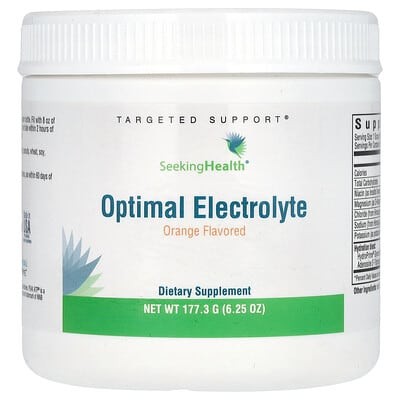

Nutrient quality
Magnesium malate, magnesium creatine chelate, and bicarbonate electrolytes are useful, specific forms. The disclosed electrolyte and niacin amounts are not obviously excessive.
 iHerb iHerb | $ 40.00 | |
 Vitacost Vitacost | $ 40.00 | |
 Amazon Amazon | $ 40.00 | |
 Pure Formulas Pure Formulas | $ 40.00 |
Magnesium from dimagnesium malate and magnesium creatine chelate combines with 510 mg of potassium bicarbonate and 140 mg of sodium bicarbonate. Those forms suit light hydration and buffering, while 2 g of D-ribose and 250 mg of taurine broaden the exercise-drink profile.
The sodium amount is modest for long, hot, or high-sweat training, so it may not replace the main electrolyte lost in sweat. Creatine is listed at only 225 mg, far below a practical stand-alone daily amount, and the niacin derivative is a secondary feature.
A scoop supplies 4 g of carbohydrate and is easy to mix, but the serving is expensive for an electrolyte product with limited sodium. It fits lighter activity or users prioritizing potassium and magnesium more than heavy-sweat replacement or creatine dosing.
Magnesium malate, magnesium creatine chelate, and bicarbonate electrolytes are useful, specific forms. The disclosed electrolyte and niacin amounts are not obviously excessive.
Listed active amounts are clear without a hidden proprietary dose. Complete directions and inactive-ingredient details remain incomplete.
The aggregate rating and its volume provide a limited top-level signal. Missing experience details prevent assessment of repeated complaints or purpose-specific satisfaction.
Useful mineral forms do not fully justify the costly serving and modest performance-active doses. Comparable products can provide a better dosing and cost balance.

Potassium and magnesium support vascular tone and electrical signaling, while taurine adds a cardiac-related pathway. D-ribose and creatine are intended for cellular energy, although their amounts are modest.
The mineral forms and amounts are clear, but several supporting actives sit below common targeted doses. The 510 mg potassium amount may raise blood potassium in people with impaired kidney function or those using potassium-sparing medicines.

Taurine provides a relevant route to cardiovascular support. Dose or form uncertainty limits confidence in the practical contribution.
Several complementary pathways broaden the formula. Vitamin K can oppose warfarin and related vitamin-K-antagonist medicines, so the intake should remain medically coordinated and consistent.
| Ingredient | Amount per serving |
|---|---|
Calories | 20 Calorie(s) |
Total Carbohydrates | 4 Gram(s) |
Niacin (Inositol Hexanicotinate) | 25 mg |
Magnesium (Albion DiMagnesium Malate, Creatine MagnaPower Magnesium Creatine Chelate) | 150 mg |
Sodium (Sodium Bicarbonate) | 140 mg |
Potassium (Potassium Bicarbonate) | 510 mg |
D-Ribose | 2 Gram(s) |
Taurine | 250 mg |
Creatine (Creatine MagnaPower Magnesium Creatine Chelate) | 225 mg |
Potassium bicarbonate provides a high elemental amount in a powdered electrolyte formula. The alkalizing source and added sodium suit fluid replacement, while the label does not separate compound weight from elemental yield. The serving cost is reasonable for the dose, but people with impaired kidney function or using potassium-sparing diuretics should avoid unmonitored concentrated potassium intake.
The formula uses strong bicarbonate, malate, and chelated mineral forms with useful buffering. Sodium is clearly disclosed but too low for demanding sweat replacement when used alone. Broader performance ingredients add context to a serving cost that remains reasonable for a complex formula.
Inositol hexanicotinate is clearly named but is secondary to the electrolyte and carbohydrate ingredients. The amount is modest for this derivative and has no specialized delivery. The serving is poor value for niacin, with most of the cost paying for the broader hydration formula.
Published studies used for the product analysis and the top-ranked studies for each ingredient and goal.