
Nutrient quality
Advanced delivery and a supportive total amount provide strong formulation quality. Missing trans-isomer and purity details prevent exact potency assessment.
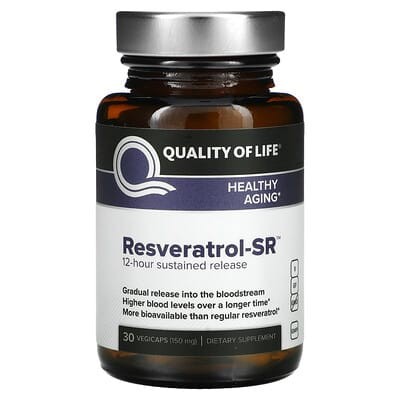
A focused controlled-release resveratrol capsule offers delivery advantages, with isomer and source disclosure as the main gaps.
A focused controlled-release resveratrol capsule offers delivery advantages, with isomer and source disclosure as the main gaps.
 iHerb iHerb | $ 15.96 | |
 Pure Formulas Pure Formulas | $ 19.96 |
The capsule supplies 150 mg MicroActive resveratrol. The delivery system is the main distinction and may offer more sustained exposure than a standard powder.
The label does not identify the trans-isomer percentage, source plant, or purity. No supporting ingredients dilute the focused design.
One capsule and 30 servings make it easy to test, though package duration is short. It fits users prioritizing controlled-release delivery over fully disclosed sourcing.
Advanced delivery and a supportive total amount provide strong formulation quality. Missing trans-isomer and purity details prevent exact potency assessment.
Active quantities and important form details are clearly stated without a hidden blend. Missing purity information, full directions, and non-active ingredients leave smaller gaps.
The supplied average rating is very strong and the rating volume is moderate. No specific experience details were provided to judge repeated complaints or purpose alignment.
The formula provides fair value for its cost. It remains moderately competitive but does not clearly lead the category.

MicroActive resveratrol at 150 mg targets sirtuin signaling, oxidative stress, and vascular aging. The sustained-delivery system may improve exposure, but the active trans-resveratrol amount and purity are not stated.
The focused product does not cover mitochondrial energy, structural proteins, or neurological aging through separate actives. Resveratrol may increase bleeding risk with anticoagulant or antiplatelet medicines, so users of those drugs need clinical guidance.

Resveratrol may support endothelial nitric-oxide signaling and antioxidant protection, giving it a plausible cardiovascular role. Human evidence for durable blood-pressure or cardiovascular outcome benefits is inconsistent.
The 150 mg amount and branded delivery system are clearly disclosed and may improve exposure compared with ordinary resveratrol. The single-active formula remains narrower and less established than omega-3, magnesium, or standard medical risk management.

Resveratrol may support inflammatory balance through SIRT1 and NF-kB-related signaling. The sustained-release MicroActive delivery system strengthens the case for useful exposure.
The label does not quantify trans-resveratrol or state purity, so the active isomer amount remains uncertain. The formula is focused but covers fewer pathways than a well-dosed combination.

Sustained-release resveratrol offers plausible support for insulin sensitivity and mitochondrial signaling. Branded delivery may improve exposure compared with a basic capsule.
The label does not confirm the active trans-isomer amount, extract purity, source, or emodin removal. Those gaps make the actual metabolic potency and source-specific tolerance harder to judge.

MicroActive resveratrol provides focused antioxidant support that may help the skin manage oxidative stress. The delivery identity suggests sustained or improved exposure compared with ordinary resveratrol.
The 150 mg amount is moderate, but the label does not clarify trans-resveratrol content or source purity. No structural, hydration, or barrier ingredient broadens the formula beyond one antioxidant pathway.
| Ingredient | Amount per serving |
|---|---|
MicroActive Resveratrol | 150 mg |
MicroActive provides an advanced delivery system that may improve absorption and sustain exposure. The label does not explicitly quantify trans-resveratrol or state a purity percentage, leaving active-isomer potency uncertain. That missing trans-isomer amount also prevents a reliable value calculation despite the useful delivery technology.
Published studies used for the product analysis and the top-ranked studies for each ingredient and goal.