

Nutrient quality
A substantial protein amount with useful MCTs creates a meaningful serving. Missing amino-acid and flavor details limit a full quality assessment.
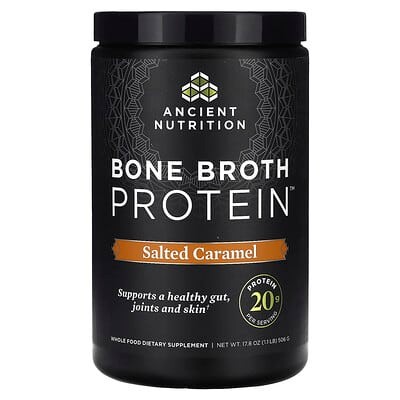
Substantial beef bone broth protein is the clear benefit, while missing protein detail and elevated serving cost are the main limitations.
Substantial beef bone broth protein is the clear benefit, while missing protein detail and elevated serving cost are the main limitations.
 Vitacost Vitacost | $ 49.49 | |
 iHerb iHerb | $ 45.01 | |
 Pure Formulas Pure Formulas | $ 45.01 | |
 Daily Vita Daily Vita | $ 45.01 |
The formula centers on 20.9 g of beef bone broth protein concentrate and yields 20 g of protein. That makes it a concentrated animal-protein powder rather than an electrolyte or broad micronutrient product.
Coconut-derived MCT contributes 2.6 g and explains most of the 3 g total fat. The supplied label does not provide collagen types or an amino acid profile, so the protein's connective-tissue composition cannot be compared precisely.
The salted-caramel format may be convenient for users who want flavored bone broth protein. Value is weaker than simpler protein powders, and the 150 mg sodium amount is too modest for serious sweat replacement.
A substantial protein amount with useful MCTs creates a meaningful serving. Missing amino-acid and flavor details limit a full quality assessment.
Core protein and MCT amounts are clearly quantified. Flavor ingredients and complete usage details are missing.
The aggregate rating is generally favorable and backed by a substantial review volume. No specific comments are available to assess recurring problems or real-world fit.
A strong protein serving provides useful nutrition. The premium cost and short supply produce weak value.
| Ingredient | Amount per serving |
|---|---|
Calories | 110 Calorie(s) |
Total Fat | 3 Gram(s) |
Total Carbohydrates | 2 Gram(s) |
Protein | 20 Gram(s) |
Iron | 0.8 mg |
Sodium | 150 mg |
Beef Bone Broth Protein concentrate | 20.9 Gram(s) |
Medium Chain Triglycerides (Coconut) | 2.6 Gram(s) |
The sodium amount is modest for intense activity and is better suited to lighter use. The sodium source is not identified, which limits confidence in its purity and functional form. Broader non-electrolyte ingredients explain much of the serving cost, making electrolyte-specific value difficult to isolate.