
Nutrient quality
Several key ingredients reach meaningful amounts and fit the testosterone-focused purpose. High boron, mixed evidence, incomplete botanical standardization, and a complex stimulant-like stack reduce balance and safety confidence.
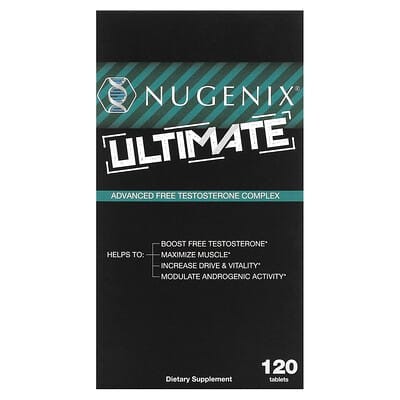
 Amazon Amazon | $ 71.99 | |
 iHerb iHerb | $ 67.99 |
D-aspartic acid leads the serving, supported by substantial fenugreek, epimedium, nettle root, maca, tongkat ali, mucuna, and boron. The breadth is notable, but most botanical extracts do not quantify their active-marker yields.
Testosterone support is the strongest fit, while general and anti-inflammatory goals receive less direct coverage. Several ingredients overlap around libido or hormone pathways, and their combined value is harder to predict than their individual amounts suggest.
The label avoids a proprietary blend and makes the major doses visible. Four tablets and a very high serving cost weaken value, particularly when users must also screen the formula for dopamine, blood-glucose, blood-pressure, and clotting interactions.
Several key ingredients reach meaningful amounts and fit the testosterone-focused purpose. High boron, mixed evidence, incomplete botanical standardization, and a complex stimulant-like stack reduce balance and safety confidence.
Every named active has an individual amount and no proprietary blend hides the formula. Missing extract ratios, marker percentages, directions, and non-active tablet ingredients reduce potency assessment.
The aggregate rating provides useful satisfaction context, with confidence shaped by the response count. No review text is supplied, so repeated complaints and purpose-specific experiences cannot be verified.
Broad ingredient coverage and several substantial doses provide some practical value. The high ongoing cost, mixed evidence, and incomplete standardization make the formula weakly competitive.

D-aspartic acid, fenugreek, nettle root, tongkat ali, and boron create broad testosterone-focused coverage, with several actives at meaningful amounts. Boron and fenugreek have relevant human evidence, while findings for D-aspartic acid and several other botanicals are less consistent.
The label discloses every amount but often omits extract ratios or active-marker percentages, which weakens confidence in botanical potency. Mucuna supplies an L-Dopa-bearing extract and fenugreek may lower blood sugar, so users taking dopamine-active or glucose-lowering medicines need product-specific medical guidance.
No linked studies yet.

Nettle root offers some context-specific inflammatory relevance, but the formula is designed mainly for testosterone and performance support. Several botanicals are substantial, yet most do not directly target the selected goal.
The broad blend emphasizes endocrine and sexual-health pathways rather than a balanced anti-inflammatory strategy. Mucuna supplies L-Dopa and may interact with dopaminergic or antipsychotic medicines, while fenugreek may lower blood sugar.

The formula combines a meaningful boron amount with several botanicals and amino-acid-related compounds aimed at male hormonal and performance support. That narrow purpose is less aligned with foundational daily health than a vitamin, mineral, or essential-fat formula.
Boron uses an absorbable organic form, but the high amount is better suited to a defined use than casual maintenance. Mucuna supplies an L-Dopa source that may interact with levodopa, dopamine-blocking medicines, or some psychiatric treatments, while the large botanical mix makes benefits and tolerability harder to predict.
| Ingredient | Amount per serving |
|---|---|
D-Aspartic Acid | 3000 mg |
Fenugreek Seed Extract (Saponins) | 700 mg |
Epimedium Aerial Part Extract (Icariins) | 625 mg |
Stinging Nettle root extract | 300 mg |
Maca Root Extract | 200 mg |
Eurycoma longifolia root extract | 150 mg |
Mucuna pruriens seed extract (L-Dopa) | 125 mg |
Boron (Bororganic Glycine) | 10 mg |
Nettle root is appropriately chosen for a testosterone-focused formula. The 300 mg extract dose is useful, though no active-marker standardization or concentration ratio is given. The very high cost is the main drawback.
Bororganic glycine is a well-absorbed form, but the label does not identify a validated trademark or purity certification. The 10 mg dose sits at the upper end of the higher clinical range and may be better suited to limited, goal-specific use than routine maintenance. Its high serving cost makes it poor value when judged only as a boron source.
The fenugreek amount is substantial, but the label does not identify a branded extract or quantify its saponin yield. Standard tablets add no absorption support. The high serving cost is difficult to justify for fenugreek-focused use despite the broad testosterone-support formula.
Published studies used for the product analysis and the top-ranked studies for each ingredient and goal.