Published studies used for the product analysis and the top-ranked studies for each ingredient and goal.
- Photosensitizer Radachlorin®: Skin cancer PDT phase II clinical trials.
Kochneva EV; Filonenko EV; Vakulovskaya EG; Scherbakova EG; Seliverstov OV; Markichev NA; Reshetnickov AV · Photodiagnosis and photodynamic therapy · 2011
Randomized trialflagSkin Health forscienceChlorophyll
- Photodynamic therapy using chlorophyll-a in the treatment of acne vulgaris: a randomized, single-blind, split-face study.
Song BH; Lee DH; Kim BC; Ku SH; Park EJ; Kwon IH; Kim KH; Kim KJ · Journal of the American Academy of Dermatology · 2014
Randomized trial24 participantsflagSkin Health forscienceChlorophyll
- Efficacy and Tolerability of Topical 0.1% Stabilized Bioactive Retinol for Photoaging: A Vehicle-Controlled Integrated Analysis.
Farris P; Berson D; Bhatia N; Goldberg D; Lain E; Mariwalla K; Zeichner J; Miller D; McGuire T; Kizoulis M · Journal of drugs in dermatology : JDD · 2024
Meta-analysis471 participants6 studies pooledflagSkin Health forscienceVitamin A
- Tensile properties and contours of aging facial skin. A controlled double-blind comparative study of the effects of retinol, melibiose-lactose and their association.
Piérard-Franchimont C; Castelli D; Cromphaut IV; Bertin C; Ries G; Cauwenbergh G; Piérard GE · Skin research and technology : official journal of International Society for Bioengineering and the Skin (ISBS) [and] International Society for Digital Imaging of Skin (ISDIS) [and] International Society for Skin Imaging (ISSI) · 2016
Randomized trial120 participantsflagSkin Health forscienceVitamin A
- Antiaging action of retinol: from molecular to clinical.
Bellemère G; Stamatas GN; Bruère V; Bertin C; Issachar N; Oddos T · Skin pharmacology and physiology · 2009
Randomized trial48 participantsflagSkin Health forscienceVitamin A
- An Updated Review of Topical Tretinoin in Dermatology: From Acne and Photoaging to Skin Cancer.
Balado-Simó P; Morgado-Carrasco D; Gómez-Armayones S; López-Ferrer A; Barco D; Ferrándiz-Pulido C; Podlipnik S · Journal of clinical medicine · 2025
Narrative reviewflagSkin Health forscienceVitamin A
- Novel Cyclized Hexapeptide-9 Outperforms Retinol Against Skin Aging: A Randomized, Double-Blinded, Active- and Vehicle-Controlled Clinical Trial.
Chang H; Tao K; Yang Y; Wang Y; Ge M; Wang X; Tang S; Yu H · Journal of cosmetic dermatology · 2025
Randomized trialflagSkin Health forscienceVitamin A
- Evaluation of the anti-wrinkle effect of an ascorbic acid-loaded dissolving microneedle patch via a double-blind, placebo-controlled clinical study.
Lee C; Yang H; Kim S; Kim M; Kang H; Kim N; An S; Koh J; Jung H · International journal of cosmetic science · 2017
Randomized trial23 participantsflagSkin Health forscienceVitamin C
- Comparative Study on the Outcome of Periorbital Wrinkles Treated with Laser-Assisted Delivery of Vitamin C or Vitamin C Plus Growth Factors: A Randomized, Double-blind, Clinical Trial.
Machado BHB; Frame J; Zhang J; Najlah M · Aesthetic plastic surgery · 2021
Randomized trial149 participantsflagSkin Health forscienceVitamin C
- Randomized trial of topical ascorbic acid in DMSO versus imiquimod for the treatment of basal cell carcinoma.
Burke B; Bailie JE · Biomedicine & pharmacotherapy = Biomedecine & pharmacotherapie · 2022
Randomized trial25 participantsflagSkin Health forscienceVitamin C
- Vitamin C improves healing of foot ulcers: a randomised, double-blind, placebo-controlled trial.
Gunton JE; Girgis CM; Lau T; Vicaretti M; Begg L; Flood V · The British journal of nutrition · 2022
Randomized trial16 participantsflagSkin Health forscienceVitamin C
- Dietary nutrient intakes and skin-aging appearance among middle-aged American women.
Cosgrove MC; Franco OH; Granger SP; Murray PG; Mayes AE · The American journal of clinical nutrition · 2007
Cross-sectional study4,025 participantsflagSkin Health forscienceVitamin C
- Randomized controlled trial using vitamins E and D supplementation in atopic dermatitis.
Javanbakht MH; Keshavarz SA; Djalali M; Siassi F; Eshraghian MR; Firooz A; Seirafi H; Ehsani AH; Chamari M; Mirshafiey A · The Journal of dermatological treatment · 2011
Randomized trial45 participantsflagSkin Health forscienceVitamin E
- Serum vitamin E levels and chronic inflammatory skin diseases: A systematic review and meta-analysis.
Liu X; Yang G; Luo M; Lan Q; Shi X; Deng H; Wang N; Xu X; Zhang C · PloS one · 2022
Meta-analysis20 studies pooledflagSkin Health forscienceVitamin E
- Evidence-Based Nutritional Interventions in Wound Care.
Saeg F; Orazi R; Bowers GM; Janis JE · Plastic and reconstructive surgery · 2021
Systematic review2,339 participants36 studies pooledflagSkin Health forscienceVitamin E
- Effects of tocotrienol on aging skin: A systematic review.
Ghazali NI; Mohd Rais RZ; Makpol S; Chin KY; Yap WN; Goon JA · Frontiers in pharmacology · 2022
Systematic reviewflagSkin Health forscienceVitamin E
- Carotenoids and carotenoids plus vitamin E protect against ultraviolet light-induced erythema in humans.
Stahl W; Heinrich U; Jungmann H; Sies H; Tronnier H · The American journal of clinical nutrition · 2000
Randomized trialflagSkin Health forscienceVitamin E
- A randomized trial of vitamin A and vitamin E supplementation for retinitis pigmentosa.
Berson EL; Rosner B; Sandberg MA; Hayes KC; Nicholson BW; Weigel-DiFranco C; Willett W · Archives of ophthalmology (Chicago, Ill. : 1960) · 1993
Randomized trial601 participantsflagVision Support forscienceVitamin A
- Efficacy and safety of retinol palmitate ophthalmic solution in the treatment of dry eye: a Japanese Phase II clinical trial.
Toshida H; Funaki T; Ono K; Tabuchi N; Watanabe S; Seki T; Otake H; Kato T; Ebihara N; Murakami A · Drug design, development and therapy · 2018
Randomized trial66 participantsflagVision Support forscienceVitamin A
- Vitamin A supplementation for preventing morbidity and mortality in children from six months to five years of age.
Imdad A; Mayo-Wilson E; Haykal MR; Regan A; Sidhu J; Smith A; Bhutta ZA · The Cochrane database of systematic reviews · 2022
Meta-analysis1,223,856 participants47 studies pooledflagVision Support forscienceVitamin A
- Vitamin A supplementation improves retinal function in infants at risk of retinopathy of prematurity.
Mactier H; McCulloch DL; Hamilton R; Galloway P; Bradnam MS; Young D; Lavy T; Farrell L; Weaver LT · The Journal of pediatrics · 2012
Randomized trial89 participantsflagVision Support forscienceVitamin A
- Effect of short-term, high-dose retinol on dark adaptation in aging and early age-related maculopathy.
Owsley C; McGwin G; Jackson GR; Heimburger DC; Piyathilake CJ; Klein R; White MF; Kallies K · Investigative ophthalmology & visual science · 2006
Randomized trial104 participantsflagVision Support forscienceVitamin A
- Role of Oral Vitamin 'C' on Astigmatic Errors in Phacoemulsification.
Mohan S; Sah K; Khattri M; Ahmad L; Sachan SK · Current eye research · 2021
Randomized trial400 participantsflagVision Support forscienceVitamin C
- Ascorbic acid metabolites are involved in intraocular pressure control in the general population.
Hysi PG; Khawaja AP; Menni C; Tamraz B; Wareham N; Khaw KT; Foster PJ; Benet LZ; Spector TD; Hammond CJ · Redox biology · 2019
Observational studyflagVision Support forscienceVitamin C
- Nutritional modulation of cataract.
Weikel KA; Garber C; Baburins A; Taylor A · Nutrition reviews · 2014
Narrative reviewflagVision Support forscienceVitamin C
- Dietary n-3 Fatty Acid, α-Tocopherol, Zinc, vitamin D, vitamin C, and β-carotene are Associated with Age-Related Macular Degeneration in Japan.
Aoki A; Inoue M; Nguyen E; Obata R; Kadonosono K; Shinkai S; Hashimoto H; Sasaki S; Yanagi Y · Scientific reports · 2017
Case-control study530 participantsflagVision Support forscienceVitamin C flagVision Support forscienceVitamin E
- Adherence to a Mediterranean diet, lifestyle and age-related macular degeneration: the Coimbra Eye Study - report 3.
Raimundo M; Mira F; Cachulo MDL; Barreto P; Ribeiro L; Farinha C; Laíns I; Nunes S; Alves D; Figueira J; Merle BM; Delcourt C; Santos L; Silva R · Acta ophthalmologica · 2019
Case-control study883 participantsflagVision Support forscienceVitamin C
- Antioxidant vitamin and mineral supplements for preventing age-related macular degeneration.
Evans JR; Lawrenson JG · The Cochrane database of systematic reviews · 2018
Meta-analysis55,614 participants4 studies pooledflagVision Support forscienceVitamin E
- Dietary carotenoids, vitamins C and E, and risk of cataract in women: a prospective study.
Christen WG; Liu S; Glynn RJ; Gaziano JM; Buring JE · Archives of ophthalmology (Chicago, Ill. : 1960) · 2008
Cohort study35,551 participantsflagVision Support forscienceVitamin E
- Long-term nutrient intake and 5-year change in nuclear lens opacities.
Jacques PF; Taylor A; Moeller S; Hankinson SE; Rogers G; Tung W; Ludovico J; Willett WC; Chylack LT · Archives of ophthalmology (Chicago, Ill. : 1960) · 2005
Cohort study408 participantsflagVision Support forscienceVitamin E
- Dietary intake of antioxidants and risk of age-related macular degeneration.
van Leeuwen R; Boekhoorn S; Vingerling JR; Witteman JC; Klaver CC; Hofman A; de Jong PT · JAMA · 2005
Cohort study4,765 participantsflagVision Support forscienceVitamin E

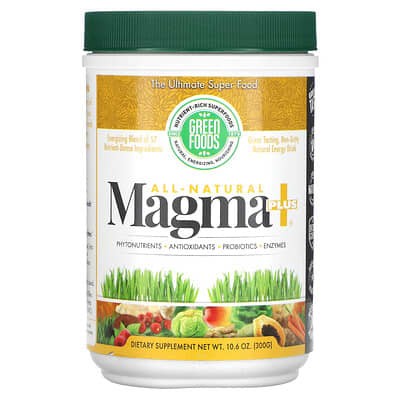
 iHerb
iHerb Amazon
 Vitacost