
Nutrient quality
The triglyceride oil form supports absorption and the formula stays focused. The active EPA and DHA dose remains modest for targeted use.
 Walmart Walmart | $ 24.88 |
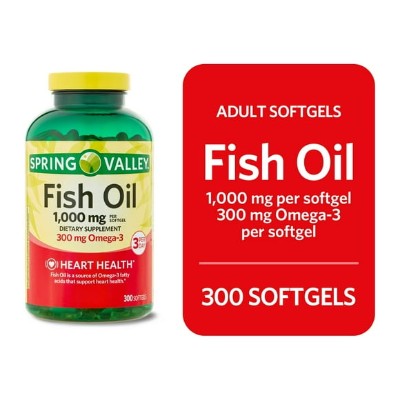
The serving provides 300 mg total omega-3 from 1,000 mg fish oil, including 260 mg combined EPA and DHA. That combined value is more useful than labels that report only total omega-3.
A triglyceride form supports absorption, especially when the softgel is taken with food. The fish source, antioxidant system, independent purity verification, and individual EPA-to-DHA balance are not supplied.
The 300-serving package and very low serving cost create strong basic value. It fits long-term low-dose users better than people targeting a high EPA or DHA intake.
The triglyceride oil form supports absorption and the formula stays focused. The active EPA and DHA dose remains modest for targeted use.
The label states total omega-3 and serving count. Separate EPA and DHA amounts, other ingredients, full directions, and key sourcing or quality details remain missing.
The aggregate satisfaction signal is strong and supported by the available response volume. No review-text evidence is provided to assess repeated complaints or whether experiences match the intended use.
The formula remains reasonably priced for basic fish-oil use. Modest active concentration and missing EPA and DHA detail reduce value per effective serving.

Fish oil is well aligned with inflammatory balance because EPA and DHA support resolution pathways. The triglyceride form is a useful absorption feature.
Only a small combined amount of EPA and DHA is supplied, and their individual amounts are missing. Absent purity testing and oxidation-protection details further limit confidence in routine use.

EPA and DHA support lipid management, but the active amount is low for targeted cardiovascular effects. Fish oil has strong human evidence for lowering triglycerides, although this serving is below commonly effective amounts.
The combined EPA and DHA amount is too low for meaningful triglyceride support. Triglyceride form is helpful, but individual fatty acids, purification, source, and antioxidant protection are not disclosed.
| Ingredient | Amount per serving |
|---|---|
Calories | 10 Calorie(s) |
Total Fat | 1 Gram(s) |
Cholesterol | 10 mg |
Fish Oil | 1000 mg |
Omega-3 Fatty Acids | 300 mg |
EPA+DHA | 260 mg |
Eicosapentaenoic Acid | 0 NP |
Docosahexaenoic Acid | 0 NP |
The triglyceride form supports good absorption, though the generic fish source lacks identified antioxidant protection. Combined EPA and DHA are disclosed, but their separate amounts are absent and their concentration in the oil is low. Cost per active gram is highly efficient, while the lack of independent purity verification remains a quality gap.
The triglyceride form supports absorption, and the low serving cost produces strong cost efficiency per gram of combined EPA and DHA. However, the active dose and concentration are both low, while individual EPA and DHA amounts are not disclosed. Missing information on purification, independent testing, source species, sustainability, and antioxidant protection leaves substantial quality uncertainty.
Published studies used for the product analysis and the top-ranked studies for each ingredient and goal.