
Nutrient quality
Generic fish oil in softgels with an unspecified molecular form gives the formula reasonable ingredient quality. Dose uncertainty or limited delivery detail prevents a confident quality assessment.
 Walmart Walmart | $ 0.00 | |
 iHerb iHerb | $ 5.05 |
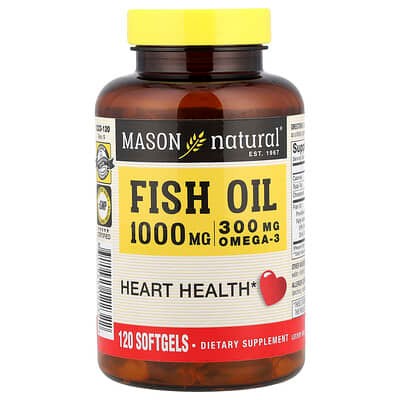
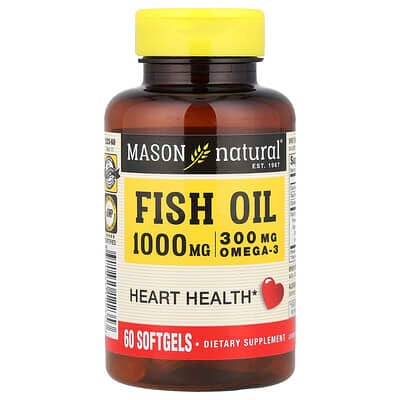
The serving delivers 180 mg of EPA and 120 mg of DHA from 1,000 mg of fish oil. That low concentration is suitable for maintenance but does not provide much active depth.
A short, inexpensive supply offers an accessible way to try basic fish-oil supplementation. The label supplies no fish species, molecular form, antioxidant protection, or independent purity verification.
The formula fits cost-sensitive adults who only need a modest daily amount. Anyone seeking higher EPA or DHA without taking several capsules should choose a more concentrated oil.
Generic fish oil in softgels with an unspecified molecular form gives the formula reasonable ingredient quality. Dose uncertainty or limited delivery detail prevents a confident quality assessment.
Important active details are incomplete or internally inconsistent. Serving guidance and the complete inactive-ingredient list are not fully supplied.
The aggregate rating is strong and supported by useful review volume. No review excerpts are supplied to assess repeated complaints or purpose-specific experiences.
Formula quality provides fair value for the category. The effective serving and focused ingredient list compare favorably with similar options.

Clearly disclosed EPA and DHA directly support lipid and endothelial health. The fatty acids have strong human evidence for cardiovascular markers.
The combined active omega-3 amount is modest for a focused cardiovascular effect. A simple fish-oil formula keeps the purpose clear but covers only one main pathway.

EPA and DHA directly support production of compounds that help resolve inflammatory signaling. Human evidence for marine omega-3 fats is strong, especially when EPA and DHA intake is sufficiently high.
The combined 300 mg EPA and DHA amount is below common anti-inflammatory target intakes. EPA, DHA, and total omega-3 amounts are clear, but oil form and purity testing are not provided. Fish oil is sourced from fish and may not be suitable for people with a fish allergy.
| Ingredient | Amount per serving |
|---|---|
Calories | 10 Calorie(s) |
Total Fat | 1 Gram(s) |
Cholesterol | 5 mg |
Fish Oil | 1000 mg |
Eicosapentaenoic Acid | 180 mg |
Docosahexaenoic Acid | 120 mg |
Total Omega-3 Fatty Acids | 300 mg |
The EPA-forward ratio suits the collection, but the absolute EPA dose is low. EPA is dilute within the fish oil, and the molecular form and oxidation protection are not disclosed. Low serving cost produces strong EPA cost efficiency, though no contaminant-testing claim is provided.
The serving supplies 300 mg of combined EPA and DHA, which is a low dose at 30% concentration. EPA and DHA amounts are transparent, but molecular form, purification, independent testing, source species, and antioxidant protection are absent. A very low serving cost creates excellent value per active gram despite modest potency.
Published studies used for the product analysis and the top-ranked studies for each ingredient and goal.