
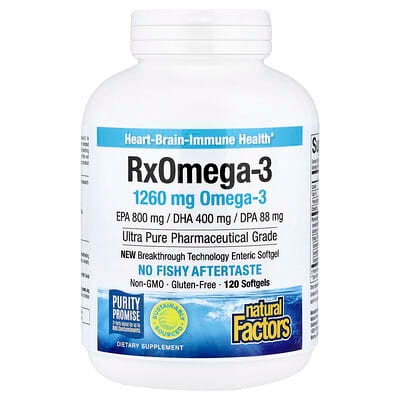
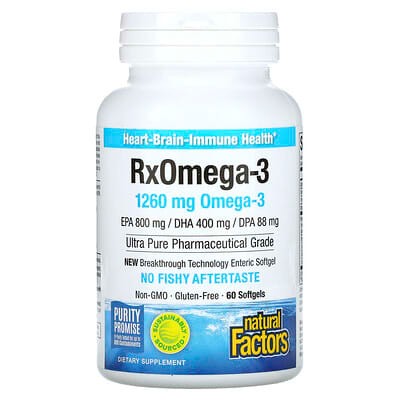
Nutrient quality
The concentrated oil supplies a useful active amount from named small-fish sources. Ethyl-ester delivery and an unclear EPA-to-DHA split limit quality.
 Pure Formulas Pure Formulas | $ 44.77 | |
 iHerb iHerb | $ 44.77 | |
 Vitacost Vitacost | $ 44.77 |
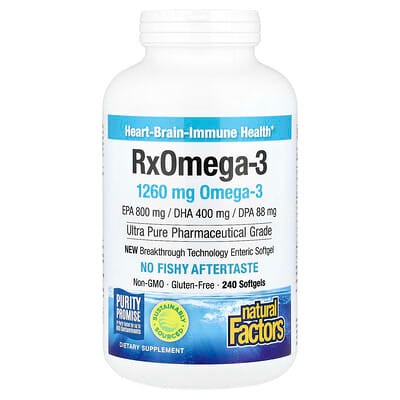
One softgel supplies 630 mg total omega-3 from 1,170 mg of fish-oil concentrate. The large bottle reduces replacement frequency and makes sense for people who take omega-3 consistently.
Anchovy, mackerel, and sardine sources are identified, but the active breakdown is not dependable. Both fatty-acid entries are labeled DHA ethyl ester, leaving EPA undisclosed and using a form with moderate rather than preferred absorption.
The amount can support routine cardiovascular, skin-barrier, and inflammatory-balance goals. Lack of a stated antioxidant and independent purity or oxidation testing leaves important quality questions open.
The concentrated oil supplies a useful active amount from named small-fish sources. Ethyl-ester delivery and an unclear EPA-to-DHA split limit quality.
Important active-label details are incomplete or ambiguous. Complete use directions and inactive-ingredient details are not available.
The aggregate satisfaction measure is favorable, with response volume determining how much confidence it deserves. Comment-level evidence is absent, so recurring complaints and purpose fit cannot be verified.
Bulk packaging and a substantial active amount create exceptional serving value. The basic ethyl-ester form and ambiguous fatty-acid split are the main quality limits.

The disclosed omega-3 amount supports lipid and inflammatory balance, and the named small-fish sources are appropriate for cardiovascular use. The amount is modest for targeted triglyceride reduction, while the missing EPA figure makes the fatty-acid balance difficult to assess.
The ethyl-ester form is less efficiently absorbed than triglyceride forms and no independent purity or oxidation testing is provided. Enteric softgel delivery may reduce aftertaste, but the two DHA entries create a label-clarity concern.

Omega-3 fatty acids may support the skin barrier and help regulate inflammatory signaling. The disclosed 630 mg total omega-3 amount provides useful support, but EPA and DHA details are incomplete.
The softgel format suits fatty-acid delivery. Missing molecular form, separate fatty-acid amounts, oxidation control, and independent purity testing limit quality confidence.

Fish-oil fatty acids provide meaningful support for inflammation-related signaling. The label appears to list DHA twice without a distinct EPA amount, limiting confidence in the active balance.
Named small-fish sources improve source transparency, but the ethyl ester form is less efficiently absorbed than triglyceride oil. Fish oil may increase bleeding tendency when combined with anticoagulant or antiplatelet medicines.
| Ingredient | Amount per serving |
|---|---|
Calories | 10 Calorie(s) |
Total Fat | 1 Gram(s) |
Polyunsaturated Fat | 1 Gram(s) |
Cholesterol | 5 mg |
pharmaceutical grade Fish Oil concentrate | 1170 mg |
Omega-3 Fatty Acids | 630 mg |
Docosahexaenoic Acid Ethyl Ester | 200 mg |
The two disclosed DHA entries together provide a high serving amount from named small-fish sources. The ethyl ester form is less readily absorbed than triglyceride forms, and no protective antioxidant is listed. The high-count package combines strong active-ingredient value with pharmaceutical-grade purity disclosure.
The pharmaceutical-grade oil uses named small fish but remains in the less efficiently absorbed ethyl ester form. Its two DHA entries lack a distinct EPA amount, leaving the fatty-acid balance unclear. The large package offers favorable cost efficiency based on disclosed actives, while independent testing and antioxidant protection are not stated.
The ethyl ester form has moderate absorption potential and comes from named small fish. Label clarity is limited because separate EPA and DHA amounts are not presented reliably, while antioxidant and independent purity details are missing. The large package delivers the disclosed active amount at a particularly low ongoing cost.
Published studies used for the product analysis and the top-ranked studies for each ingredient and goal.