

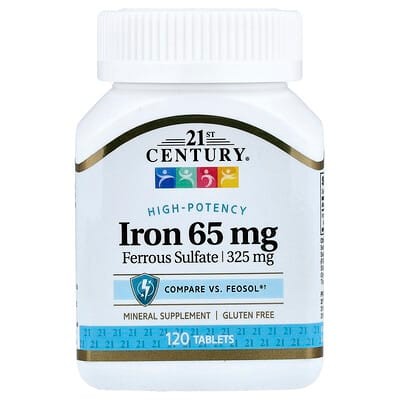
Nutrient quality
The iron amount is potent and directly supports deficiency-oriented use. A harsh sulfate form and aggressive dose create substantial tolerance and overdosing concerns.
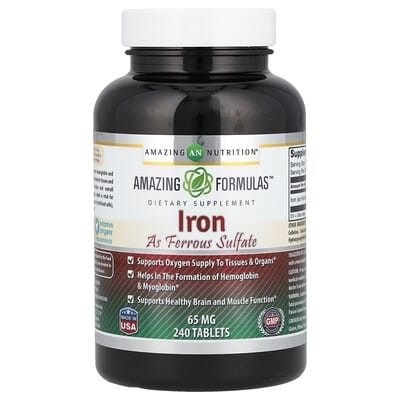
 Vitacost Vitacost | $ 9.99 | |
 iHerb iHerb | $ 9.99 | |
 Amazon Amazon | $ 286.99 | |
 Pure Formulas Pure Formulas | $ 9.98 |
Ferrous sulfate delivers 65 mg of iron in a single tablet. The amount may suit substantial deficiency correction, but it is much higher than a casual maintenance supplement.
Ferrous sulfate is more likely than chelated forms to cause constipation, nausea, or stomach irritation. The product includes no vitamin C or other nutrients that would broaden its role beyond high-dose iron delivery.
A 240-tablet bottle provides exceptional supply and low serving cost. The large quantity also increases the importance of safe storage and periodic review so use does not continue after the need has resolved.
The iron amount is potent and directly supports deficiency-oriented use. A harsh sulfate form and aggressive dose create substantial tolerance and overdosing concerns.
The active form and amount are clearly disclosed without a proprietary blend. Missing full use guidance and non-active tablet ingredients leave practical gaps for a high-dose product.
The supplied average is strong and supported by moderate response volume. No comment-level evidence is available to assess repeated complaints or alignment with the intended use.
Very low serving cost and a clearly measured active support strong economic value. Harsh form quality and a dose unsuitable for routine use reduce practical value.

High-dose ferrous sulfate can improve oxygen transport and fatigue when a significant iron deficiency is confirmed. The basic salt is more likely to cause nausea, constipation, or abdominal discomfort than gentler chelates.
The amount is too high for casual routine use and is better suited to clinician-directed deficiency treatment. A single-active design is clear, but it does not address any other energy pathway.

Iron may help hair shedding caused by iron deficiency, but a 65 mg dose is unsuitable as routine hair support without a documented need. The amount exceeds the adult upper intake level and increases digestive and overload concerns.
Ferrous sulfate is clearly identified and widely used, though it can be poorly tolerated. Use should follow iron testing or clinical direction, especially for people with iron-storage disorders.

Iron may support oxygen transport and exercise capacity when a confirmed deficiency is present. The 65 mg amount is clearly disclosed in a simple one-tablet formula.
The dose is high for routine unsupervised use, and ferrous sulfate is more likely to cause nausea, constipation, or stomach discomfort than gentler chelated forms. People without a demonstrated iron need should not treat this as a general fitness enhancer.

Iron is a foundational nutrient for oxygen transport and energy metabolism, but this high-potency tablet is designed for a specific need rather than casual wellness use. Ferrous sulfate is effective but often less gentle than chelated forms.
The amount is well above routine daily requirements and should generally be used only when iron deficiency or increased need has been established. Excess iron can cause digestive symptoms and may be harmful when iron stores are already adequate.

Iron may improve brain fog and concentration when iron deficiency is present, but it is not a general focus enhancer. The high-potency serving is better suited to professionally guided deficiency support than routine cognitive use.
Ferrous sulfate is clearly disclosed but can cause more constipation, nausea, or stomach irritation than gentler forms. People without a confirmed need may gain no focus benefit and can be exposed to unnecessary iron.
| Ingredient | Amount per serving |
|---|---|
Iron (Ferrous Sulfate) | 65 mg |
Published studies used for the product analysis and the top-ranked studies for each ingredient and goal.