
Nutrient quality
The focused fish-oil formula avoids low-value extras. Modest active concentration and an unspecified oil form limit dose and absorption confidence.
 iHerb iHerb | $ 16.49 | |
 Pure Formulas Pure Formulas | $ 15.35 | |
 Walmart Walmart | $ 19.99 | |
 Vitacost Vitacost | $ 17.19 |
Total omega-3, rather than the larger fish-oil weight, is the meaningful active measure. The 420 mg amount offers basic support but does not reveal how much comes from EPA versus DHA.
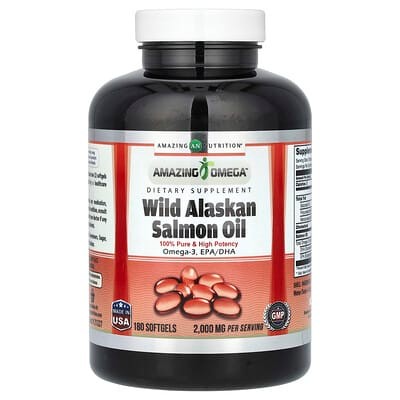
Wild Alaskan salmon is a named source, but the molecular form is not stated. The supplied data also omit the fish species, antioxidant protection, oxidation measures, and independent purity verification.
Two softgels provide the serving, and the 90-serving supply is practical. The serving cost is low. It fits general low-dose use better than targeted high-EPA or high-DHA supplementation.
The focused fish-oil formula avoids low-value extras. Modest active concentration and an unspecified oil form limit dose and absorption confidence.
The label states total omega-3 and serving count. Separate EPA and DHA amounts, other ingredients, full directions, and key sourcing or quality details remain missing.
The aggregate satisfaction signal is strong and supported by the available response volume. No review-text evidence is provided to assess repeated complaints or whether experiences match the intended use.
The formula remains reasonably priced for basic fish-oil use. Modest active concentration and missing EPA and DHA detail reduce value per effective serving.

Salmon oil supplies omega-3 fats that can support inflammatory resolution, but only 420 mg of total omega-3 is stated. EPA and DHA are not listed separately, so the key active dose cannot be confirmed.
Wild Alaskan sourcing is a useful quality detail, yet molecular form, purification, testing, and oxidation protection are absent. The low omega-3 concentration makes the large oil weight look more potent than the active content supports.

Wild salmon oil supplies a relevant omega-3 pathway, but the label gives only total omega-3s rather than EPA and DHA amounts. Human evidence for EPA and DHA is strong, yet the undisclosed active split prevents confident assessment of this serving.
The named wild Alaskan salmon source is useful, while the molecular form, purification, independent testing, and oxidation protection are not stated. People using anticoagulant or antiplatelet medicines should review concentrated fish oil with a clinician because omega-3s can add to bleeding risk.
| Ingredient | Amount per serving |
|---|---|
Calories | 20 Calorie(s) |
Total Fat | 2 Gram(s) |
Cholesterol | 10 mg |
Salmon Oil | 2000 mg |
Total Omega-3 Fatty Acids | 420 mg |
Wild Alaskan salmon gives the oil a clear source, but only a small share of the oil is identified as total omega-3. Separate EPA and DHA amounts, molecular form, antioxidant protection, and purity testing are missing. The low serving cost is attractive, yet active-gram value remains unproven because EPA and DHA are not quantified.
Wild Alaskan salmon provides a clearly identified, high-quality fish source. The oil has a low total omega concentration and does not disclose EPA or DHA separately. Its low serving cost cannot be judged against the active dose, while purification, testing, and oxidation protection remain unstated.
Published studies used for the product analysis and the top-ranked studies for each ingredient and goal.